Where It Began
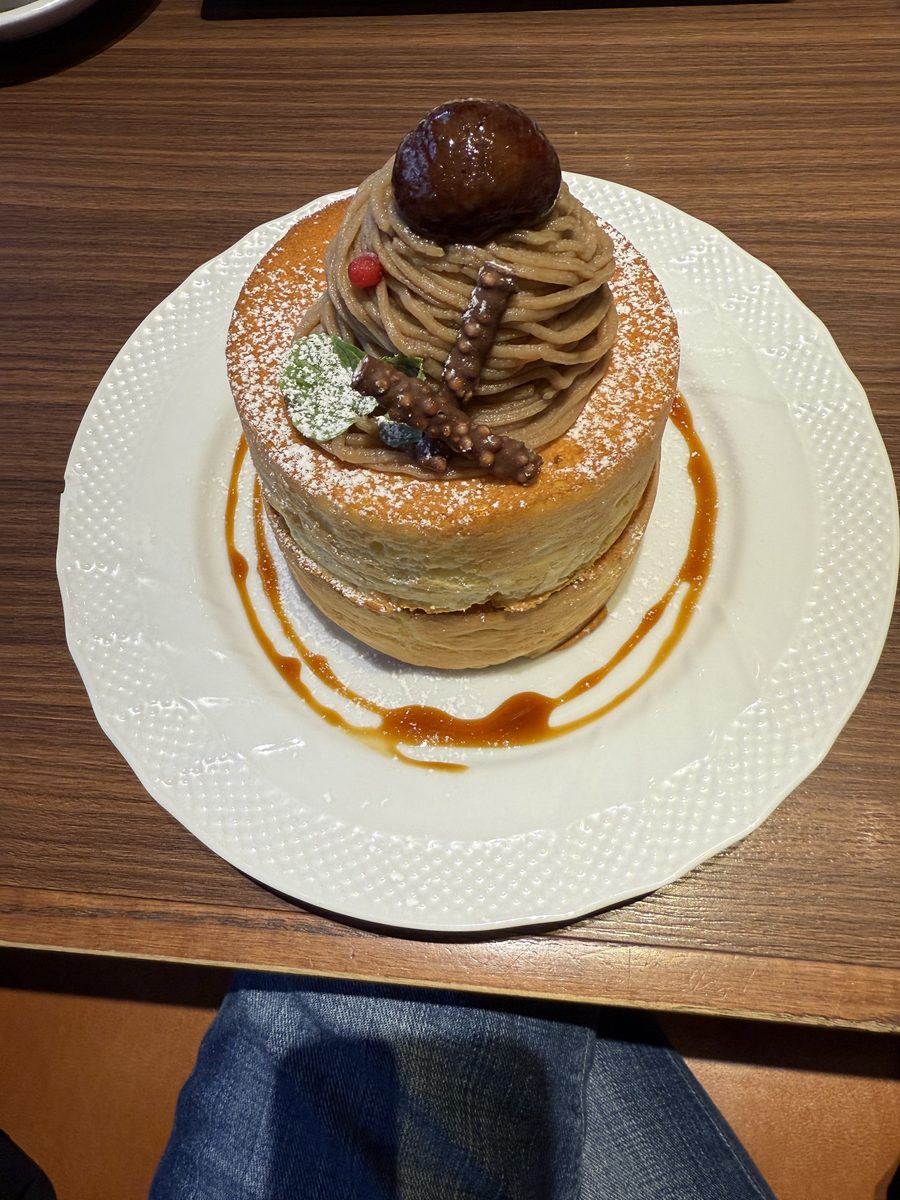
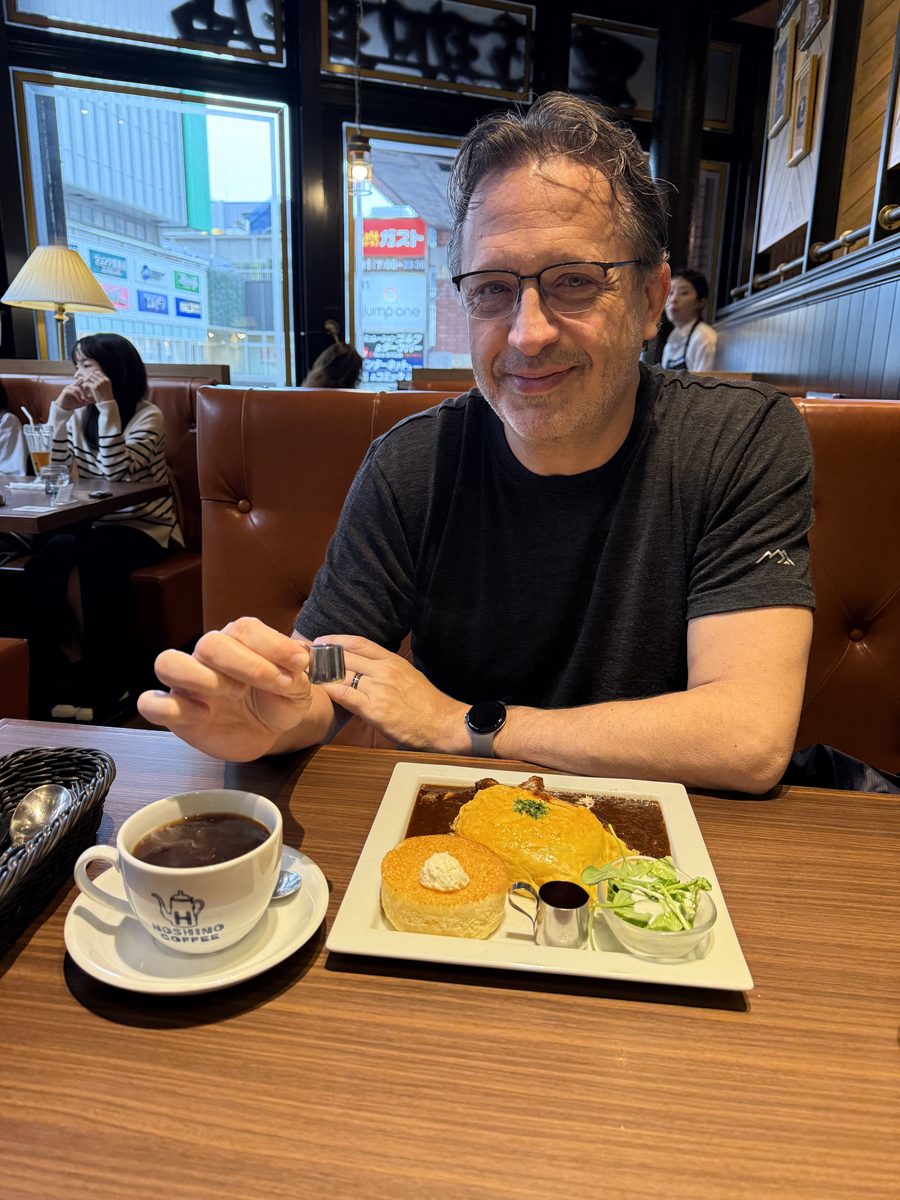
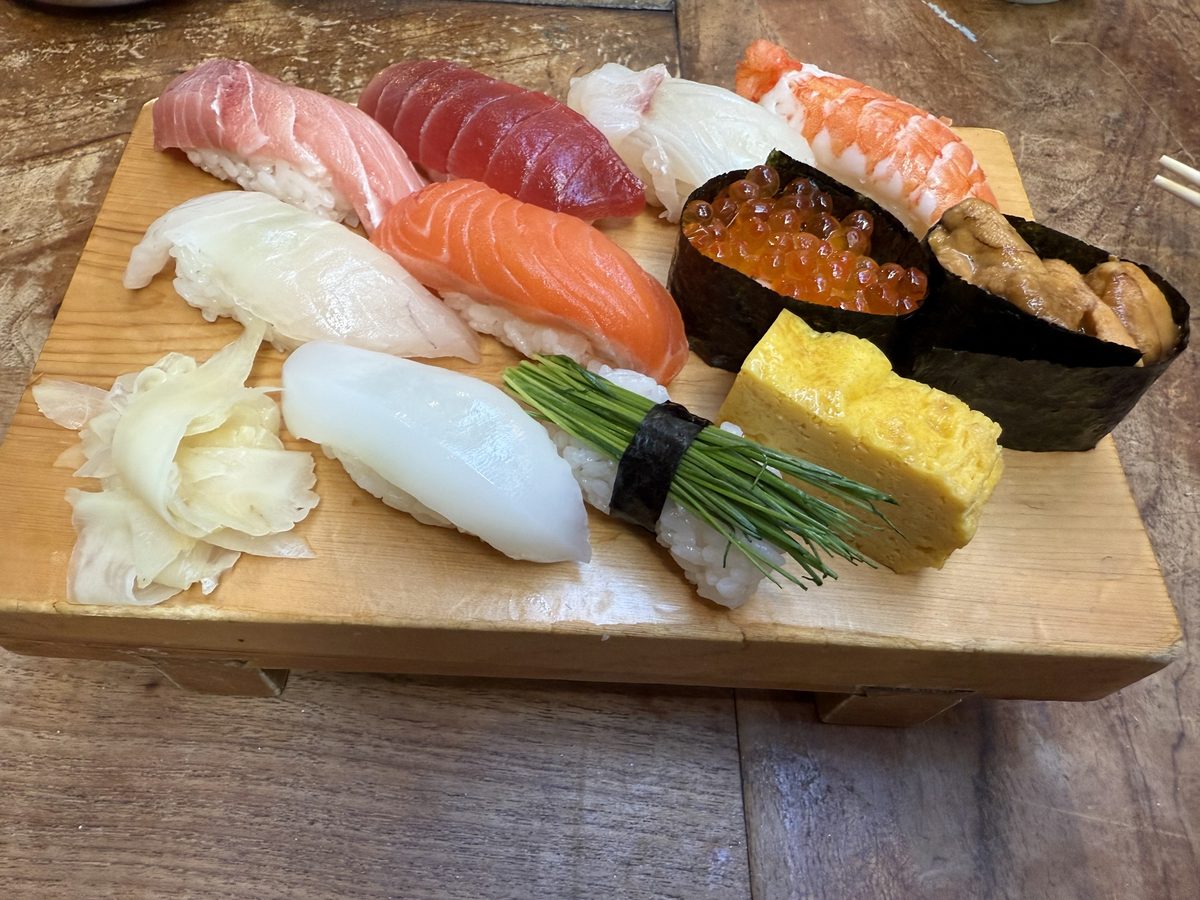
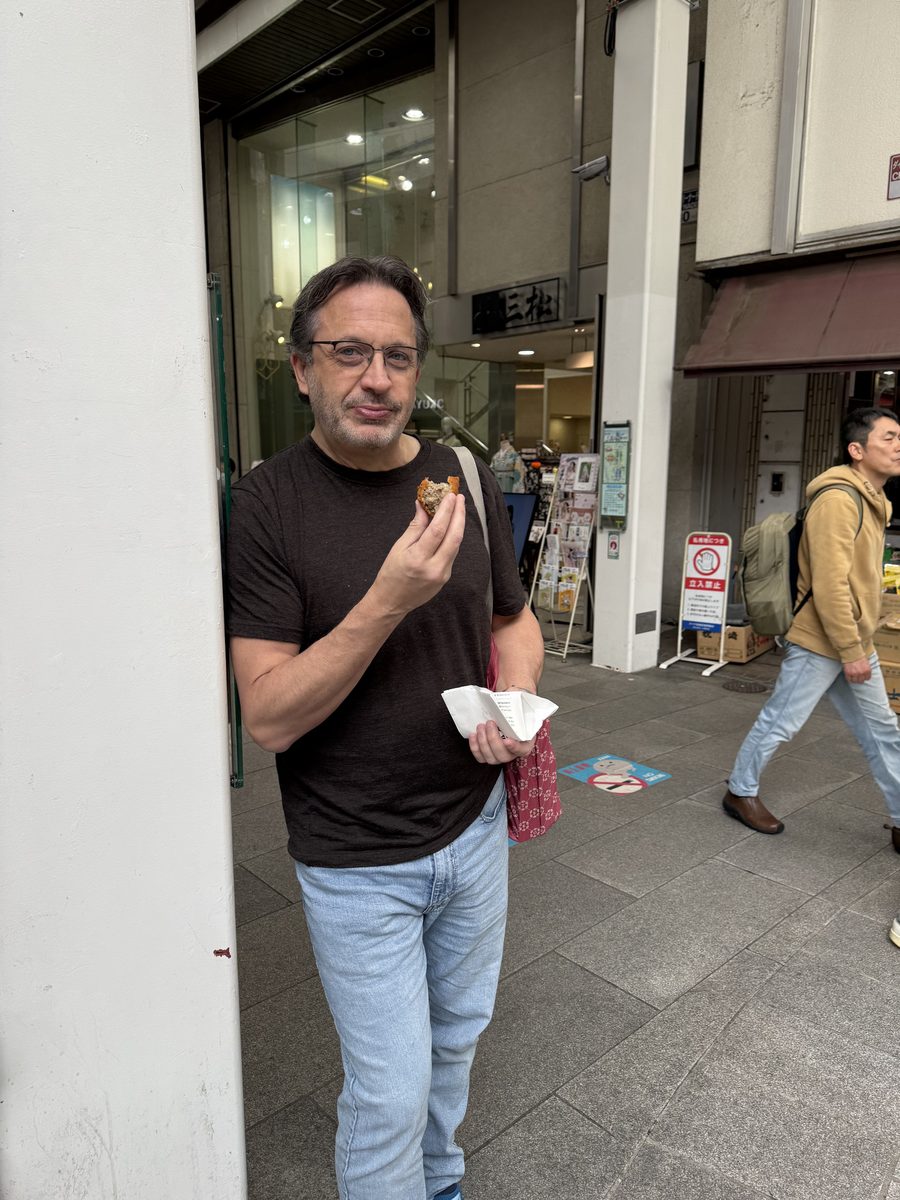
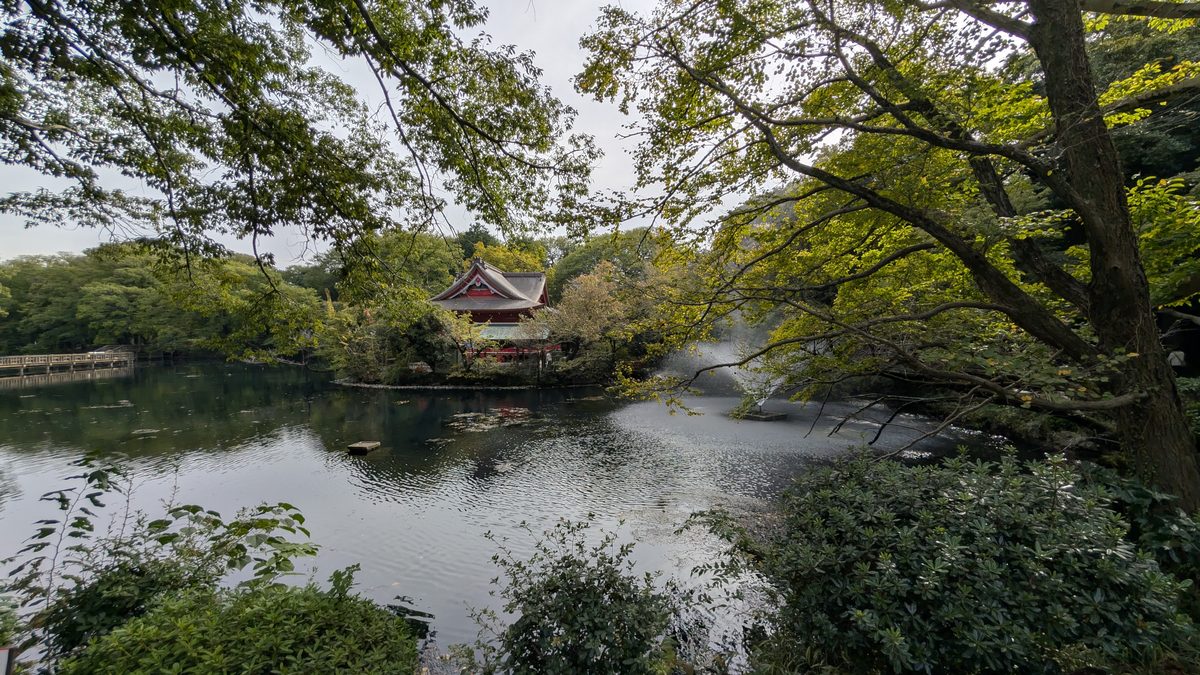
The trip opened on the quieter, leafier western edge of Tokyo. Kichijōji is the kind of neighborhood Tokyoites themselves keep voting the most livable in the city — a tangle of covered shopping arcades, tiny standing bars, and bakeries wrapped around the green sprawl of Inokashira Park. The first days were about settling in: a chestnut Mont Blanc, a board of sushi cut that morning, a Hoshino Coffee omurice-and-pancake plate, a croquette eaten standing up outside a shopfront, and a slow loop of the park's pond where a vermilion Benzaiten shrine sits out over the water.
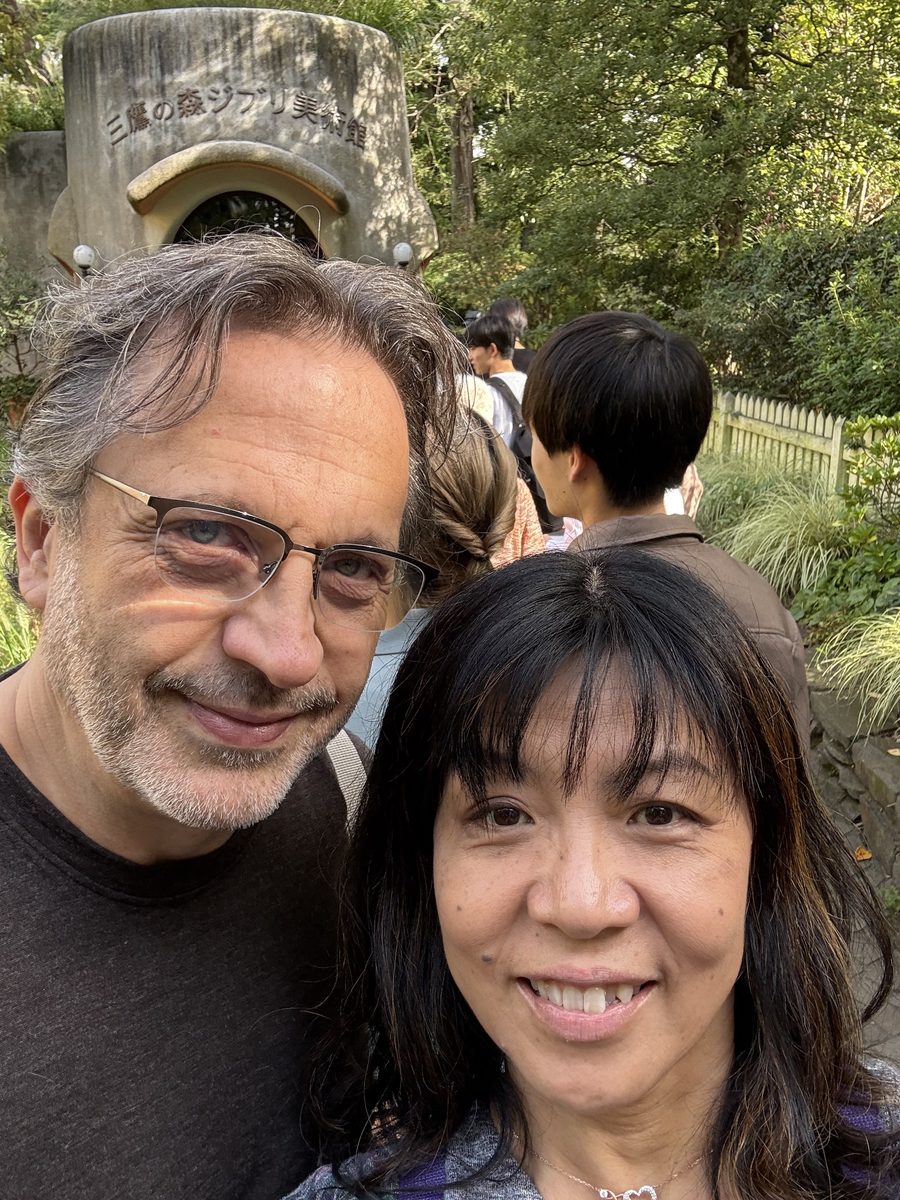
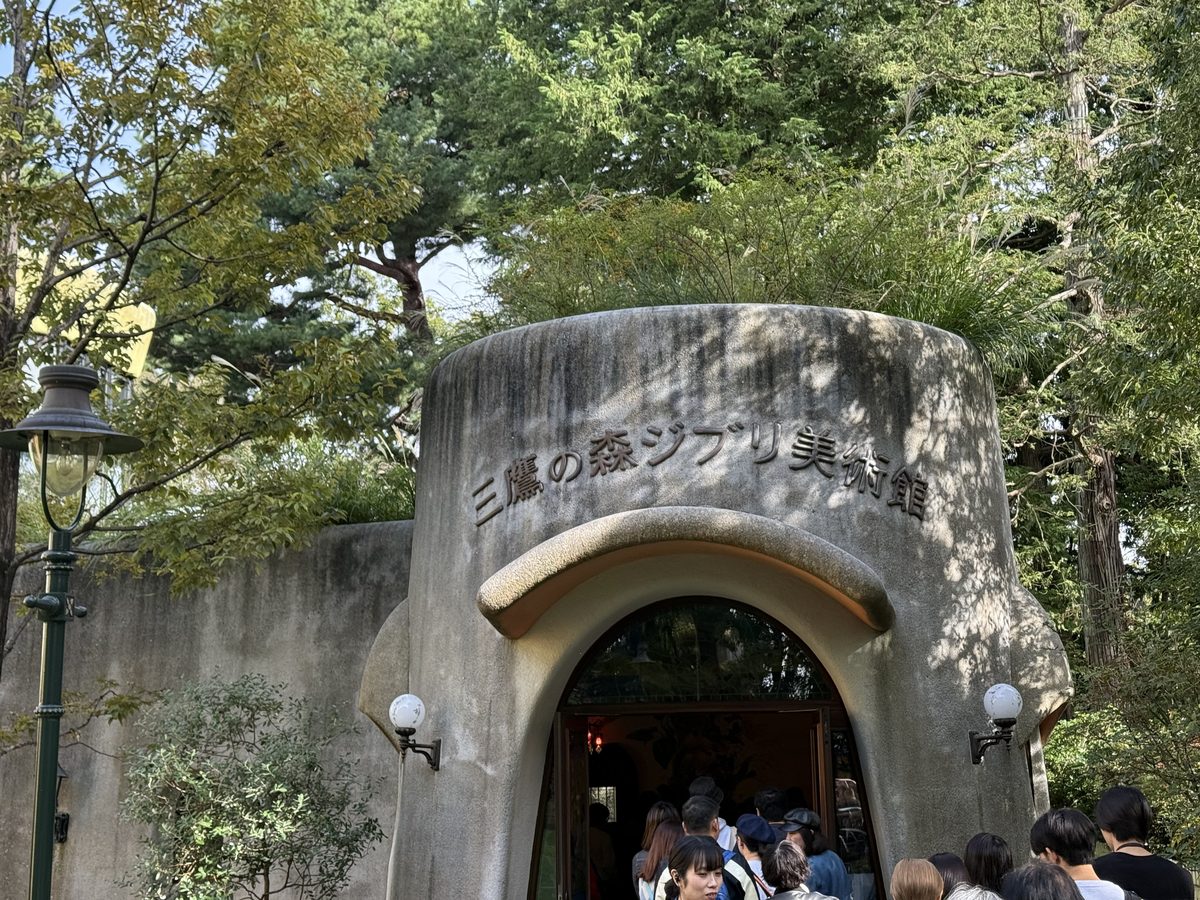
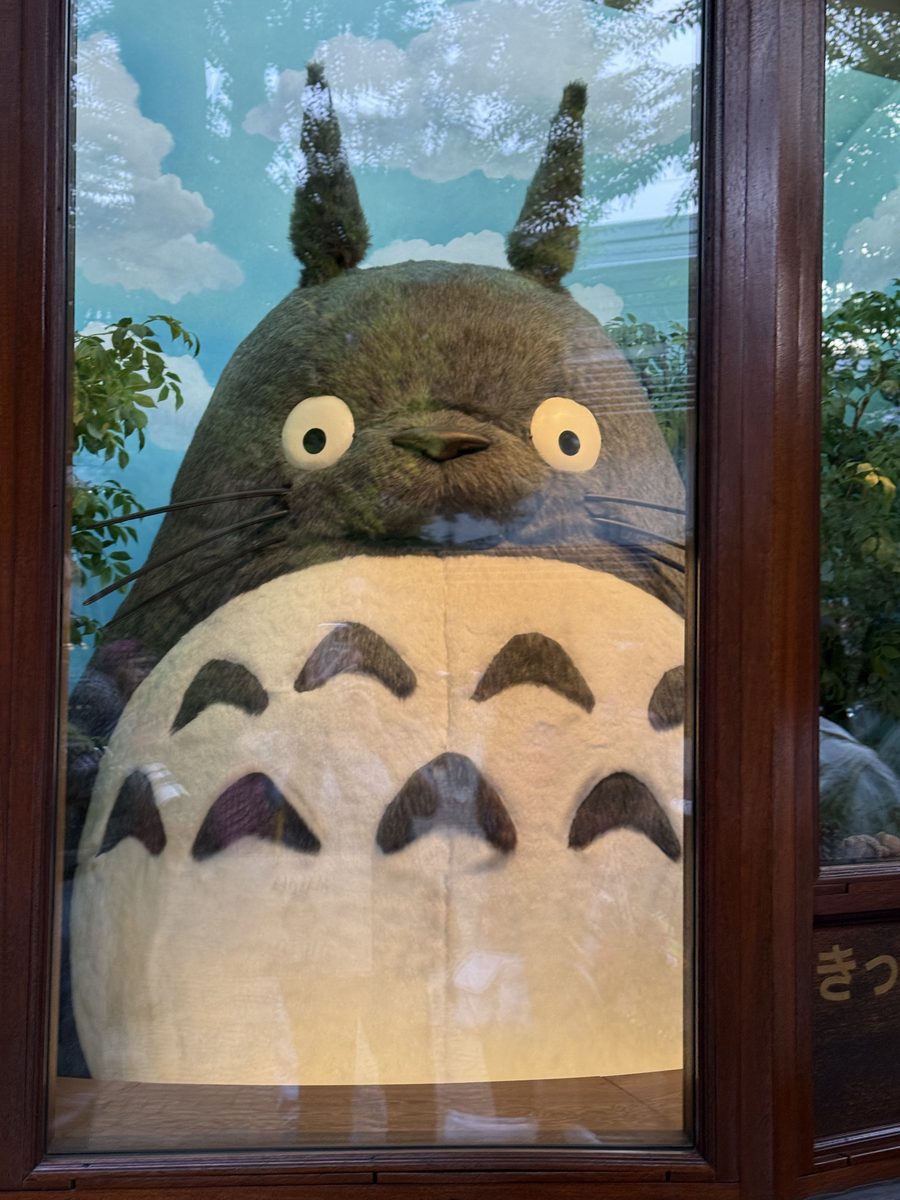
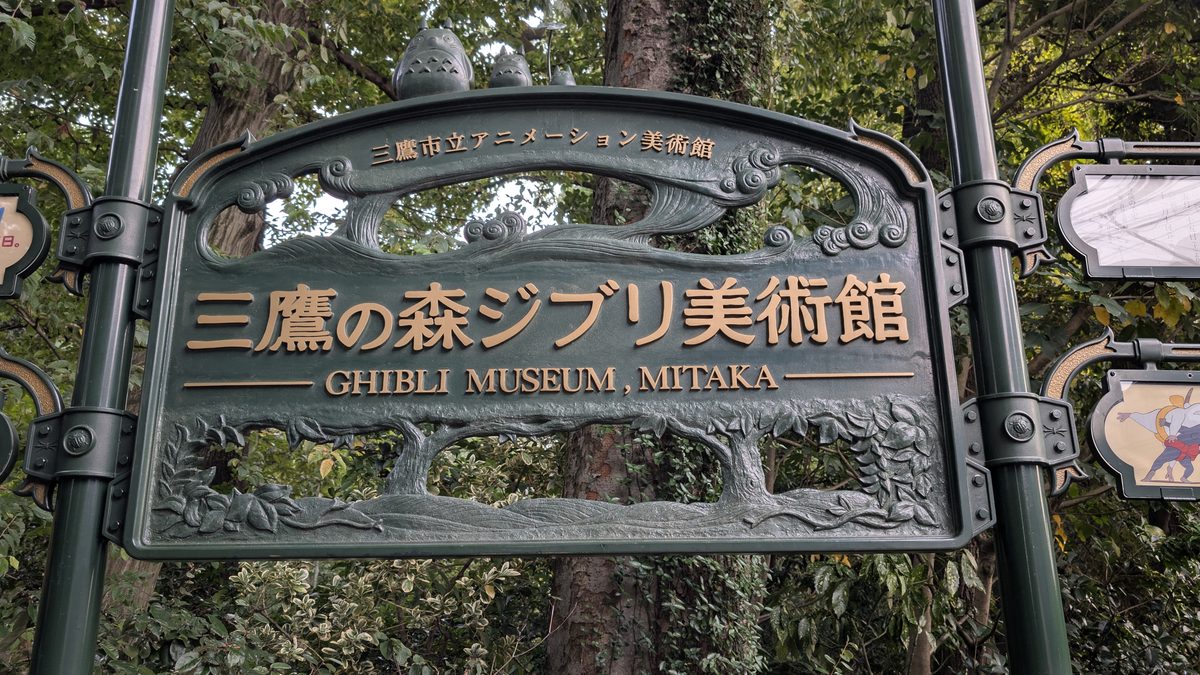
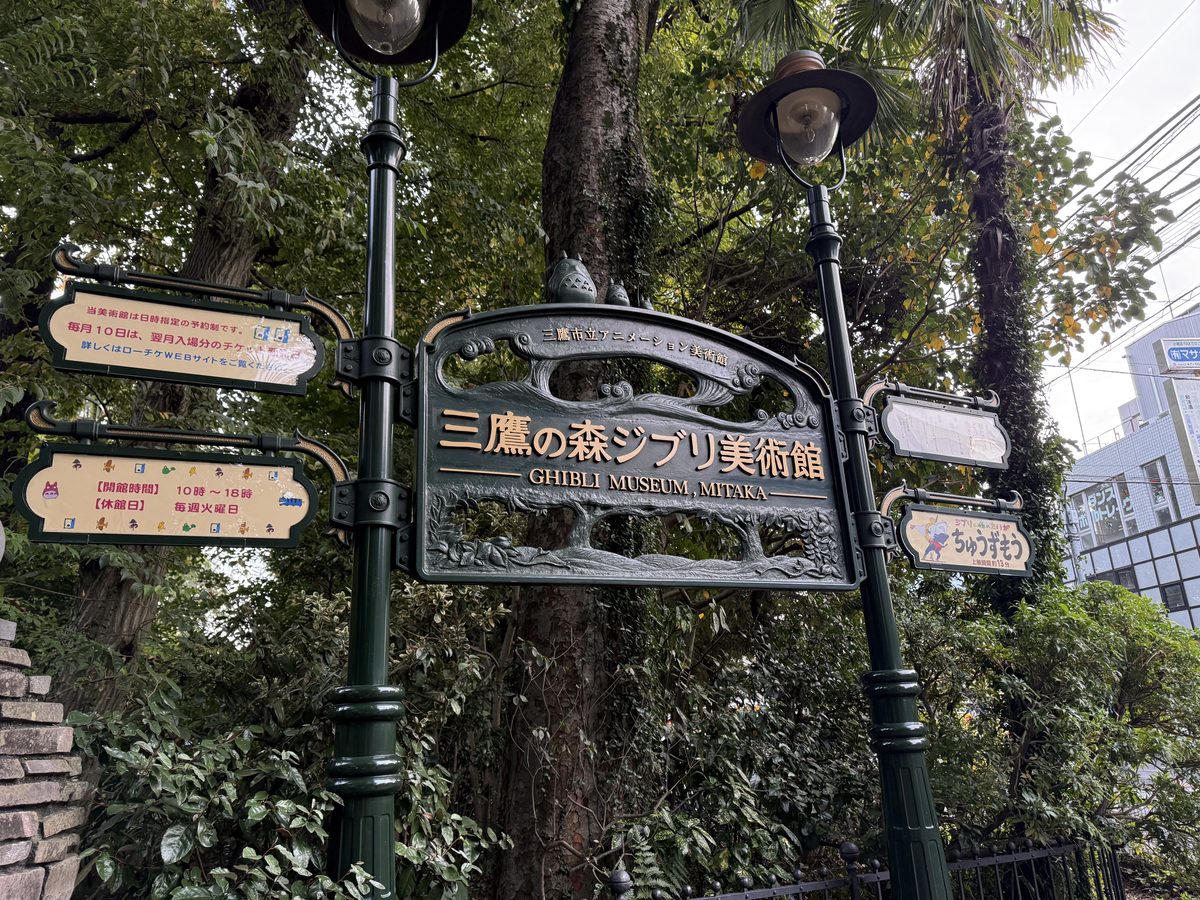
Inokashira also hides the trip's first pilgrimage. Tucked into its southwestern corner is the Ghibli Museum, the storybook-built home of Studio Ghibli that Hayao Miyazaki designed to be wandered rather than toured — "let's get lost, together." Photography is forbidden inside, which is its own kind of spell; you keep only what you remember. What made it outside are the frames at the threshold: the rounded, almost edible entrance, an oversized Totoro peering through a window, the ornate cast-iron museum sign, and a selfie under the stone marker before stepping in.
旅は、東京の西のはずれ、緑の多い静かな一角から始まりました。吉祥寺は、東京に住む人たち自身が「最も住みたい街」に選び続けるような場所。アーケード商店街、小さな立ち飲み屋、パン屋が入り混じり、その中心には井の頭公園の広い緑が広がります。最初の数日は、ゆっくりと旅に体を慣らす時間 — 栗のモンブラン、その朝に握られた寿司、ホシノコーヒーのオムライスとパンケーキのプレート、店先で立ち食いしたコロッケ、そして朱色の弁財天が水の上に佇む池をのんびりと一周。
井の頭公園は、この旅最初の「巡礼地」も隠しています。南西の隅にひっそり建つのが三鷹の森ジブリ美術館。宮崎駿が「迷子になろうよ、いっしょに。」という思いで設計した、絵本のような建物です。館内は撮影禁止 — それもまた一つの魔法で、心に残ったものだけを持ち帰ります。外に残った写真は、その入口にまつわるもの — まるく、どこか食べられそうな入口、窓からのぞく大きなトトロ、装飾を施された鋳鉄の美術館看板、そして中に入る前、石の標識の前で撮った一枚。
Ginza Nights
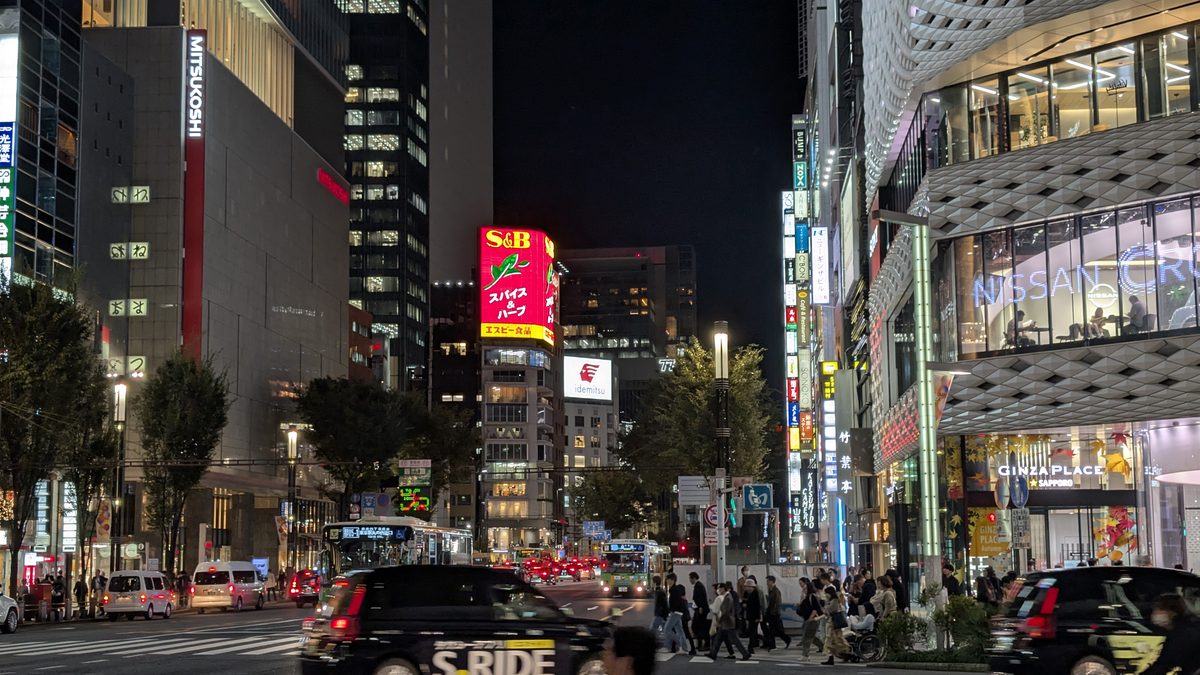
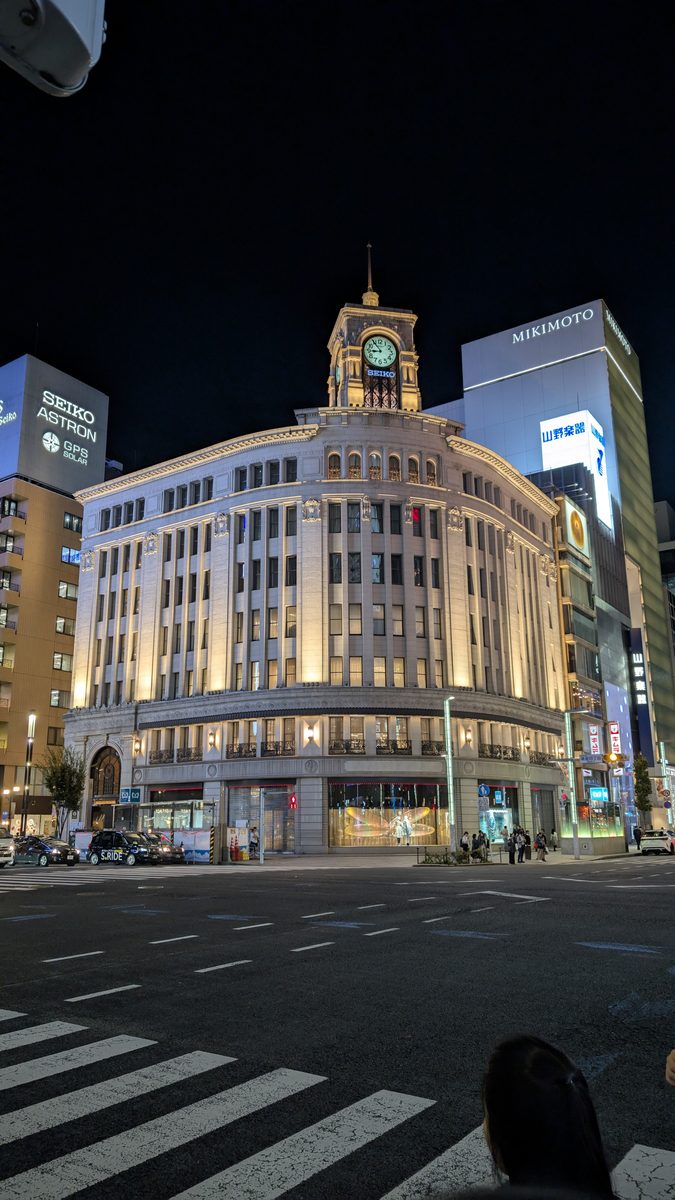
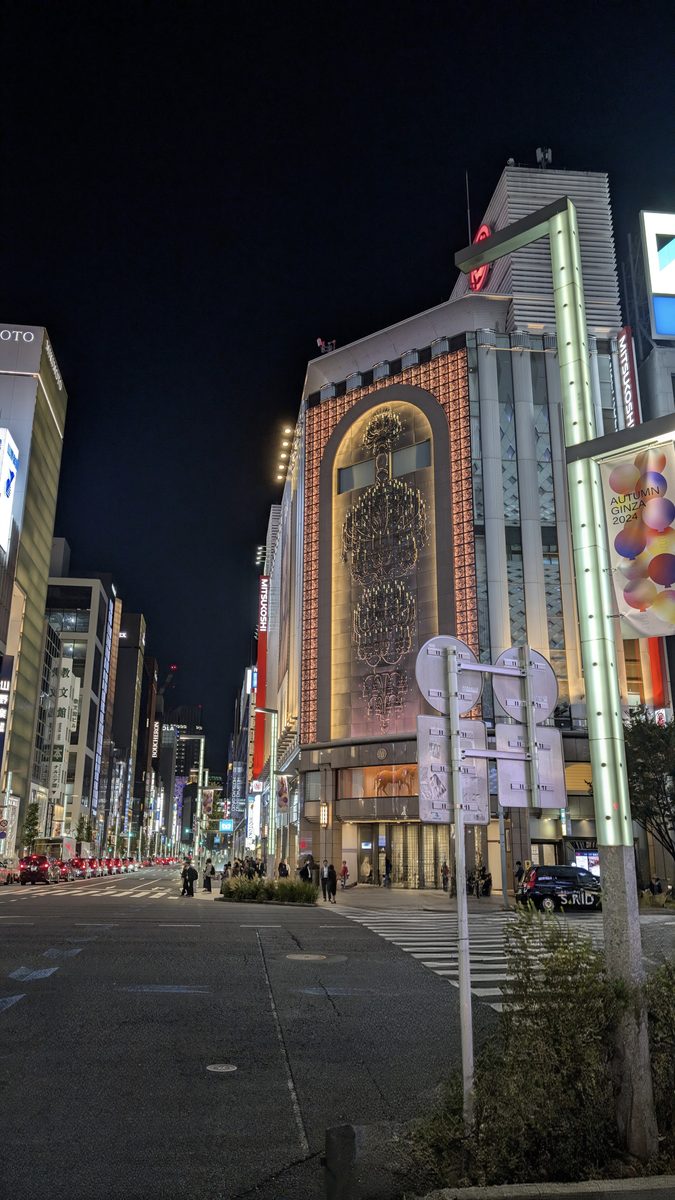
Ginza takes its name from the silver mint the Tokugawa shogunate moved here in 1612 — gin-za, the silver place. Four centuries on, it is still where Tokyo goes to glitter: flagship boutiques, the Wakō building with its 1932 Hattori clock tower presiding over the Ginza 4-chōme crossing, and avenues that turn into rivers of light after dark.
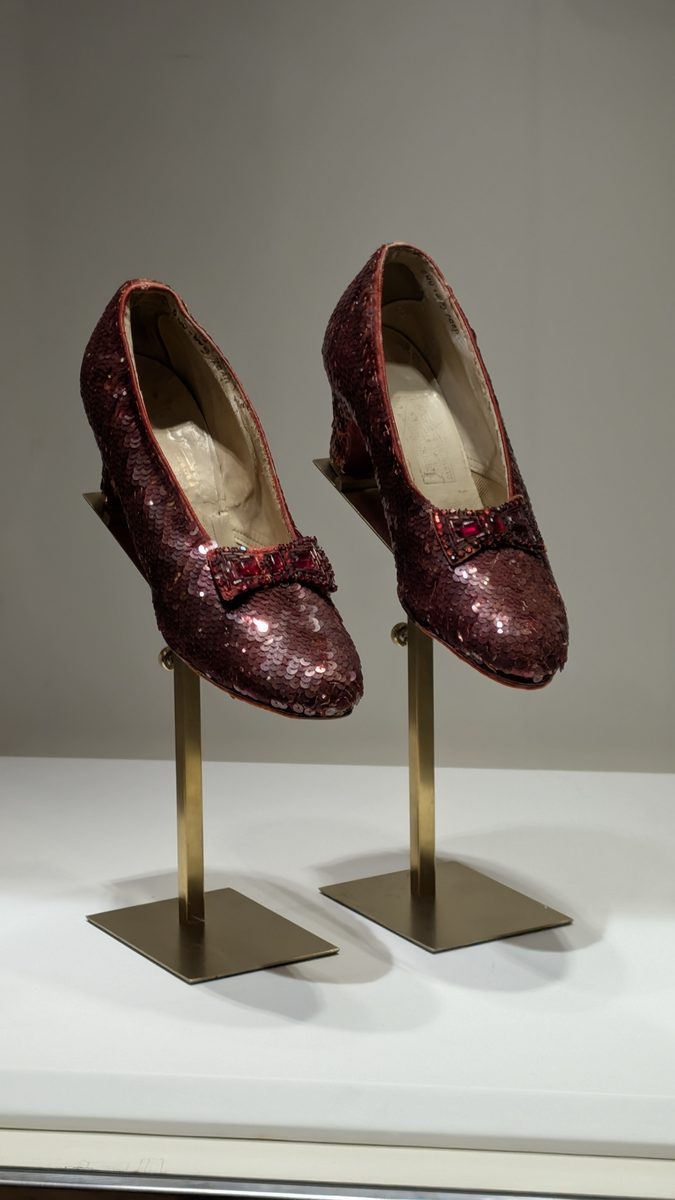
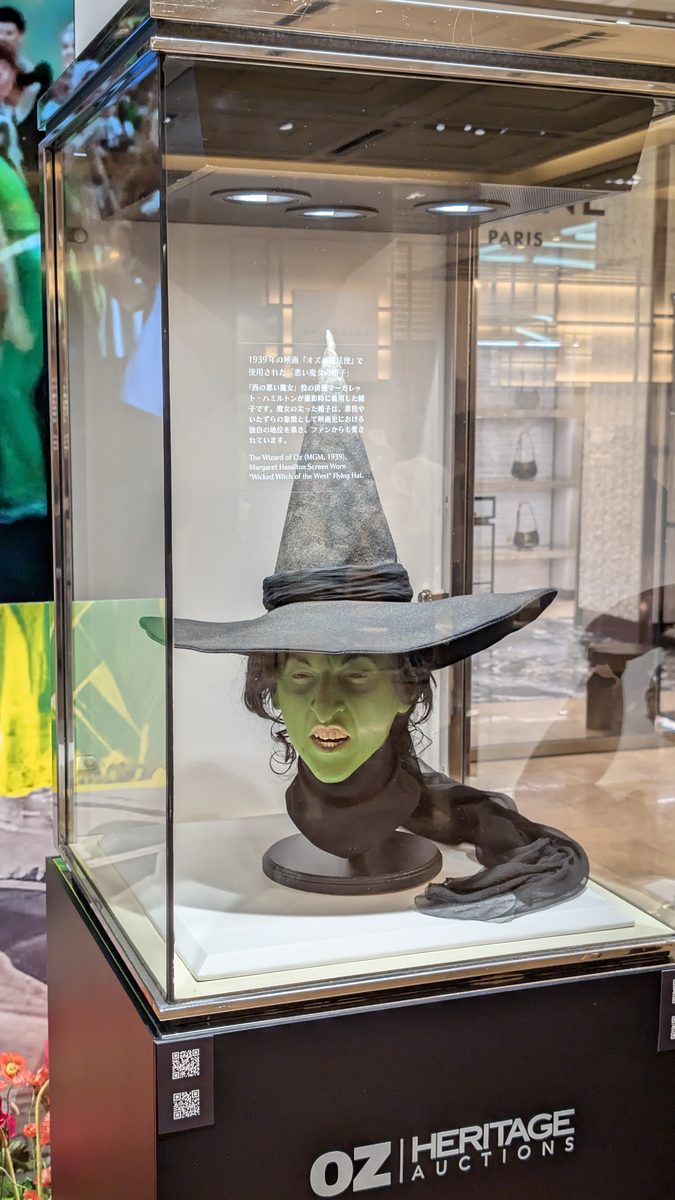
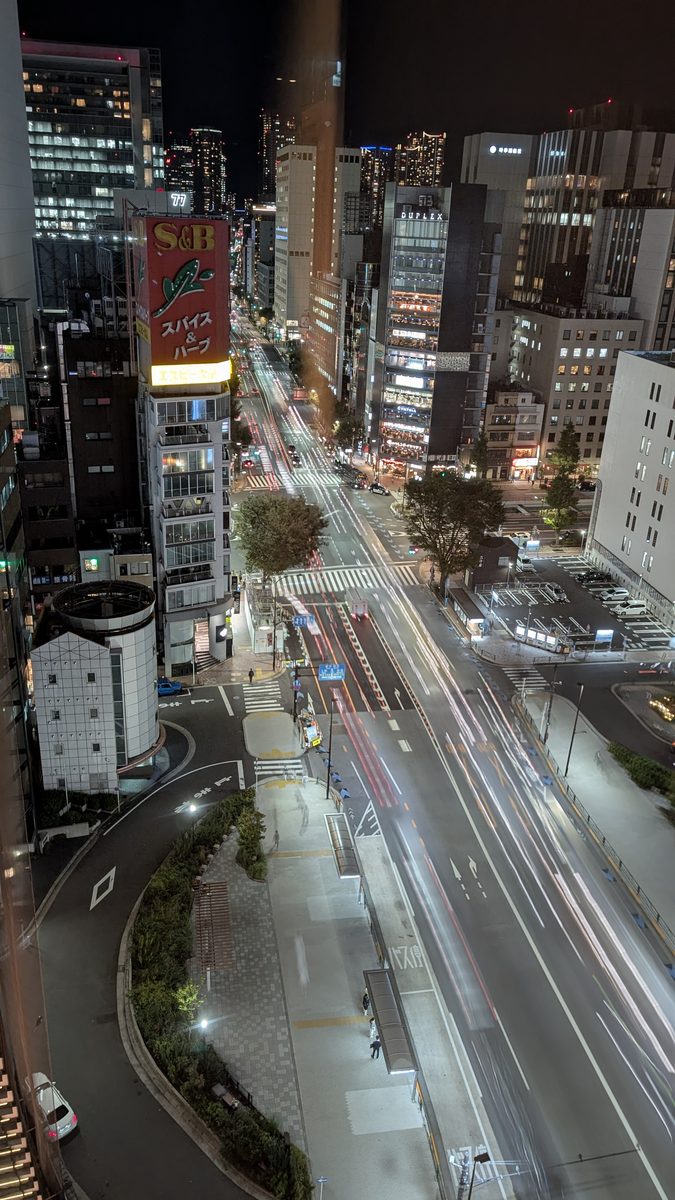
There was a surprise tucked among the boutiques, too — a Wizard of Oz memorabilia exhibit, ruby slippers glittering on their stands and the Wicked Witch of the West staring out from a glass case. A very Hollywood ghost to meet in the heart of Tokyo. The long exposure down the avenue, taillights smeared into ribbons, is Ginza doing what it does best.
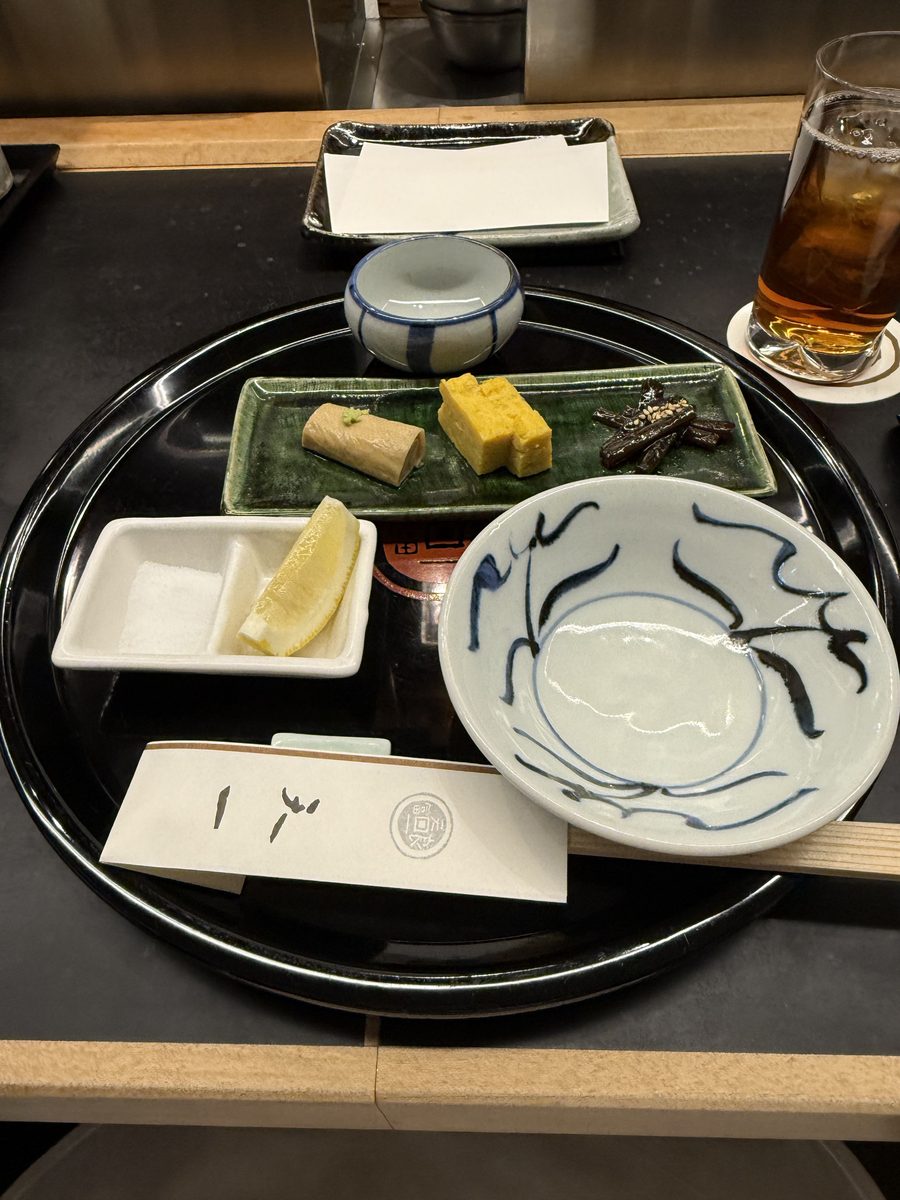
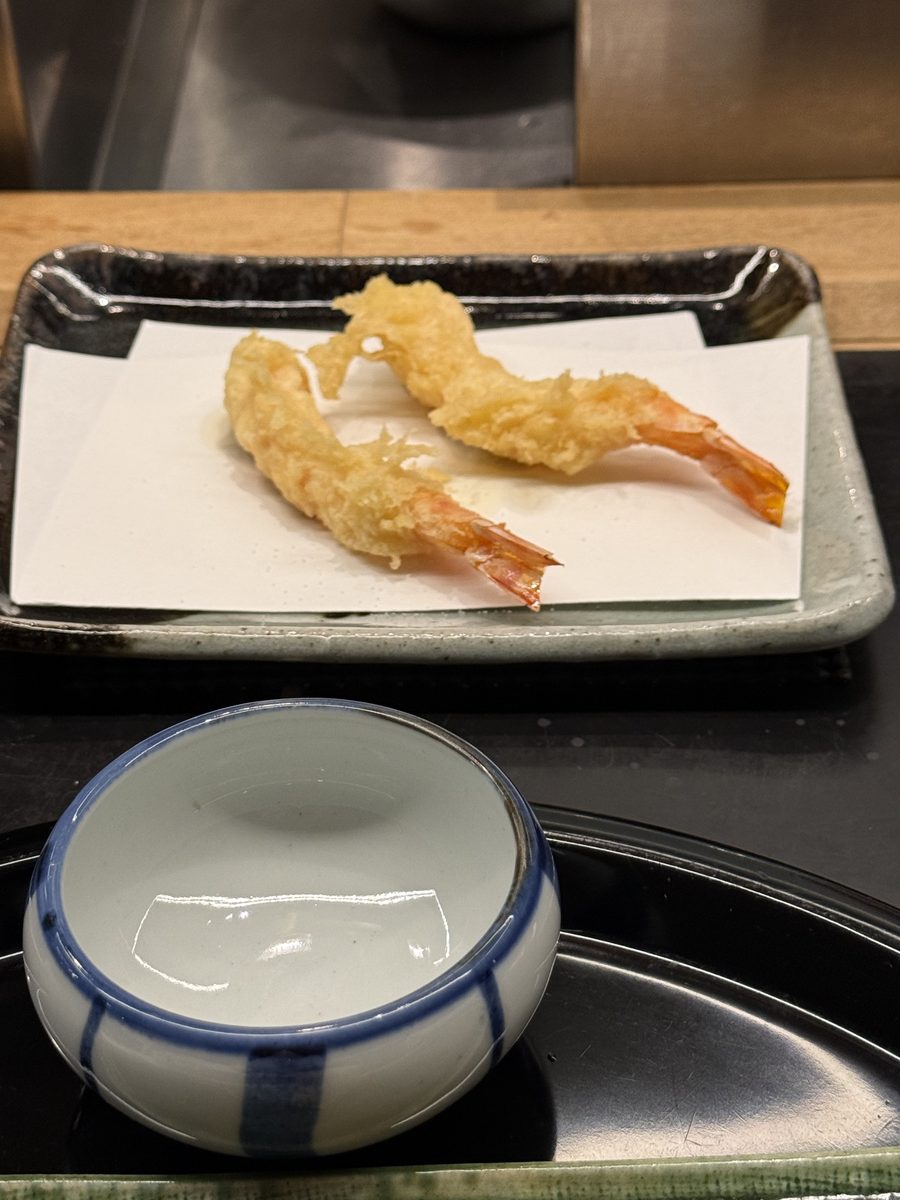
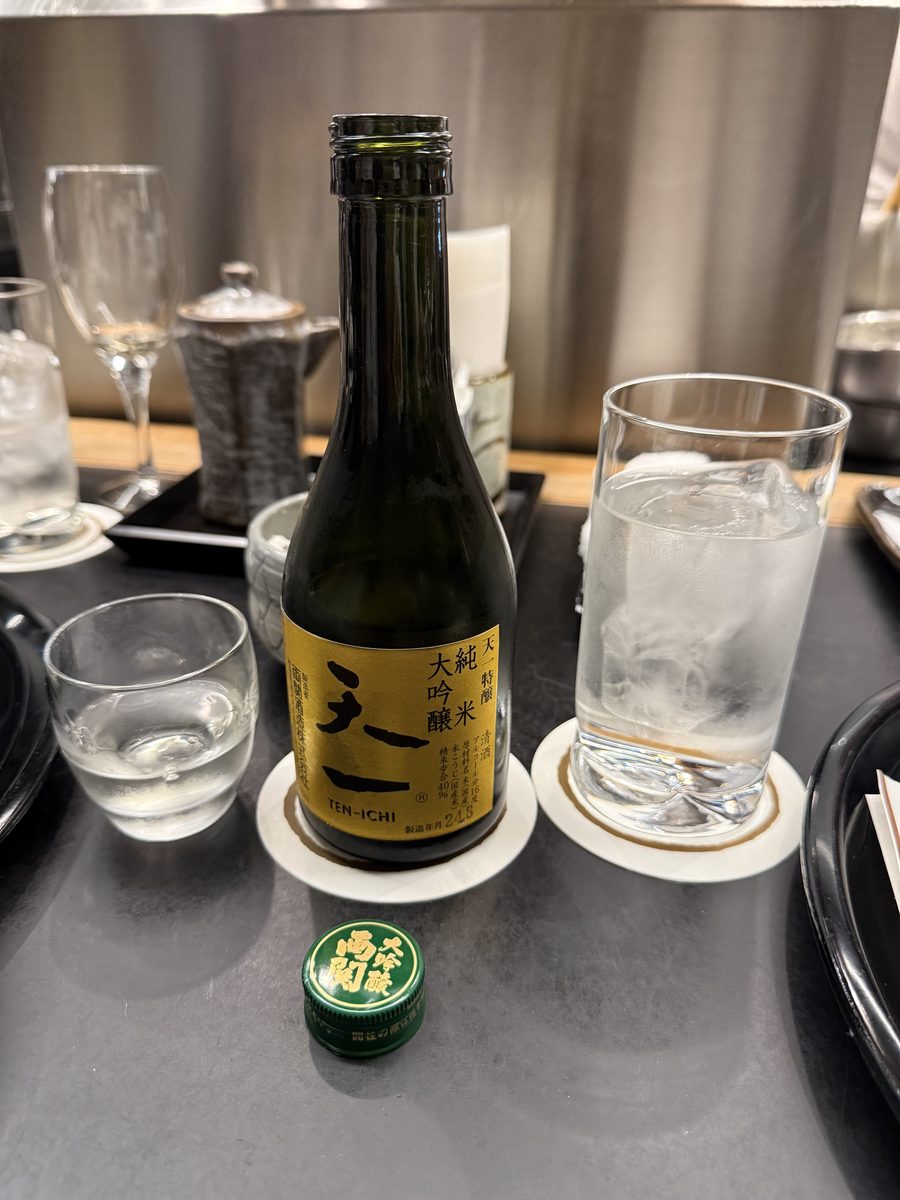
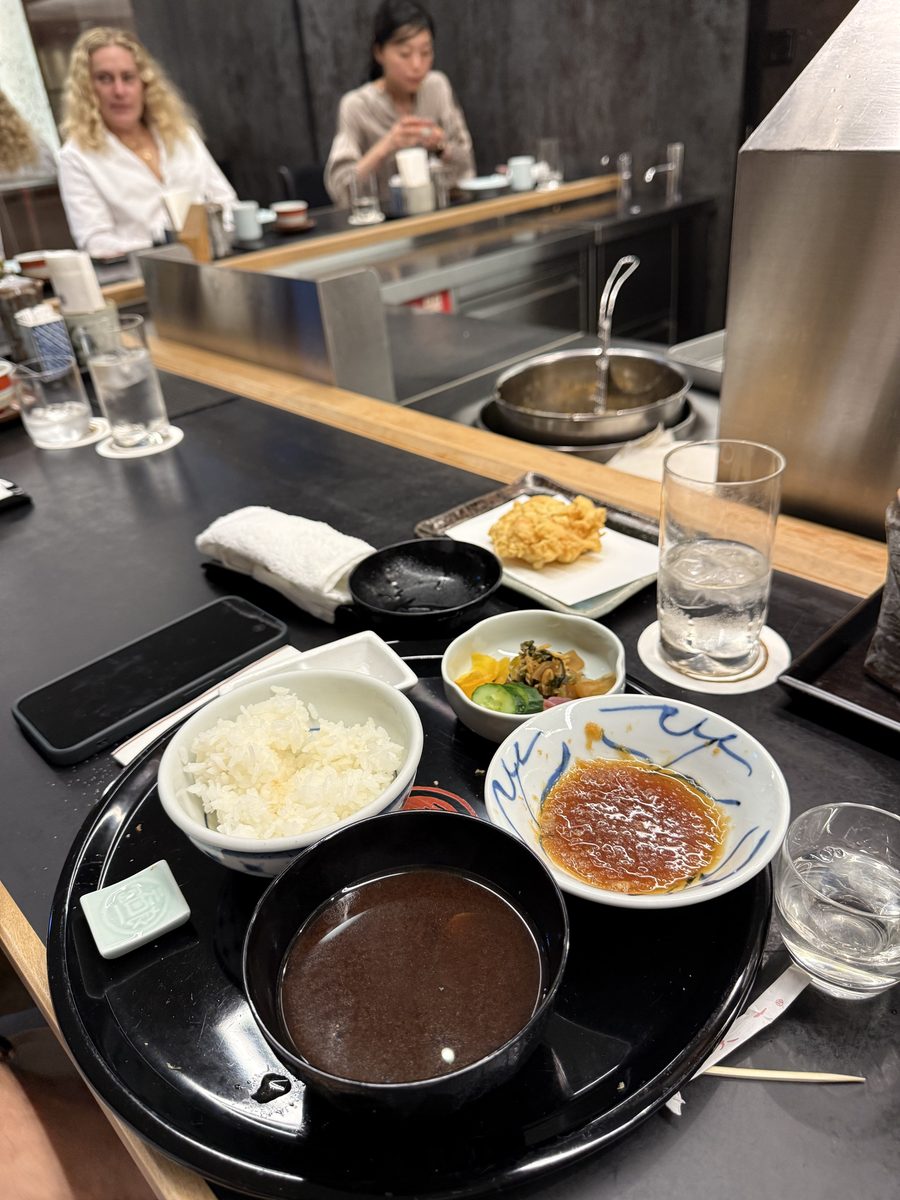
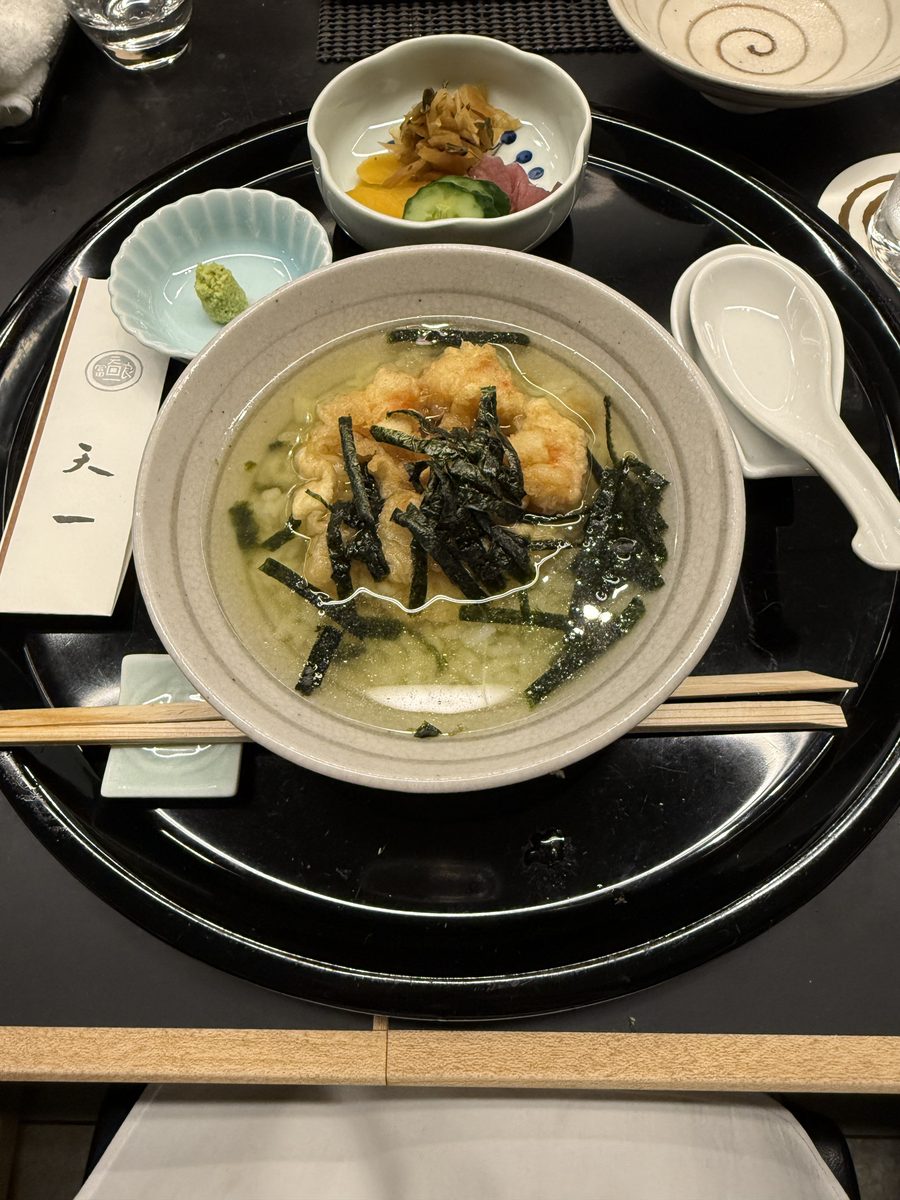
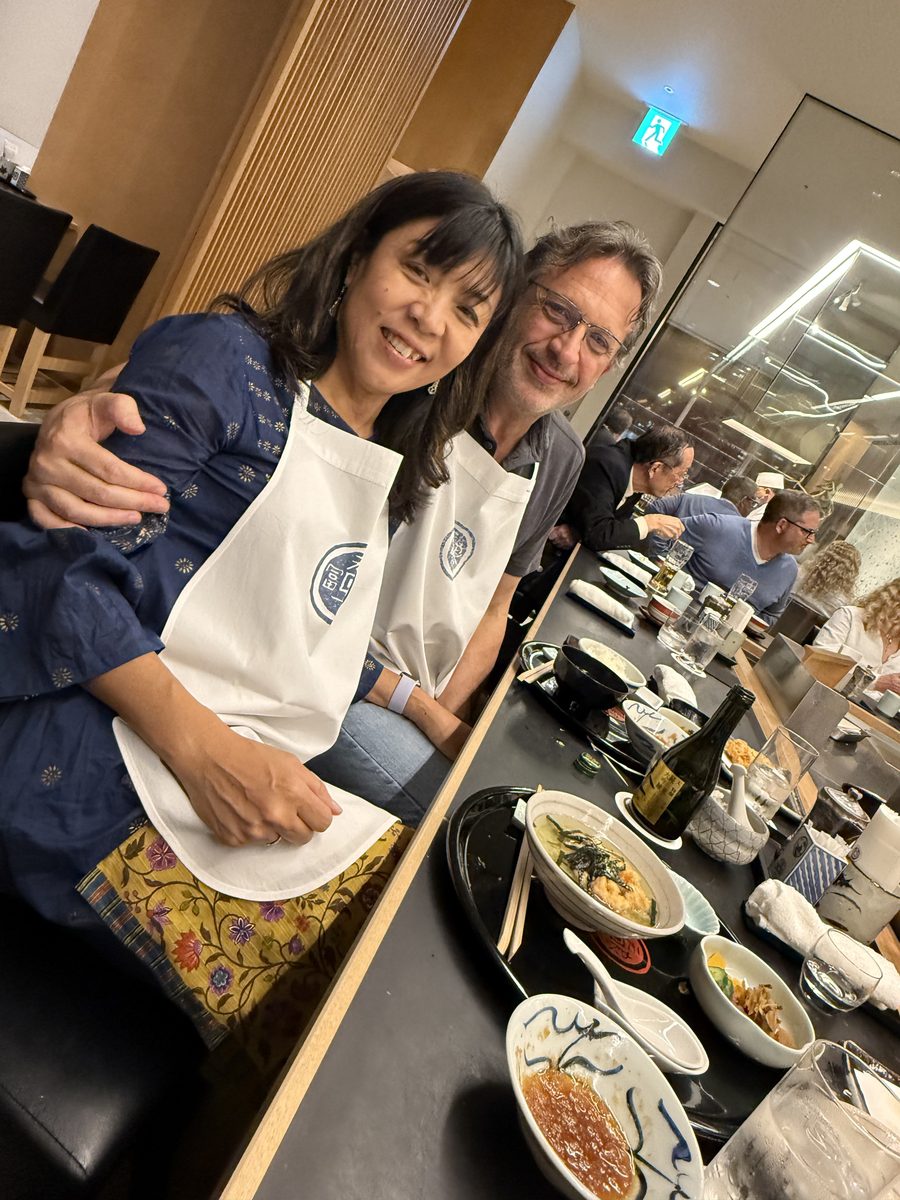
The evening ended at the counter of Tenichi, a tempura restaurant that has been frying since long before the neon arrived — white aprons on, a small bottle of Ten-Ichi daiginjō poured, and course after course of shrimp and kakiage lowered into rice, broth, and ankake sauce one piece at a time.
銀座という名は、1612年に徳川幕府がこの地へ移した銀貨鋳造所 — 「銀座」 — に由来します。四世紀を経た今も、ここは東京がきらめくための場所。旗艦店が軒を連ね、1932年の服部時計塔をいただく和光が銀座四丁目の交差点を見守り、大通りは日が暮れると光の川に変わります。
ブティックの合間には、思いがけない出会いも — オズの魔法使いの記念品展。台の上できらめくルビーの靴、ガラスケースからこちらを見つめる西の悪い魔女。東京の真ん中で出会う、いかにもハリウッドらしい亡霊です。テールライトが光のリボンに溶ける大通りの長時間露光は、銀座が最も得意とする表情。
夜の締めくくりは、ネオンが灯るずっと前から天ぷらを揚げ続けてきた店、天一のカウンター。白い前掛けを身につけ、天一の大吟醸を少しだけ注いでもらい、海老やかき揚げがご飯や出汁、あんかけへと一品ずつ沈められていく、コース仕立ての夜でした。
Meiji Shrine
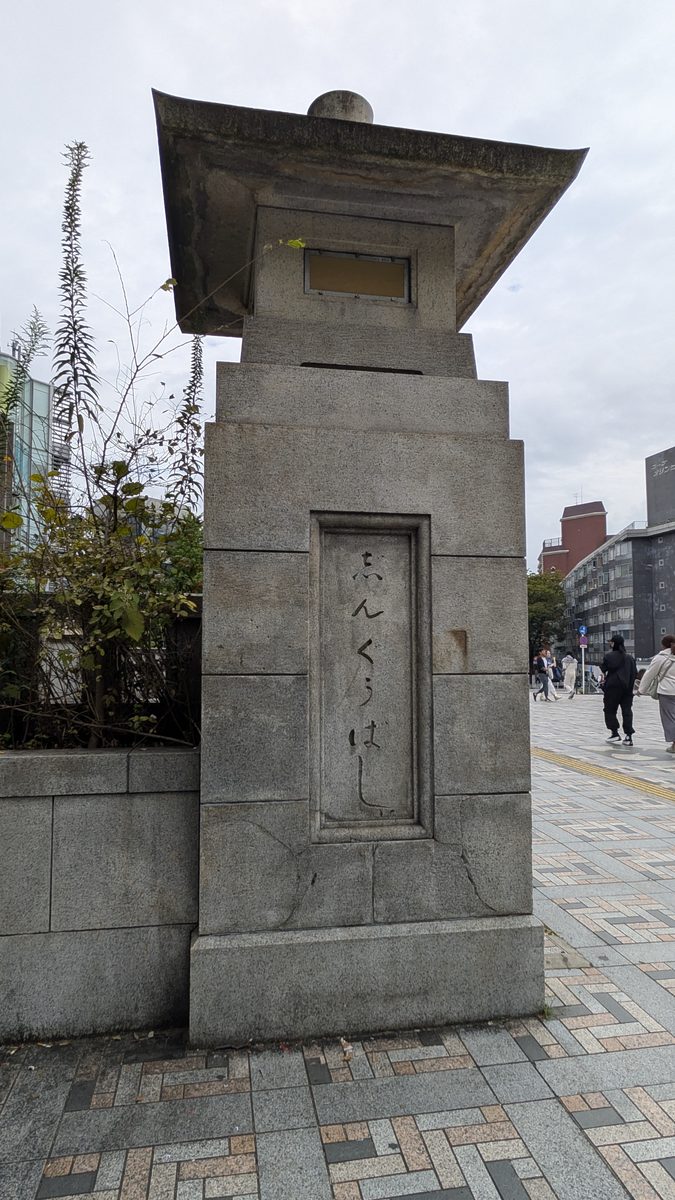
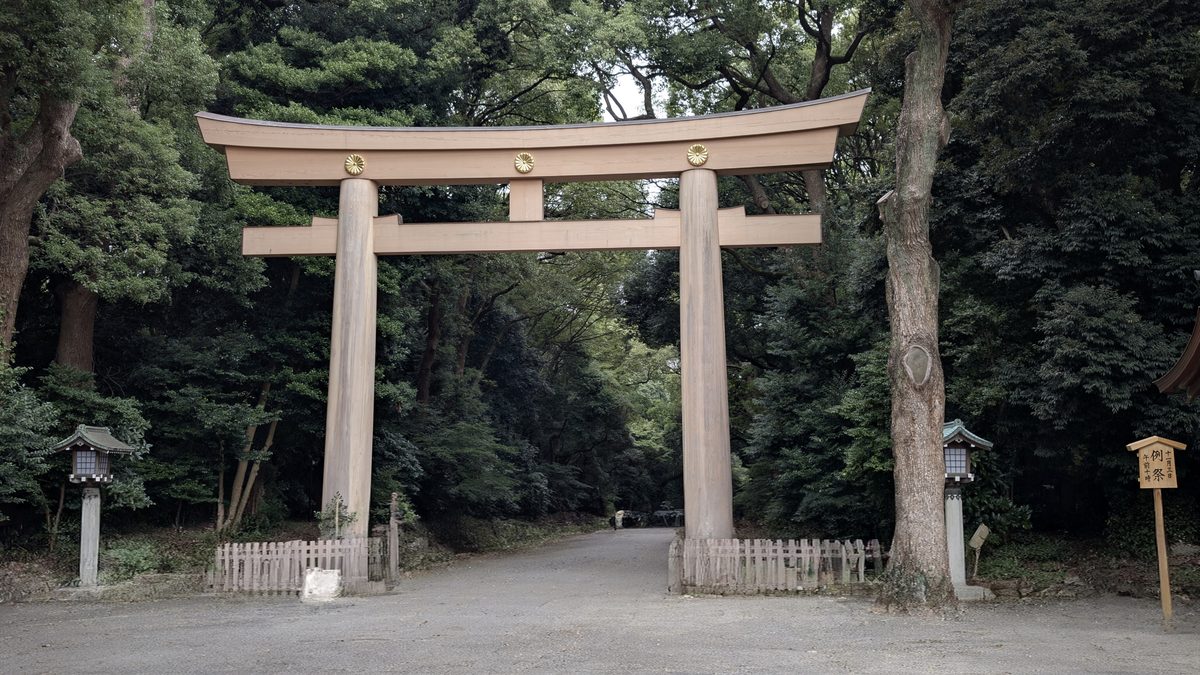
Step through the great wooden torii off Harajuku's busiest corner and the city simply… stops. Meiji Jingū, completed in 1920 and dedicated to Emperor Meiji and Empress Shōken, sits inside a man-made forest of some 100,000 trees donated from across Japan — a woodland engineered to look eternal. The gravel approach muffles everything; within a few hundred meters Tokyo's roar is gone.
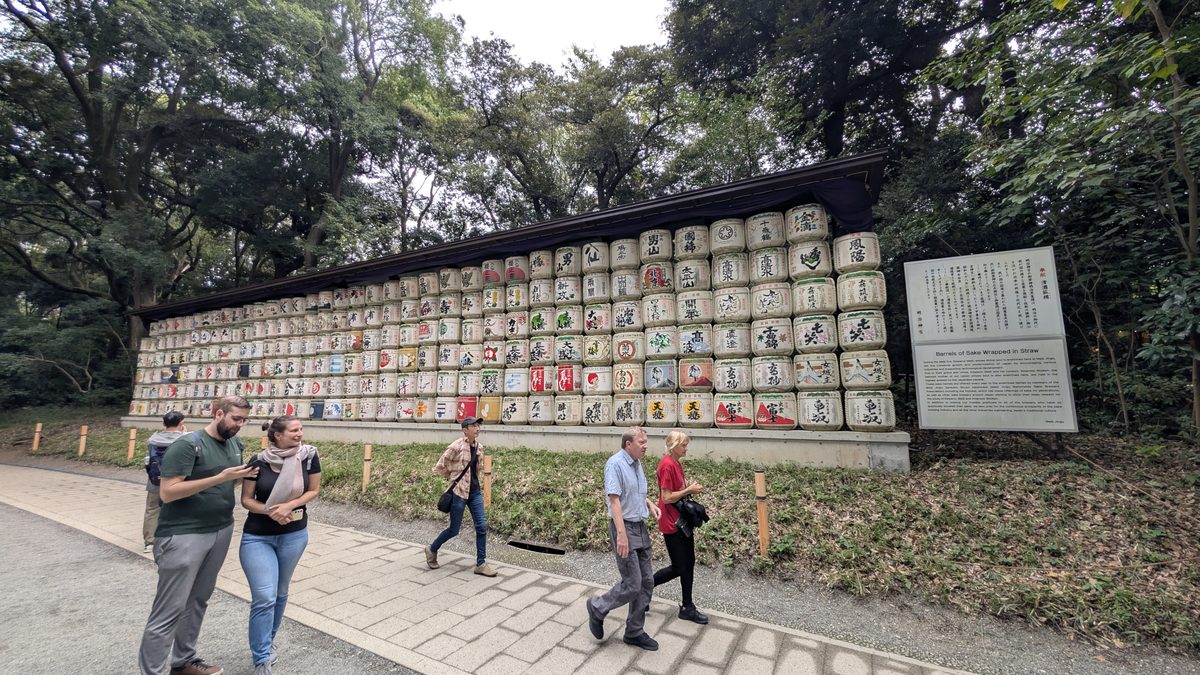
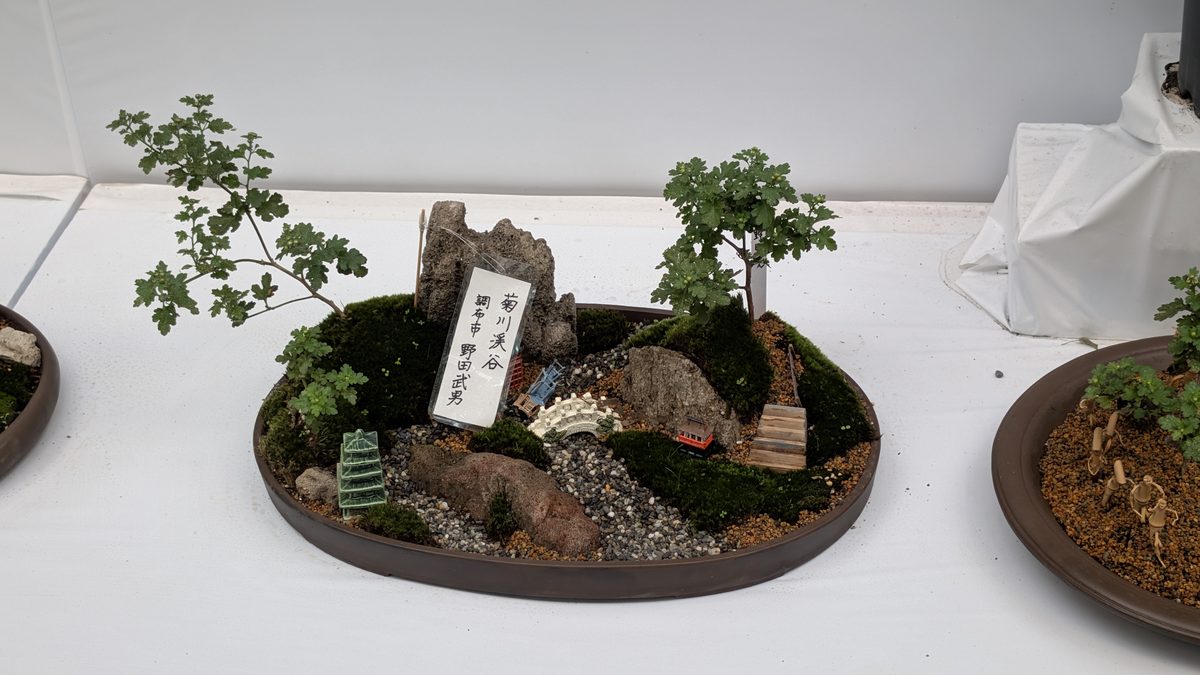
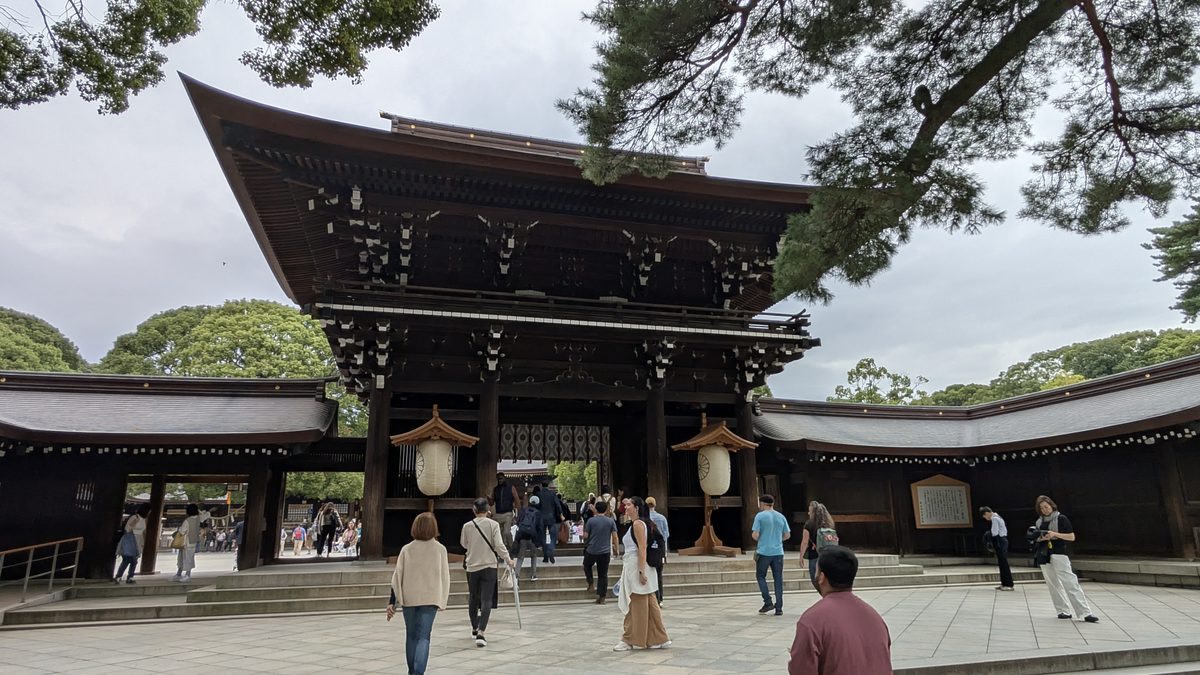
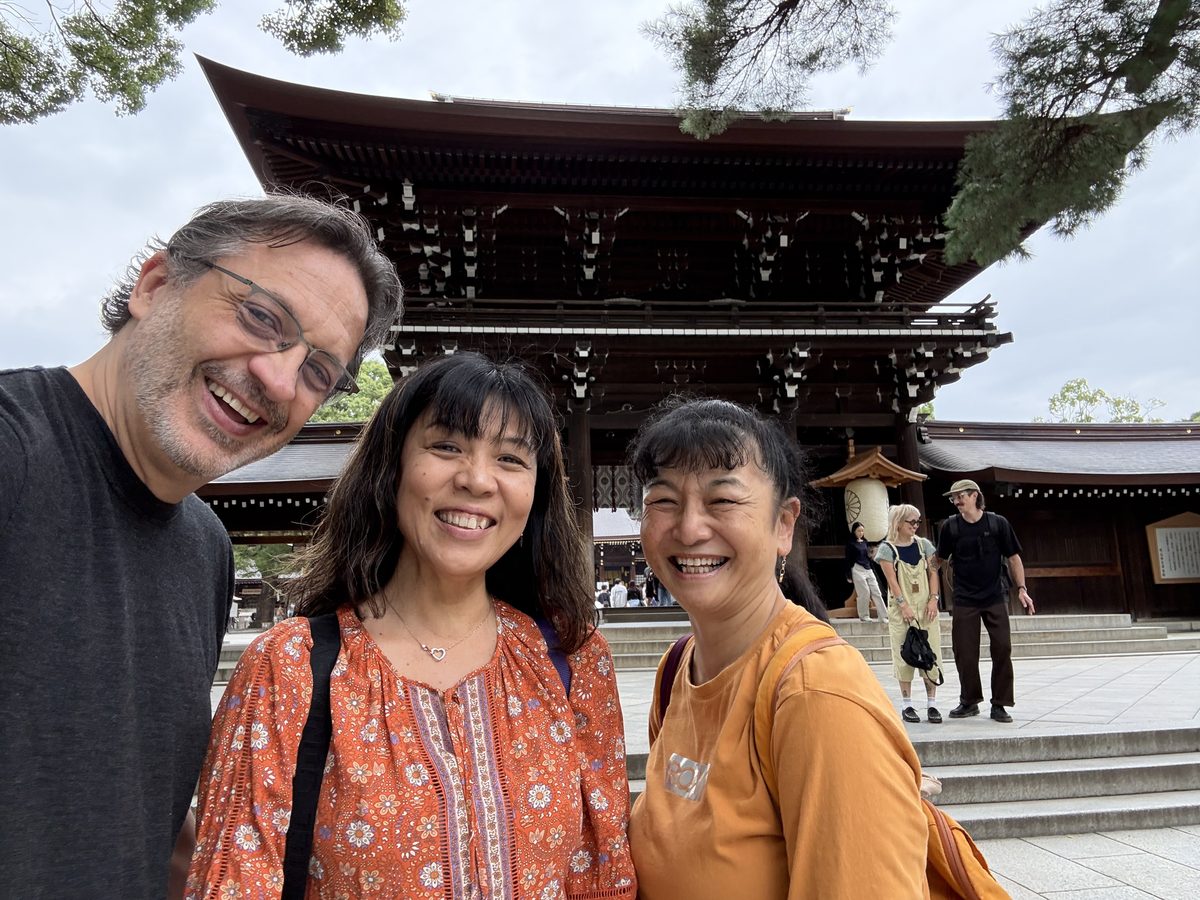
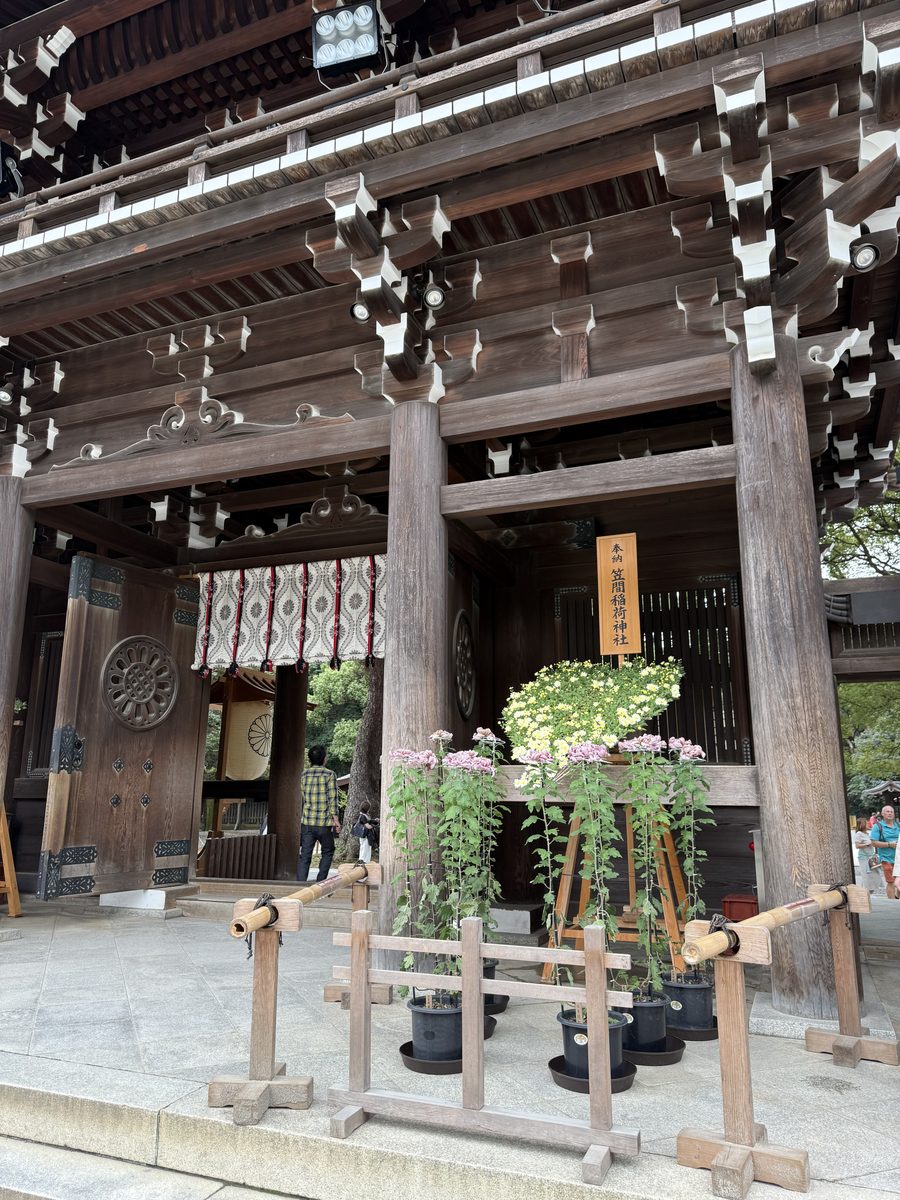
Along the path stand two famous walls of barrels. One is sake, straw-wrapped and offered each year by brewers nationwide; the other, facing it, is Burgundy wine — a nod to Emperor Meiji's role in opening Japan to the West. We caught the shrine in early-November quiet: the cypress otorii, an autumn chrysanthemum display, and the great Rōmon gate with its paper lanterns.
原宿のいちばん賑やかな角から大きな木の鳥居をくぐると、街の喧騒がふっと止まります。1920年に創建され、明治天皇と昭憲皇太后を祀る明治神宮は、全国から献木されたおよそ十万本の木でつくられた人工の森の中に佇みます — 永遠を装うよう設計された杜です。玉砂利の参道がすべての音を吸い込み、数百メートルも歩けば東京の轟音は消えています。
参道沿いには、名高い二つの樽の壁。ひとつは藁に包まれ、全国の蔵元が毎年奉納する酒。向かいに積まれるのは、明治天皇が日本を西洋へ開いた縁にちなむブルゴーニュのワイン樽です。私たちが訪れたのは十一月初めの静けさの中 — 檜の大鳥居、秋の菊花展、そして紙提灯を掲げる楼門。
Takeshita Street
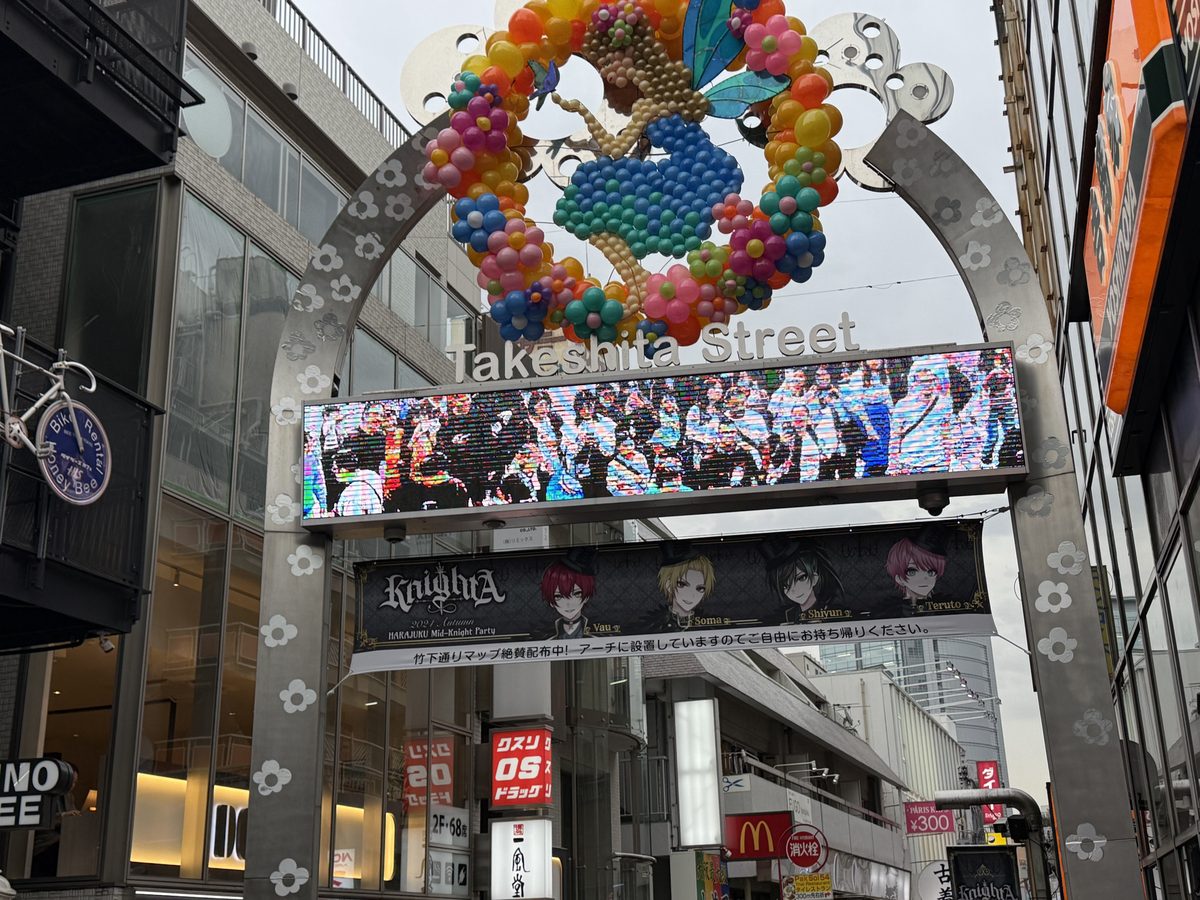
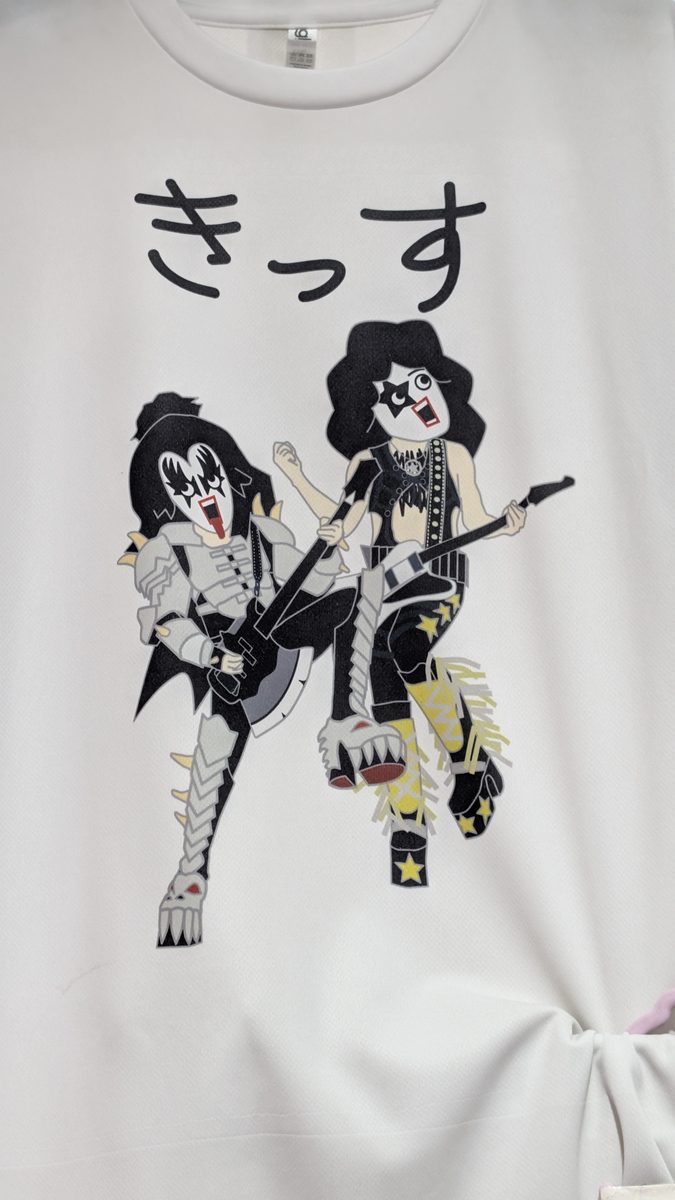
A few steps from the shrine's hush, Takeshita Street is the opposite of everything Meiji Jingū stands for — a narrow, neon-lit gauntlet of crêpe stands, sticker shops, and teenage fashion that has been Tokyo's youth-culture engine since the 1980s. The reward for wading in: a perfectly absurd KISS T-shirt, the band's name rendered phonetically in katakana — きっす — for a guitarist who appreciated the cross-cultural translation.
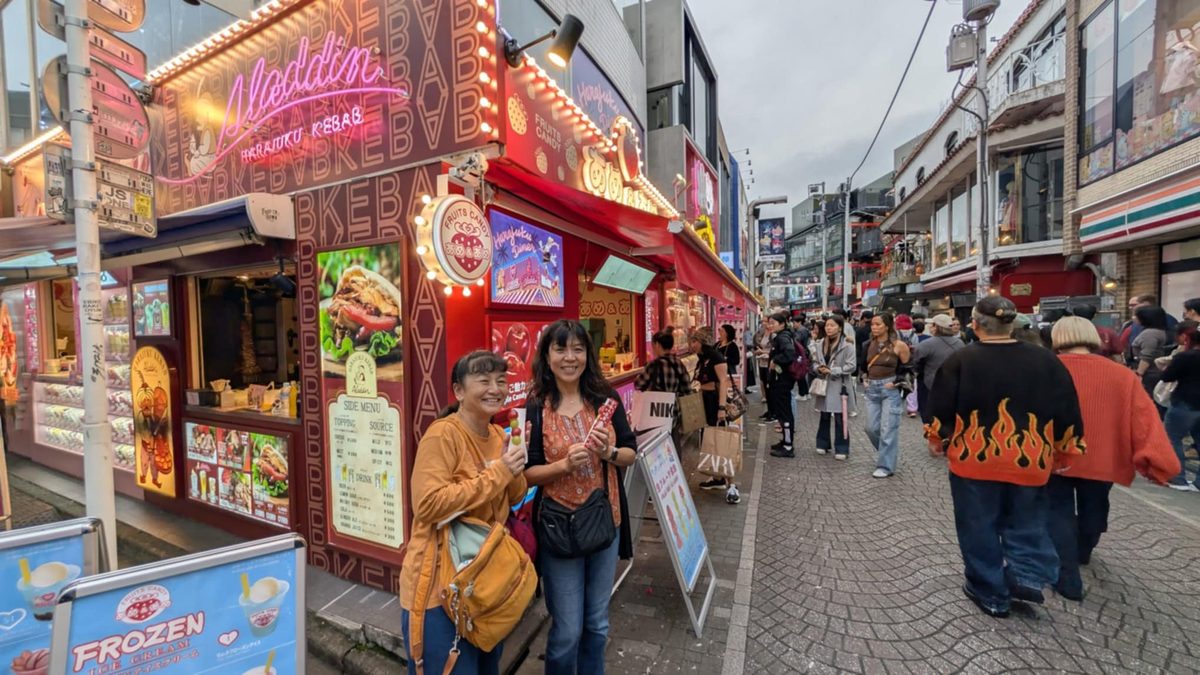
The street pulled us back a few days later for candied fruit at a kebab-and-crêpe stand near the arch — proof that one pass down Takeshita Street is never really enough.
神宮の静けさからほんの数歩、竹下通りは明治神宮が象徴するすべての正反対 — クレープの屋台、ステッカーショップ、十代のファッションがひしめく、狭くてネオンに照らされた通りです。1980年代以来、東京の若者文化を動かしてきたエンジン。人混みをかき分けたご褒美は、最高にばかげたKISSのTシャツ。バンド名がカタカナで「きっす」と音写されていて、文化を越えた翻訳をギタリストはいたく気に入りました。
数日後、この通りは私たちを再び呼び戻しました。アーチの近くのケバブ&クレープの屋台で味わった、フルーツ飴 — 竹下通りは、一度歩いただけでは終われない場所です。
Shibuya
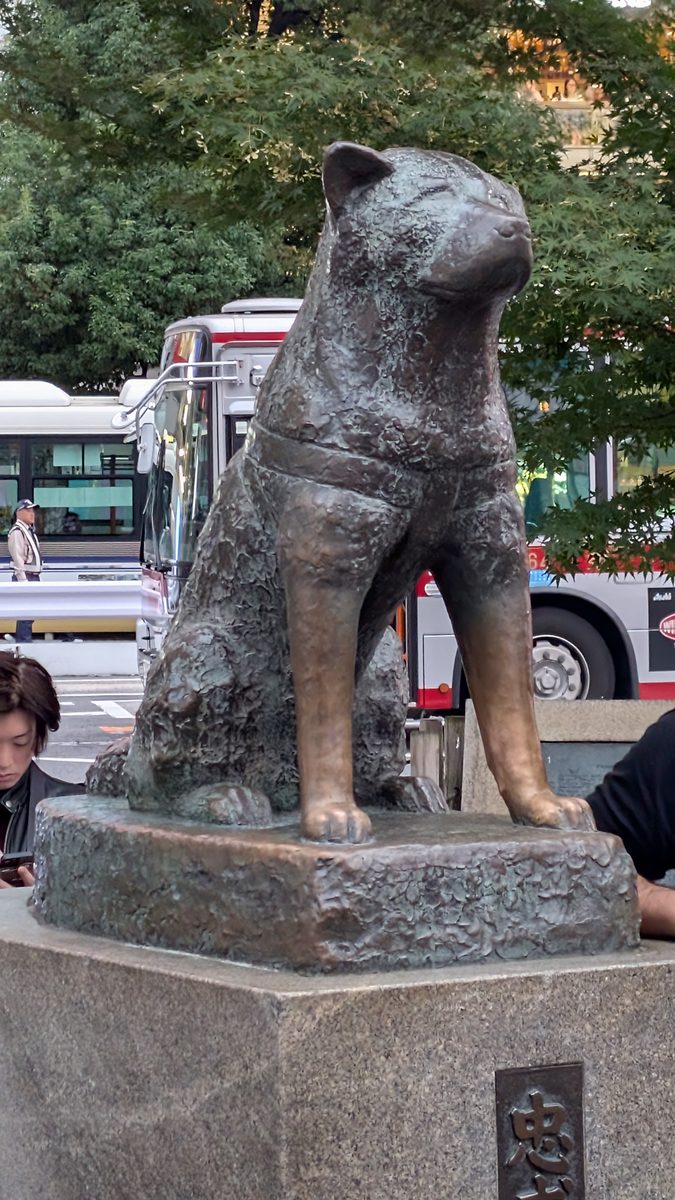
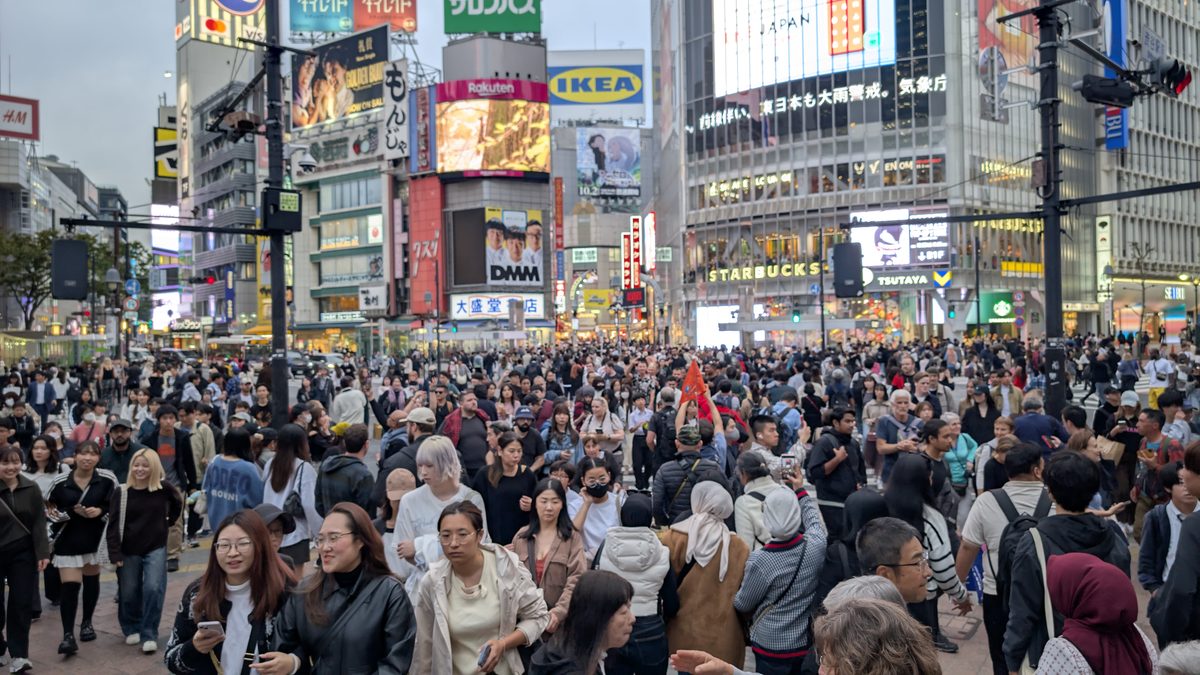
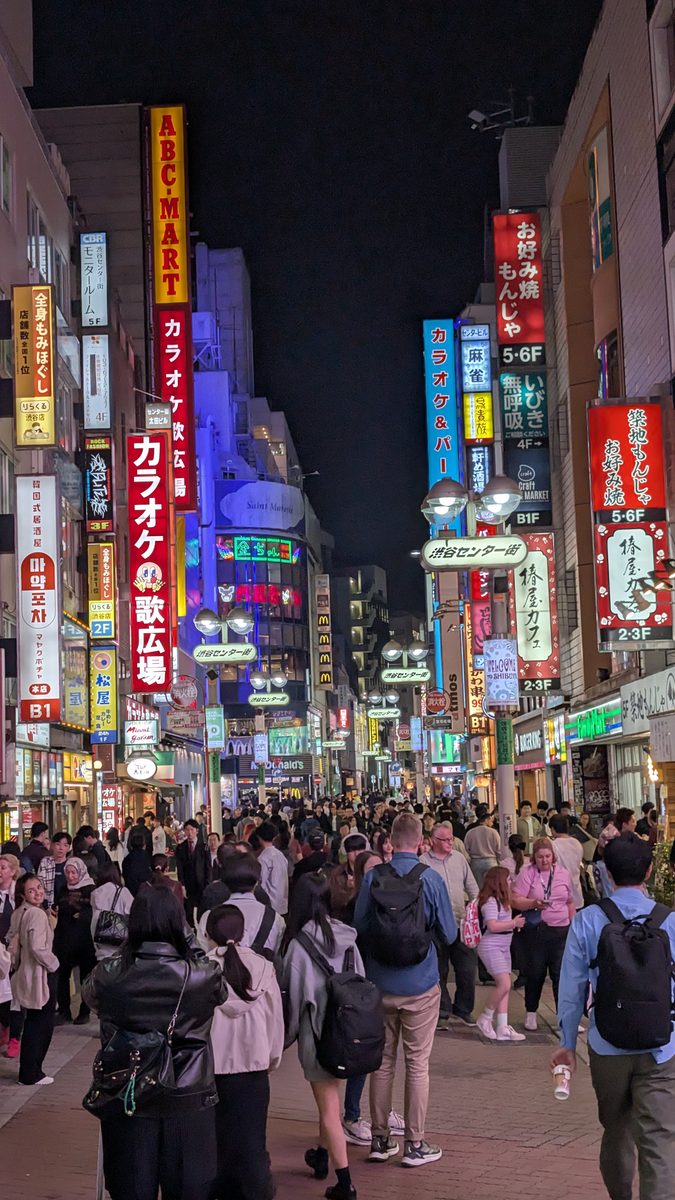
Outside Shibuya Station sits Hachikō, the bronze Akita who waited at this spot every evening for an owner who had died — and kept waiting, for nearly ten years, until his own death in 1935. He is now Tokyo's most beloved meeting point. A block away is the Shibuya Scramble, the choreographed chaos where every light turns red at once and a thousand people cross from all directions without touching — best seen at dusk, as Center-Gai's neon flickers on.
渋谷駅の前に座るのはハチ公 — 亡くなった飼い主を毎晩この場所で待ち続け、自らが世を去る1935年まで、十年近くも待ち続けた秋田犬の銅像です。今では東京でいちばん愛される待ち合わせ場所。一区画先には渋谷スクランブル交差点。すべての信号が一斉に赤になり、四方から千人が誰にも触れずに渡りきる、振り付けられたような混沌。夕暮れ、センター街のネオンが灯りはじめる頃がいちばんです。
Shinjuku
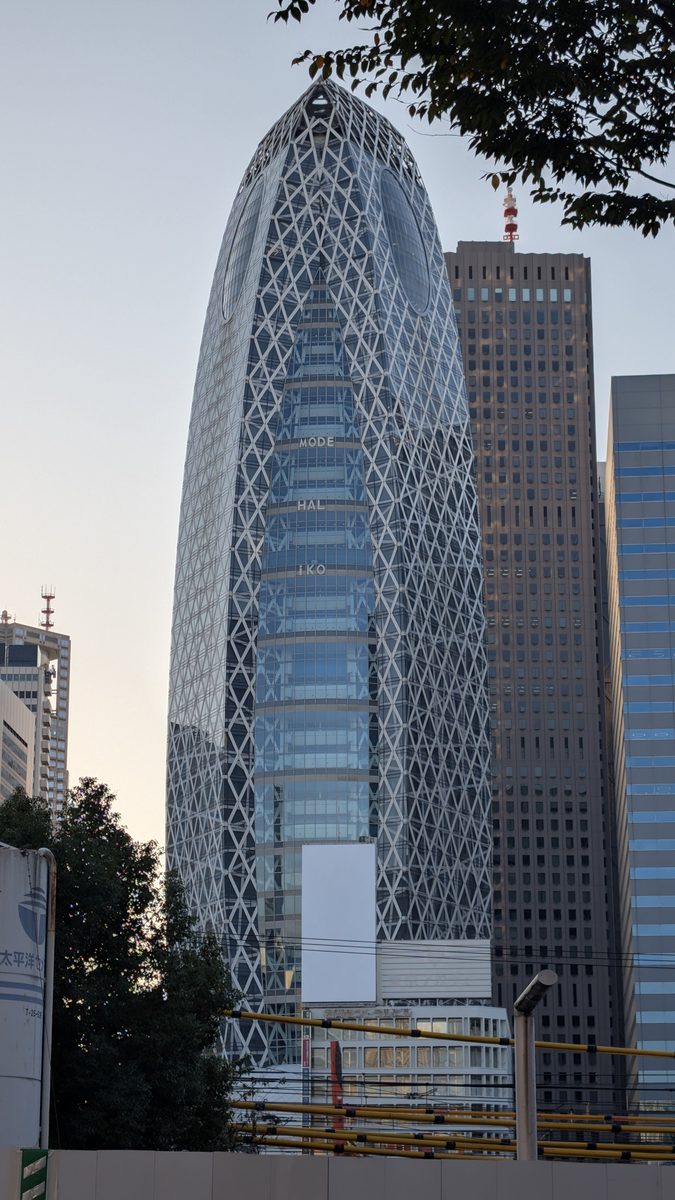
Shinjuku is Tokyo at full volume — the world's busiest railway station fanning out into skyscrapers, lantern-lit alleys, and department-store food halls. Overhead twists the Mode Gakuen Cocoon Tower, a 204-meter fashion school from 2008 whose white lattice really is meant to read as a cocoon nurturing the students inside.
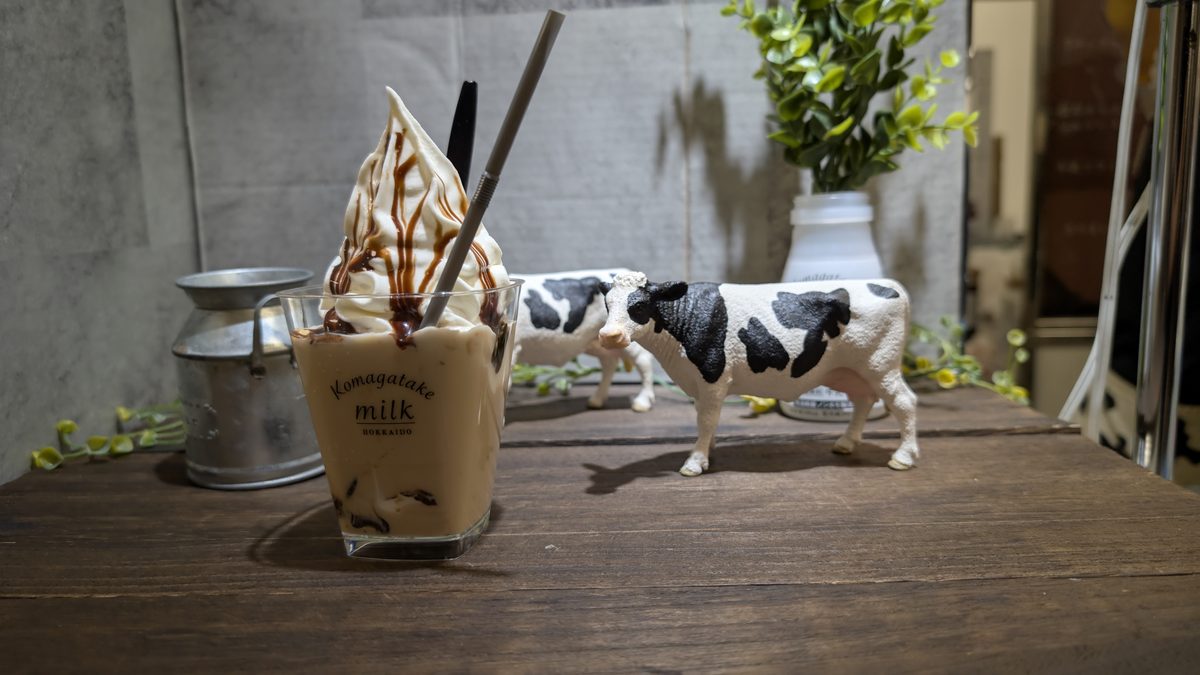
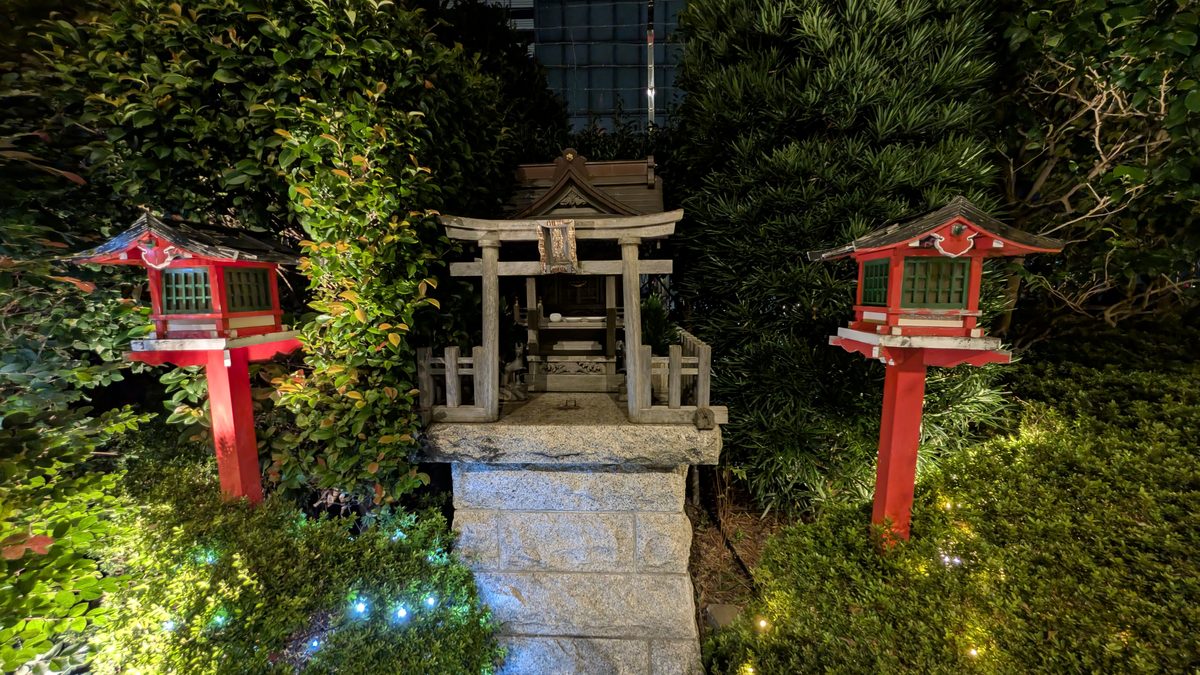
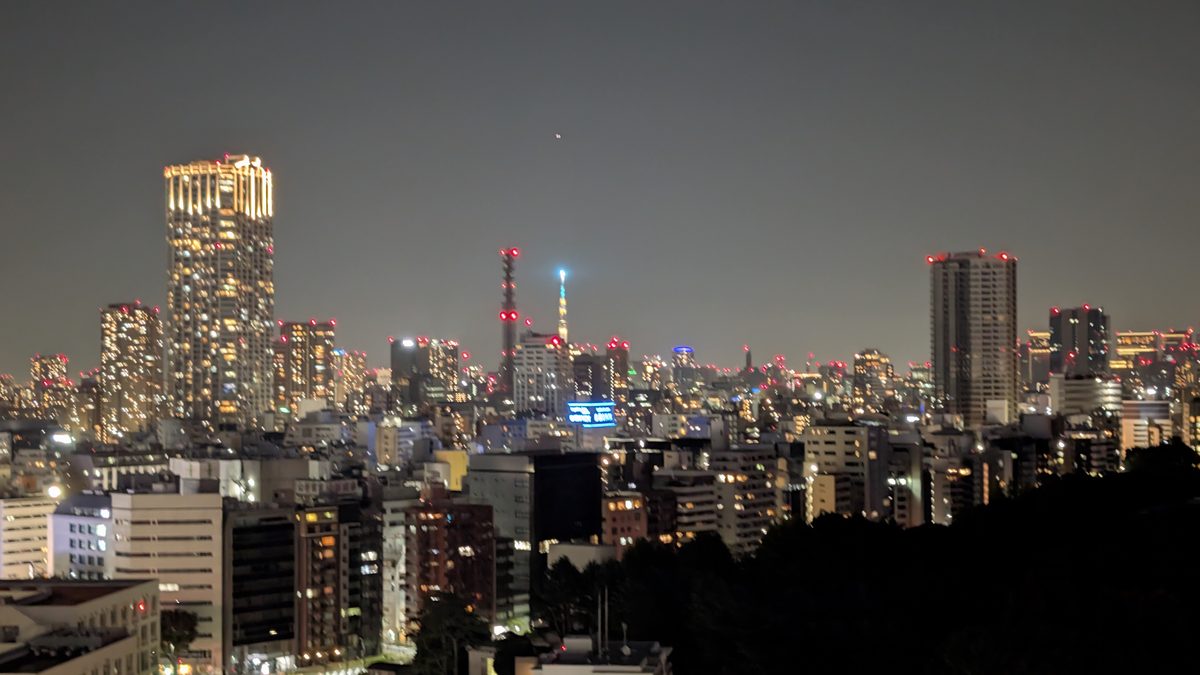
The day wandered between scales: a Hokkaido-milk soft serve guarded by toy cows, a tiny shrine glowing between office towers after dark, a skyline view with Skytree pinned to the horizon, and a string-lit dinner that ended the evening just the two of us.
新宿は、音量を上げきった東京 — 世界一利用者の多い駅が、高層ビル群、提灯の灯る路地、デパートの食品フロアへと扇のように広がります。頭上にねじれて建つのはモード学園コクーンタワー。2008年に完成した高さ204メートルのファッション専門学校で、白い格子は本当に、中で学ぶ学生を包む繭(コクーン)を表しているのです。
その一日は、大小さまざまな風景の間をさまよいました — おもちゃの牛に見守られた北海道ミルクのソフトクリーム、日が暮れてビルの谷間に灯る小さな祠、地平線にスカイツリーを留めた夜景、そして豆電球の下、二人だけで締めくくった夕食。

The Imperial Palace
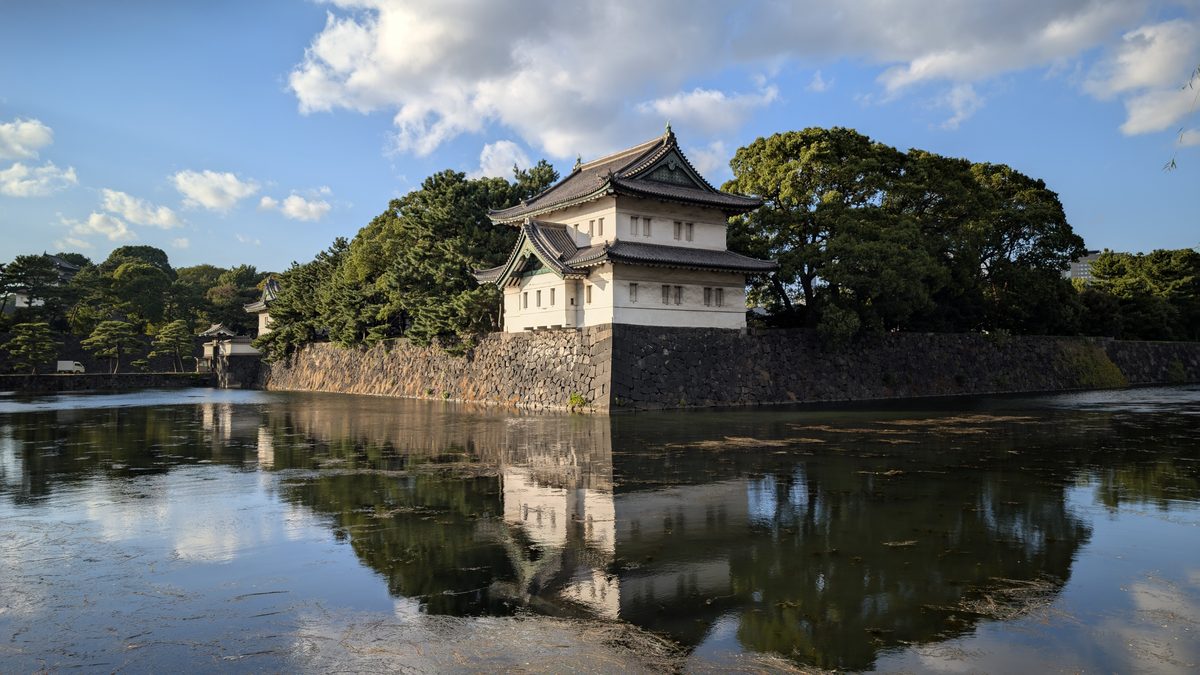
The Imperial Palace stands on the bones of Edo Castle, the Tokugawa shogunate's seat and once the largest fortress on earth. The shōguns are gone and the main keep was never rebuilt, but the moats, cyclopean stone walls, and white-plastered yagura watchtowers remain, mirrored in still water beneath an open sky.
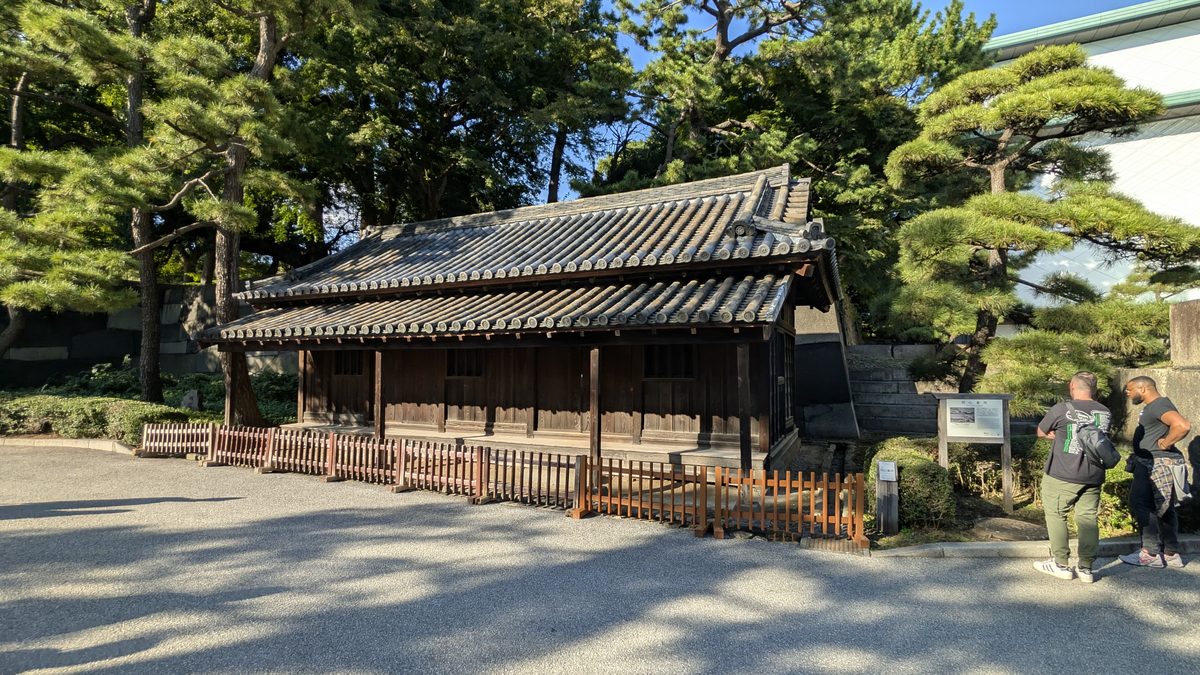
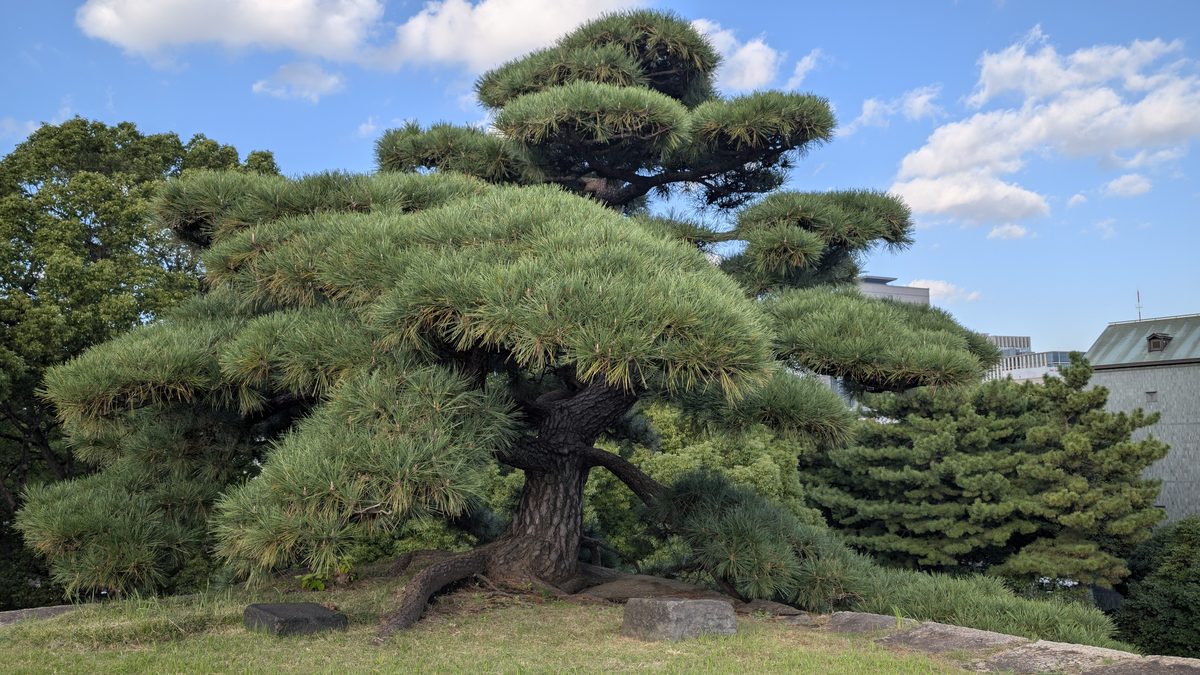
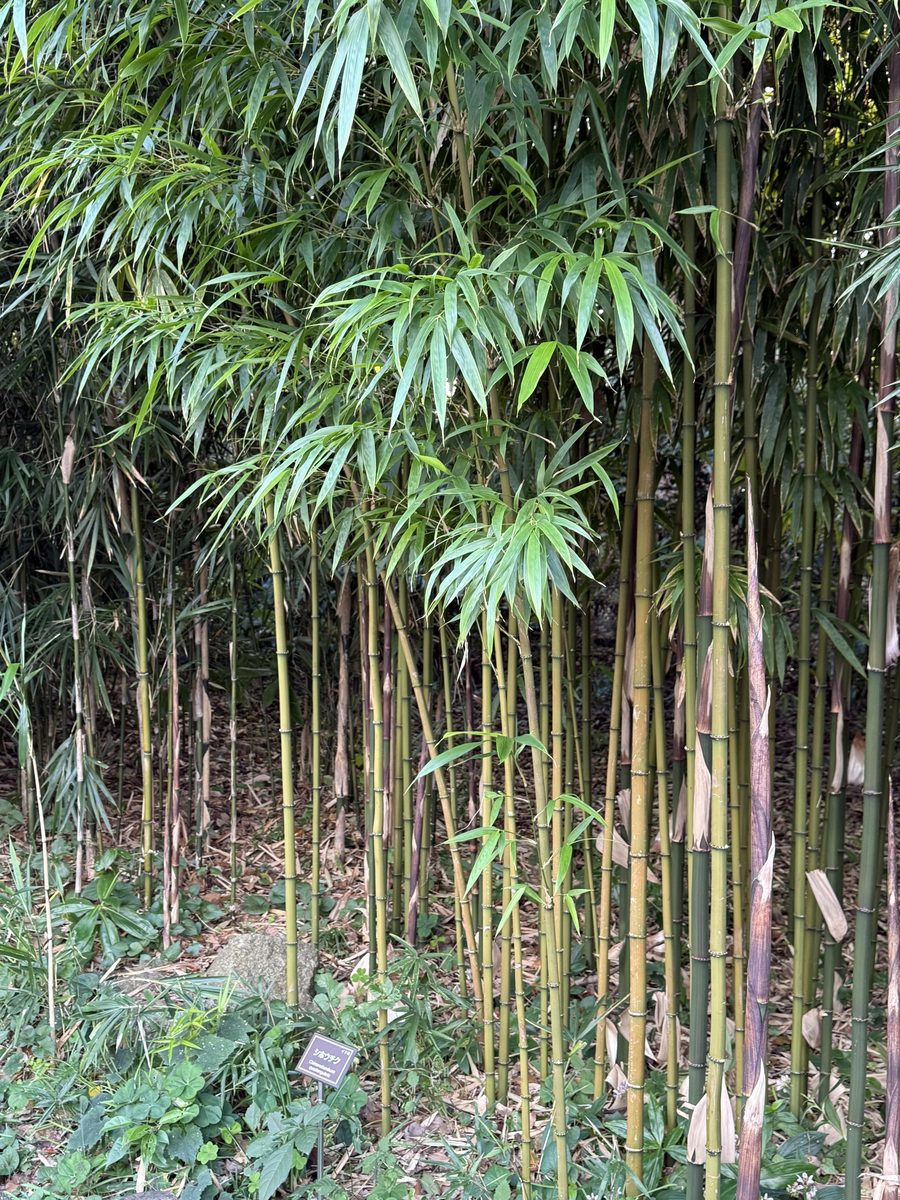
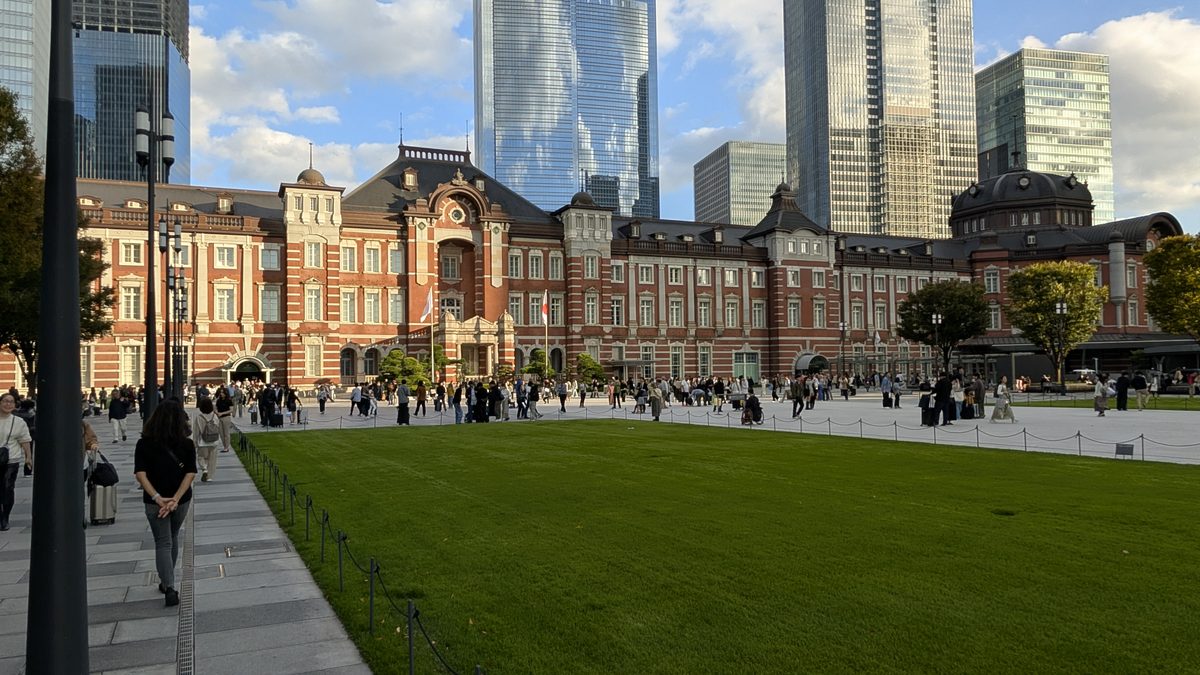
The free East Gardens are a lesson in restraint: a wooden guardhouse, a black pine pruned over generations into a living sculpture, a grove of labeled bamboo. The morning's walk drifted east and ended at the red-brick 1914 face of Tokyo Station — architect Tatsuno Kingo's Marunouchi masterpiece, lovingly restored.
皇居は、江戸城の骨格の上に建っています — 徳川幕府の居城であり、かつては地上最大の城郭でした。将軍たちは去り、天守が再建されることはありませんでしたが、堀、巨石の石垣、白漆喰の櫓(やぐら)は今も残り、開けた空の下、静かな水面に映ります。
無料で入れる東御苑は、抑制の美の手本 — 木造の番所、何世代もかけて生きた彫刻のように仕立てられた黒松、名札のついた竹林。その朝の散歩は東へと流れ、1914年築、赤れんがの東京駅の駅舎で終わりました。辰野金吾による丸の内の傑作を、丁寧に復原したものです。
Tokyo National Museum
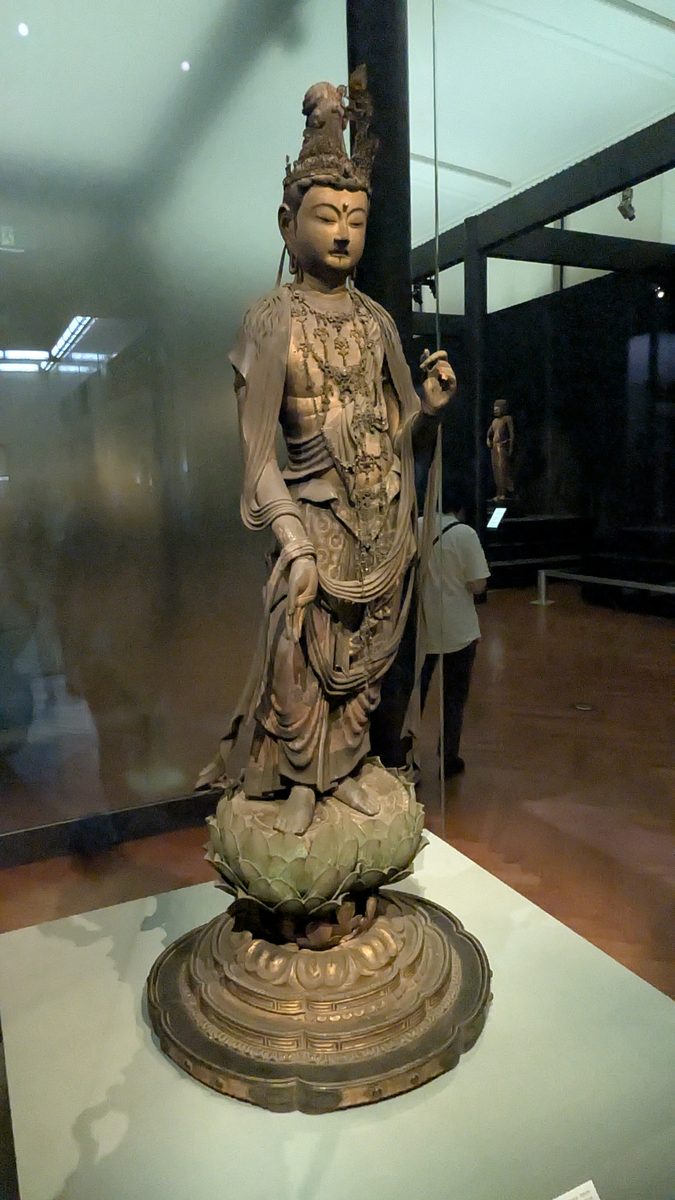
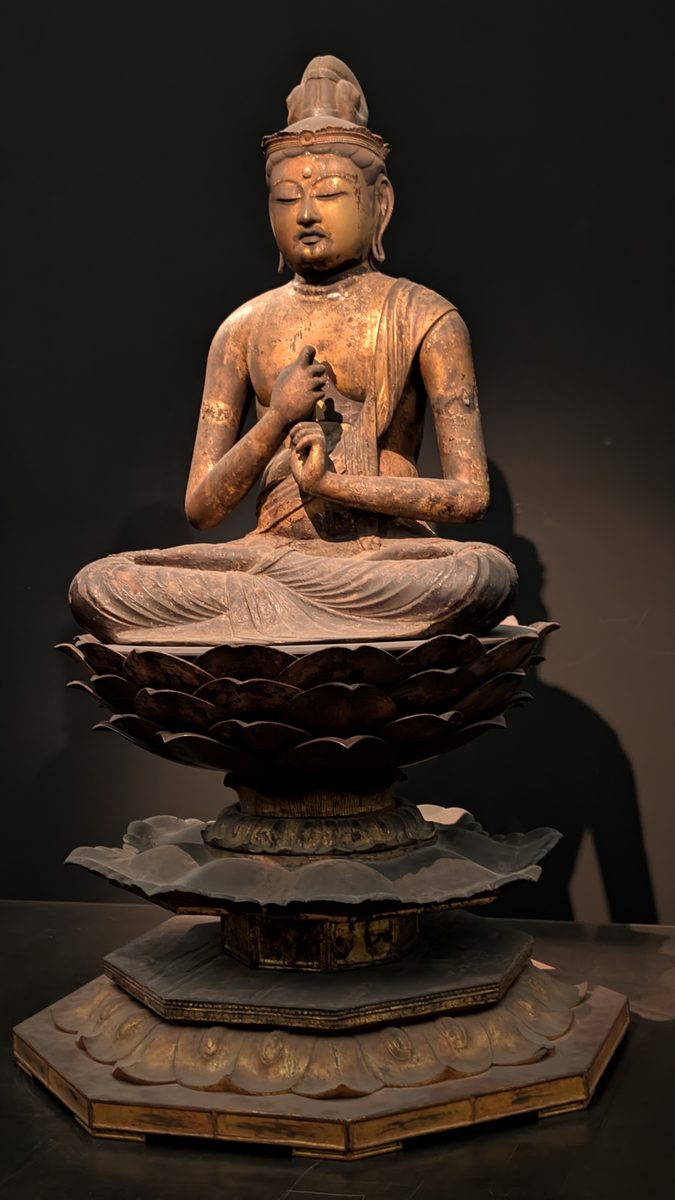
In the leafy expanse of Ueno Park sits the Tokyo National Museum — founded in 1872, the oldest and largest museum in Japan, holding the country's deepest collection of art and antiquities. Its halls move quietly through a thousand years: serene wooden Buddhas and bodhisattvas perched on lotus thrones, their gilding worn back to warm bare wood.
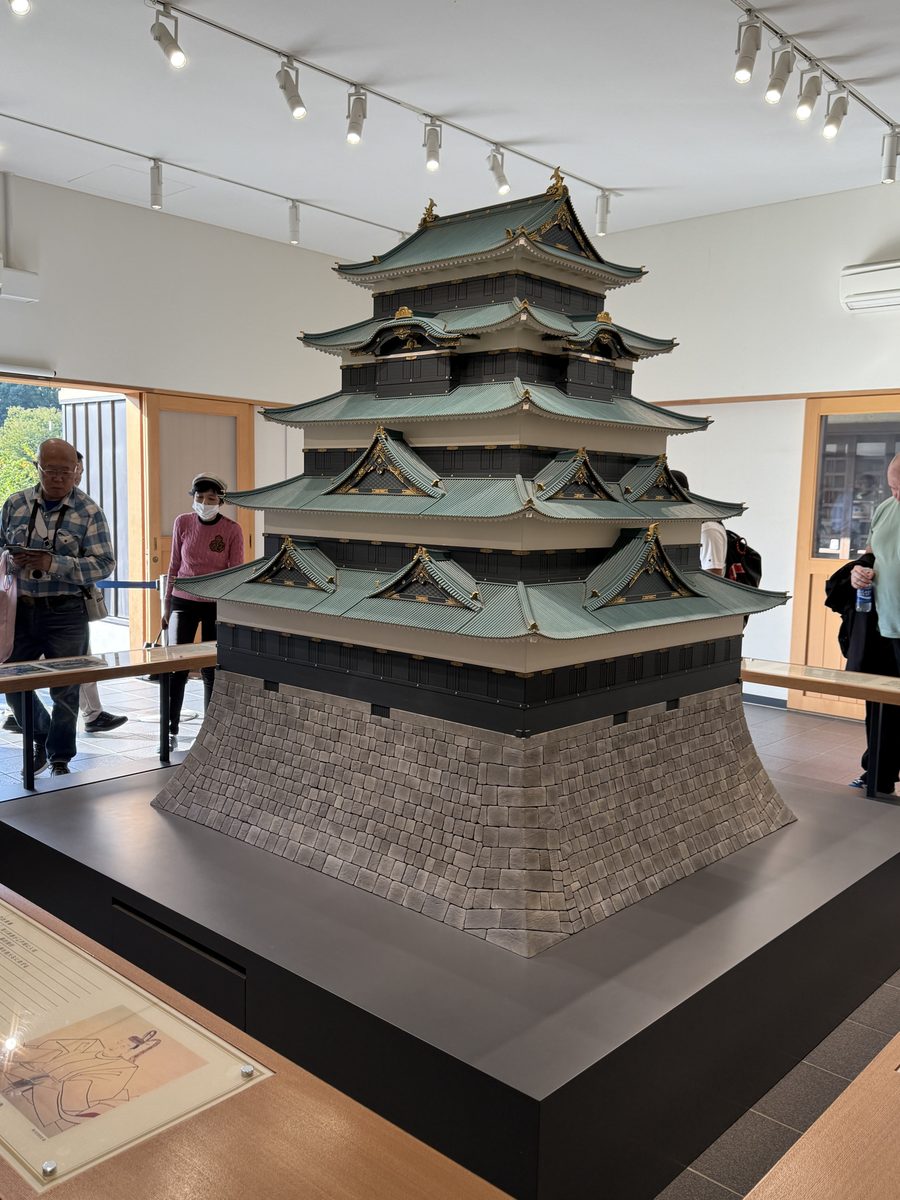
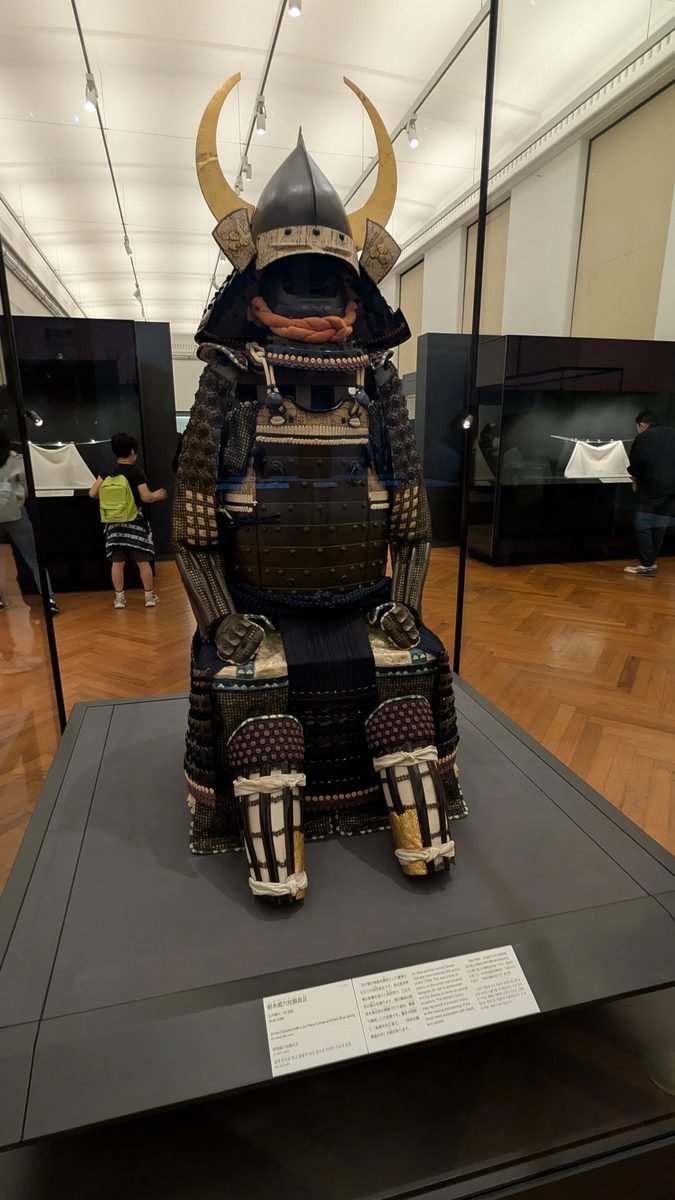
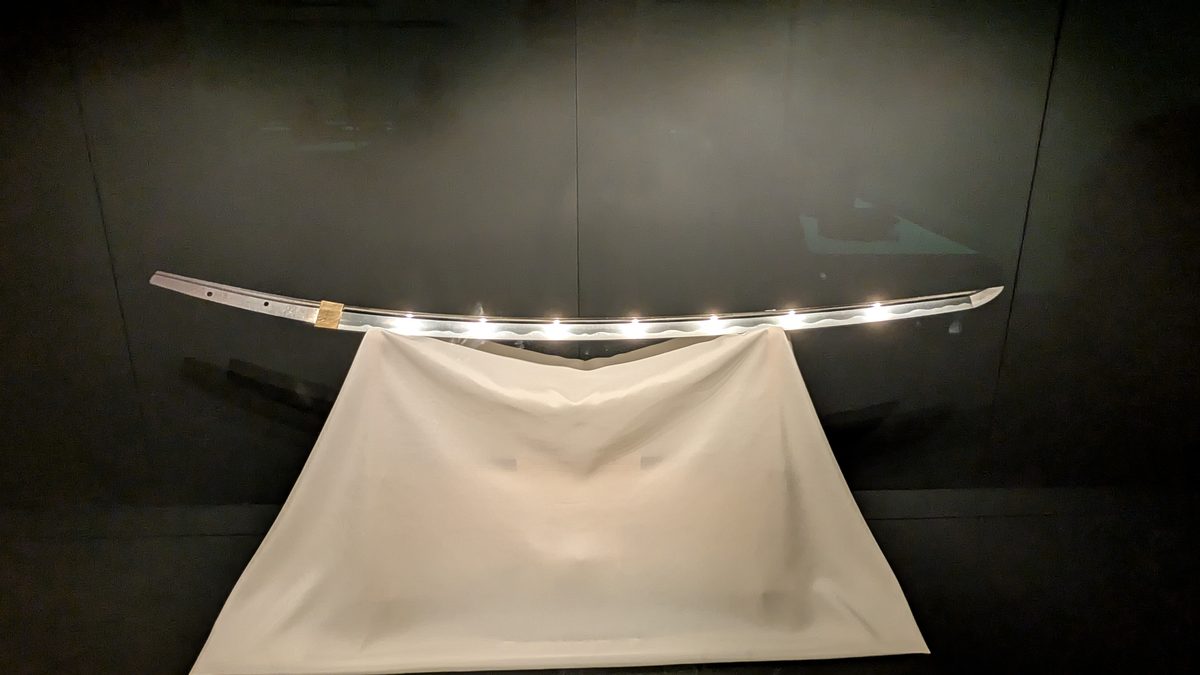
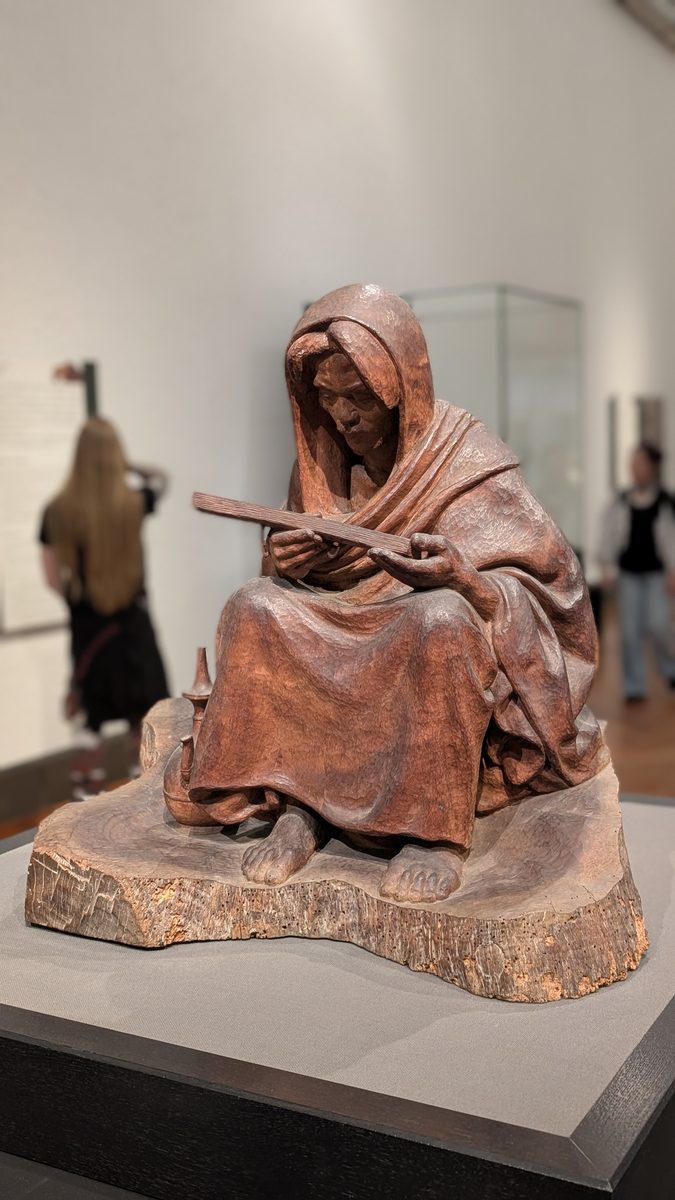
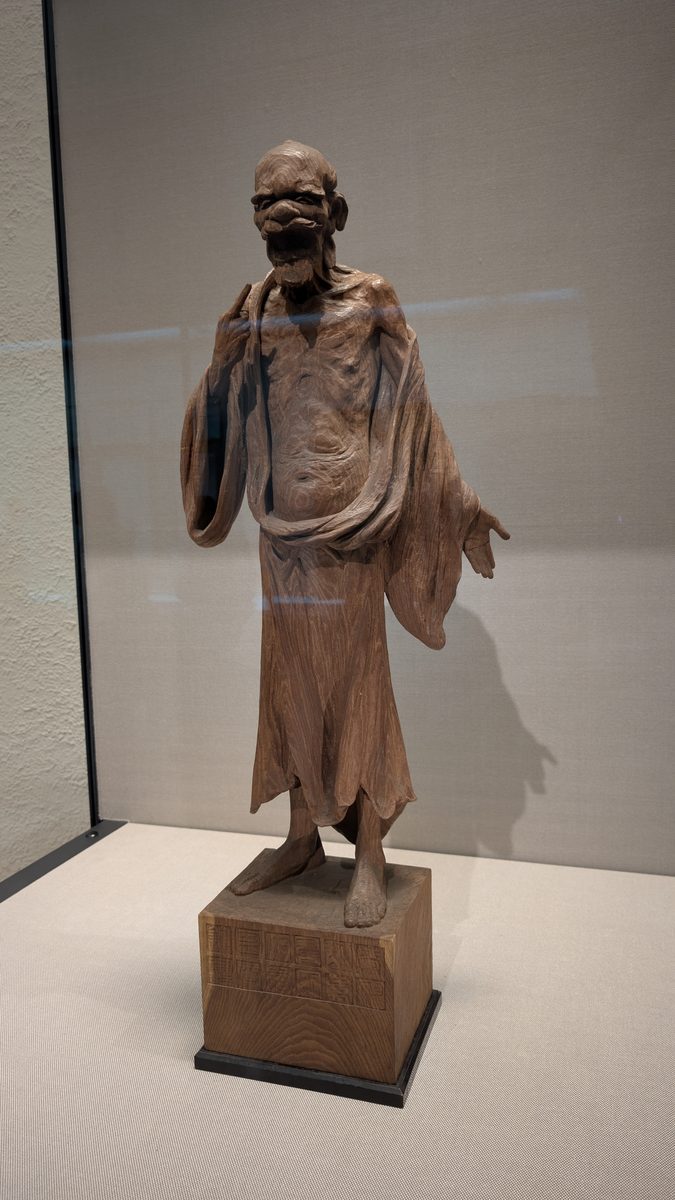
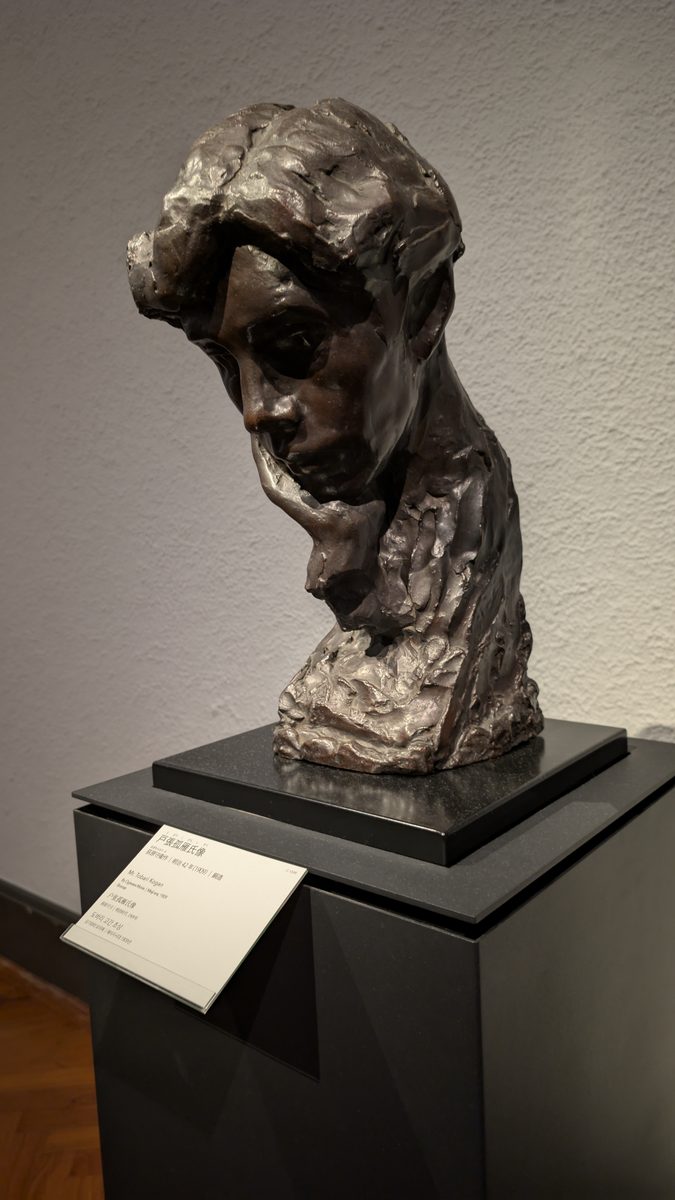
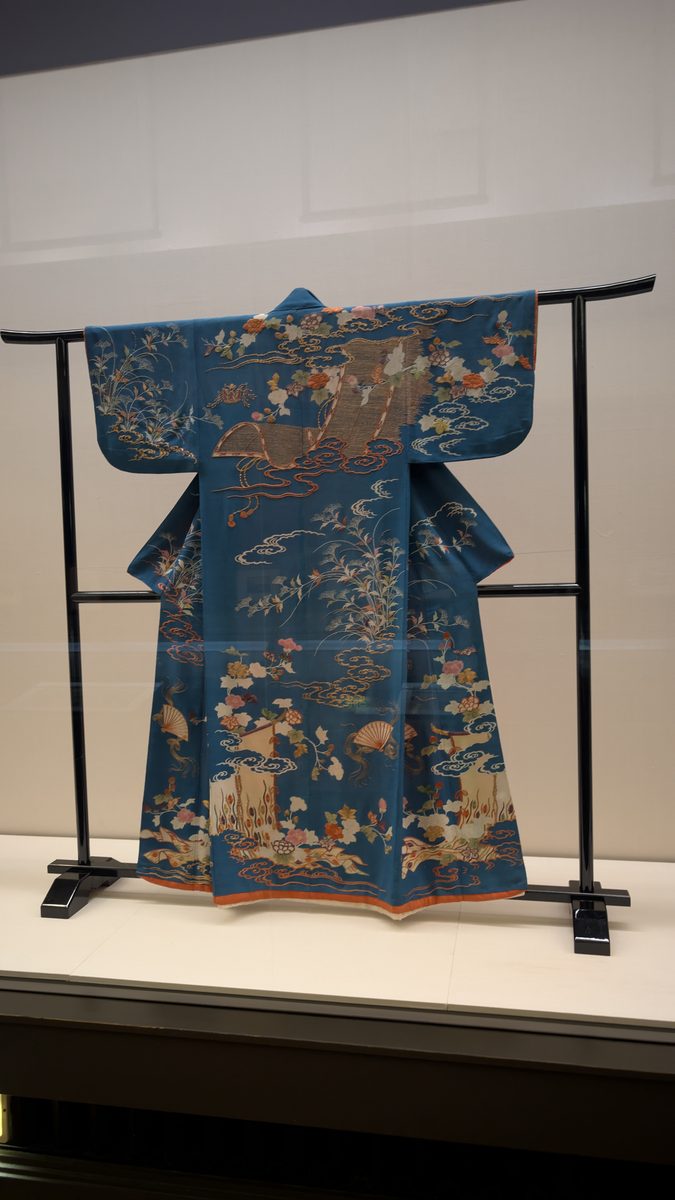
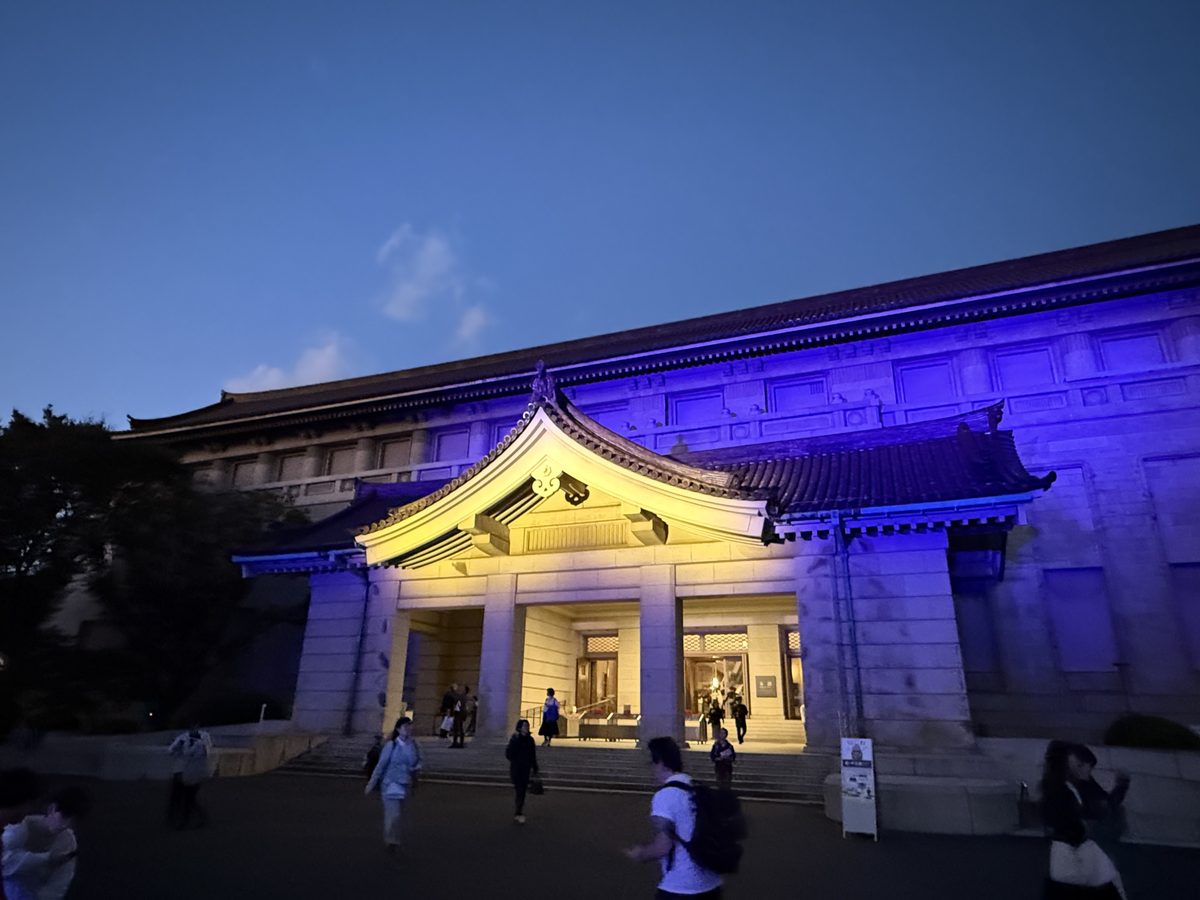
Further in, the warrior's world — a suit of samurai armor crowned with golden horns, a single tachi blade laid on white cloth like a line of light. Then the human and the woven: a carved hooded monk, a gaunt ascetic, a modern bronze, and a blue silk kimono spread like a painting. A detailed scale model of a castle keep anchors the visit, and by the time we stepped back outside, the museum's own tiled roofline had been lit gold and blue against the dusk.
緑あふれる上野公園の一角に建つのが東京国立博物館 — 1872年創立、日本最古にして最大の博物館で、この国で最も奥深い美術・工芸のコレクションを収めています。その展示室は、千年の時を静かにたどります。蓮の台に座す穏やかな木造の仏や菩薩、金箔は剥がれて温かな素地の木肌をのぞかせています。
奥へ進むと、武士の世界 — 金色の角をいただく甲冑、白い布の上に一筋の光のように置かれた太刀。そして人の姿と織りの美 — 頭巾をかぶった僧の彫像、痩せた行者、近代のブロンズ、絵のように広げられた青い絹の着物。城の天守の精巧な模型がこの訪問を締めくくり、外へ出る頃には、博物館自慢の瓦屋根が夕闇の中、金と青にライトアップされていました。
Tokyo Skytree
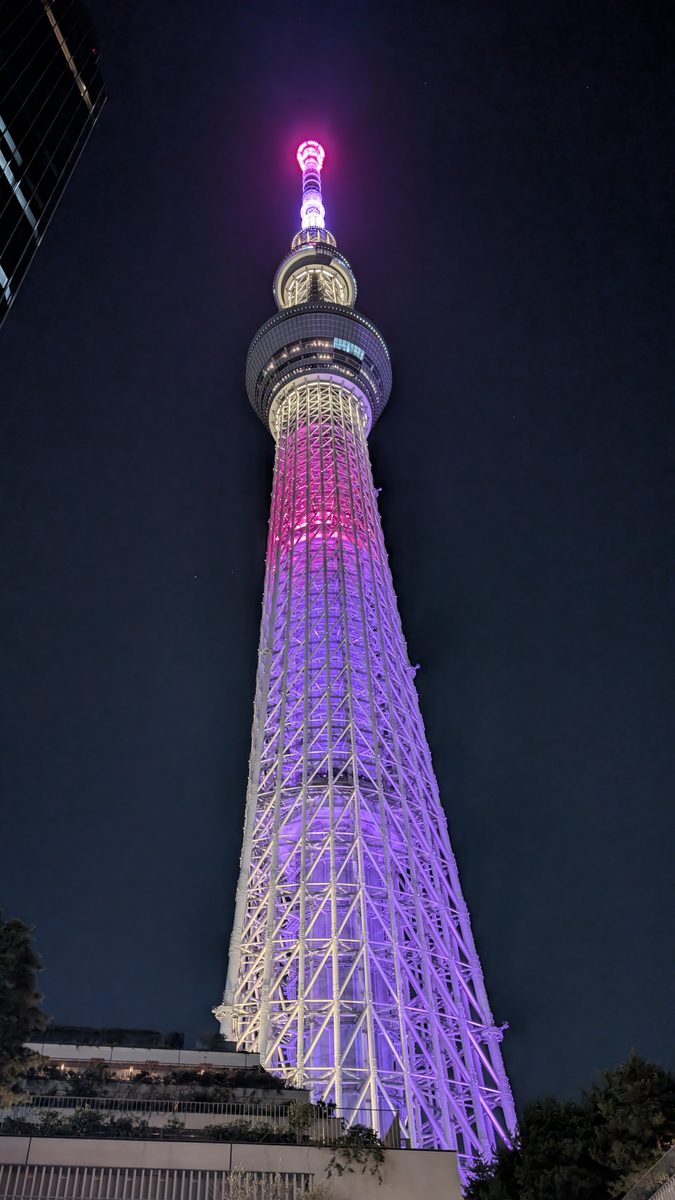
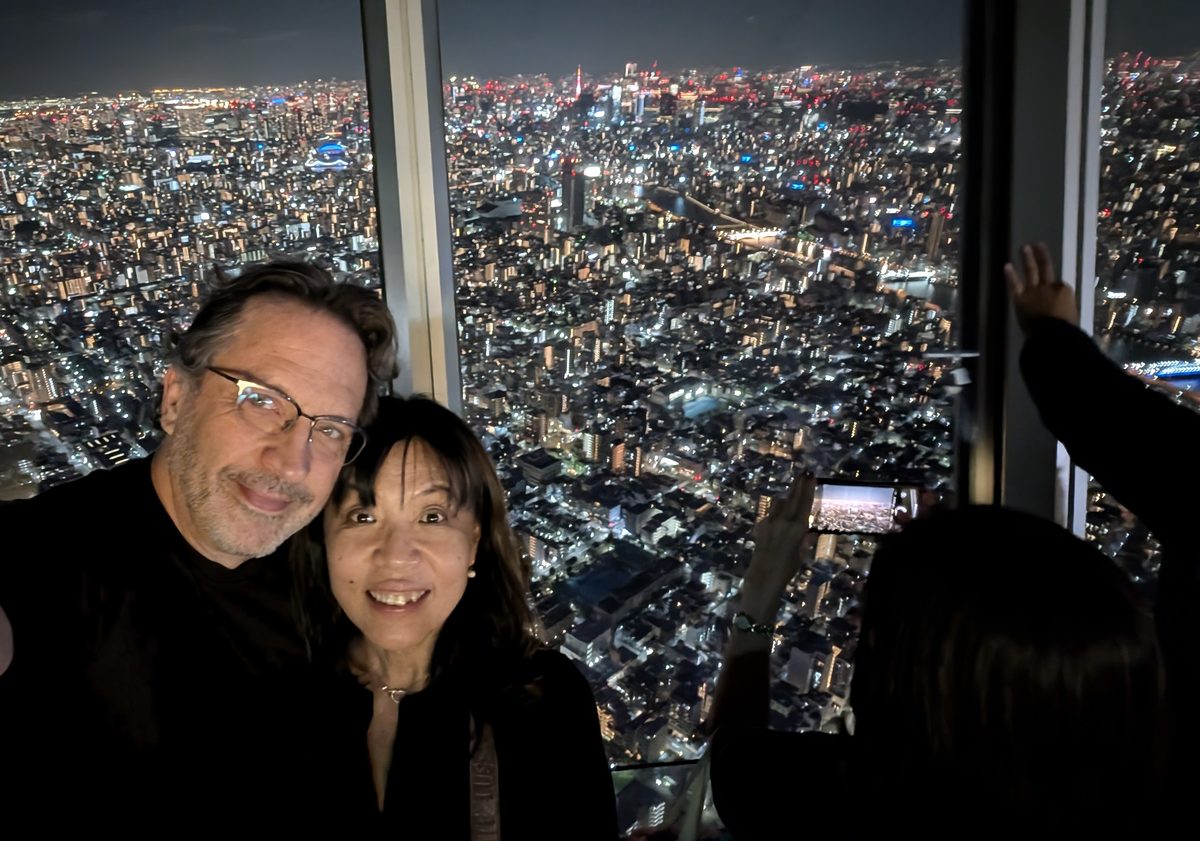
At 634 meters, Tokyo Skytree is the tallest tower in the world and Tokyo's broadcasting spine — a lattice of steel that lights each night in alternating themes, the violet "Miyabi" for elegance among them. From the observation deck the city becomes an endless circuit board of light spilling to every horizon, and the two of us pressed to the glass somewhere near the top of it all.
高さ634メートル、東京スカイツリーは世界一高いタワーであり、東京の電波塔。鋼の格子が毎夜テーマを変えて灯り、その中には雅(みやび)を表す紫の光もあります。展望デッキから見下ろせば、街はどの地平線へも光をこぼし続ける果てしない基板になり、そのてっぺん近くで、二人ガラスに顔を寄せました。
着物 — Kimono
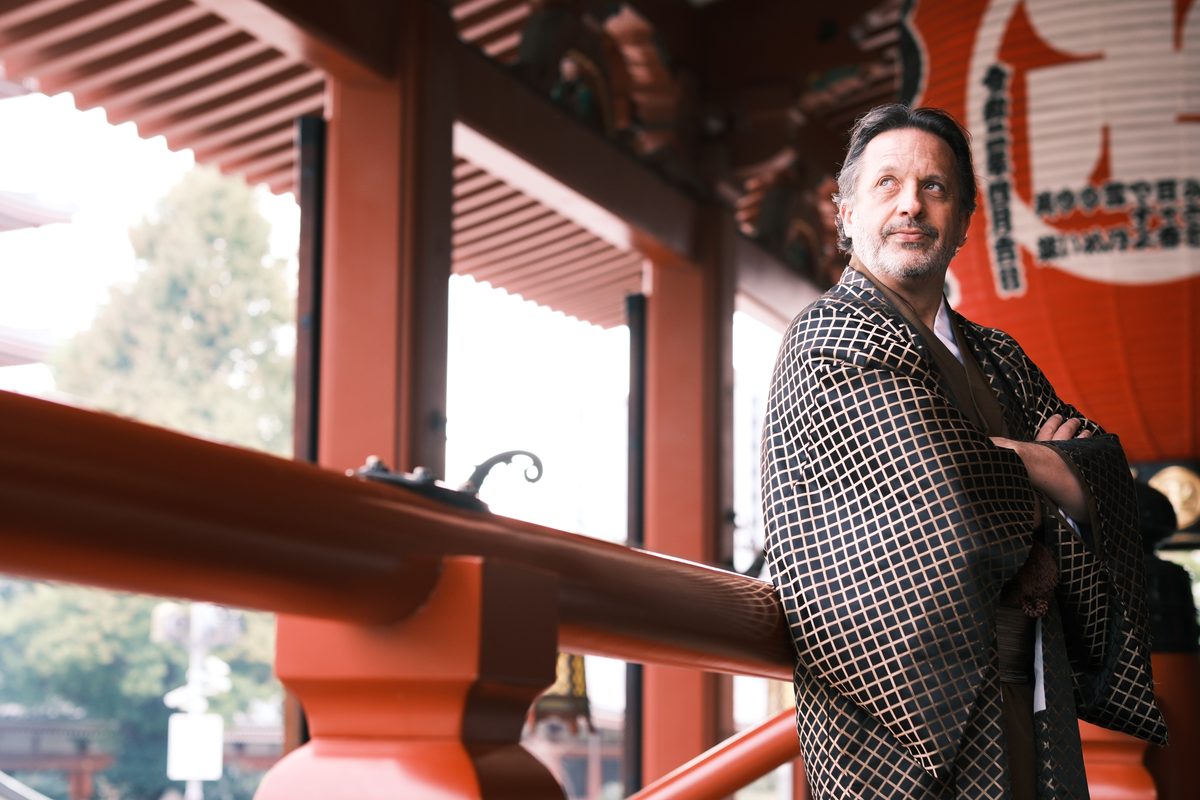
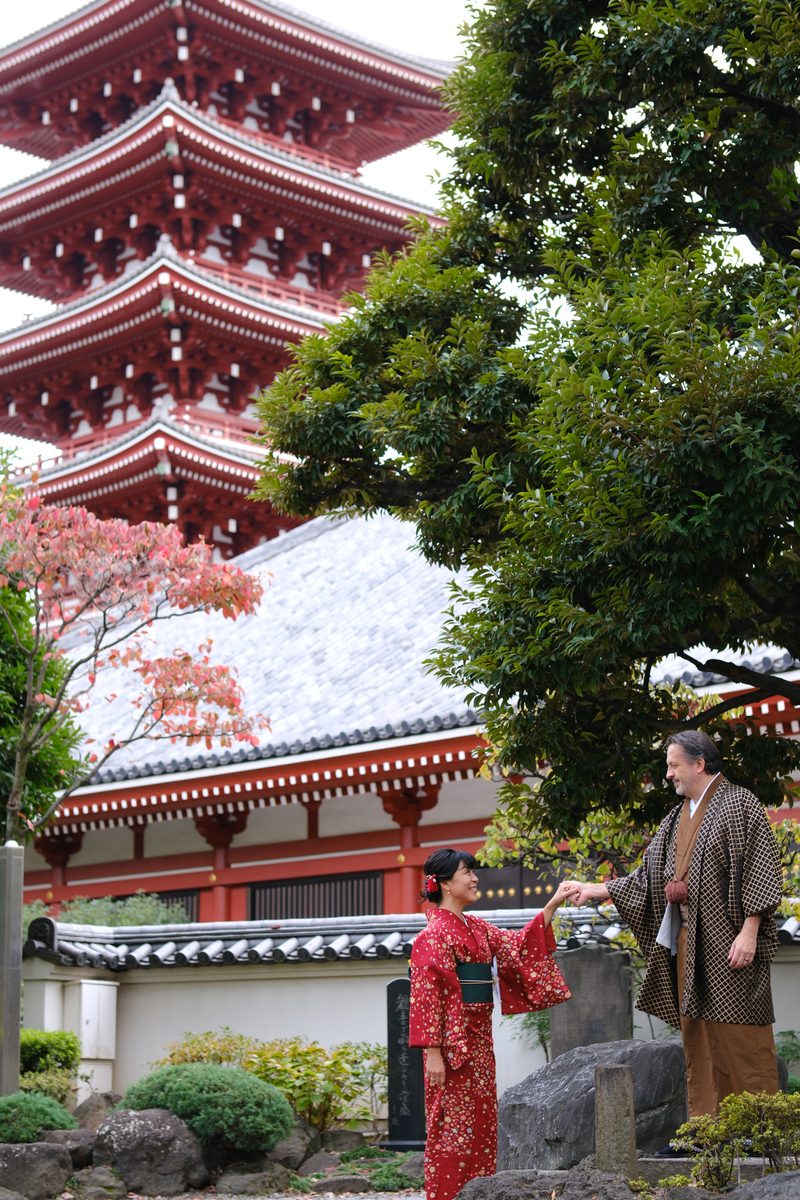
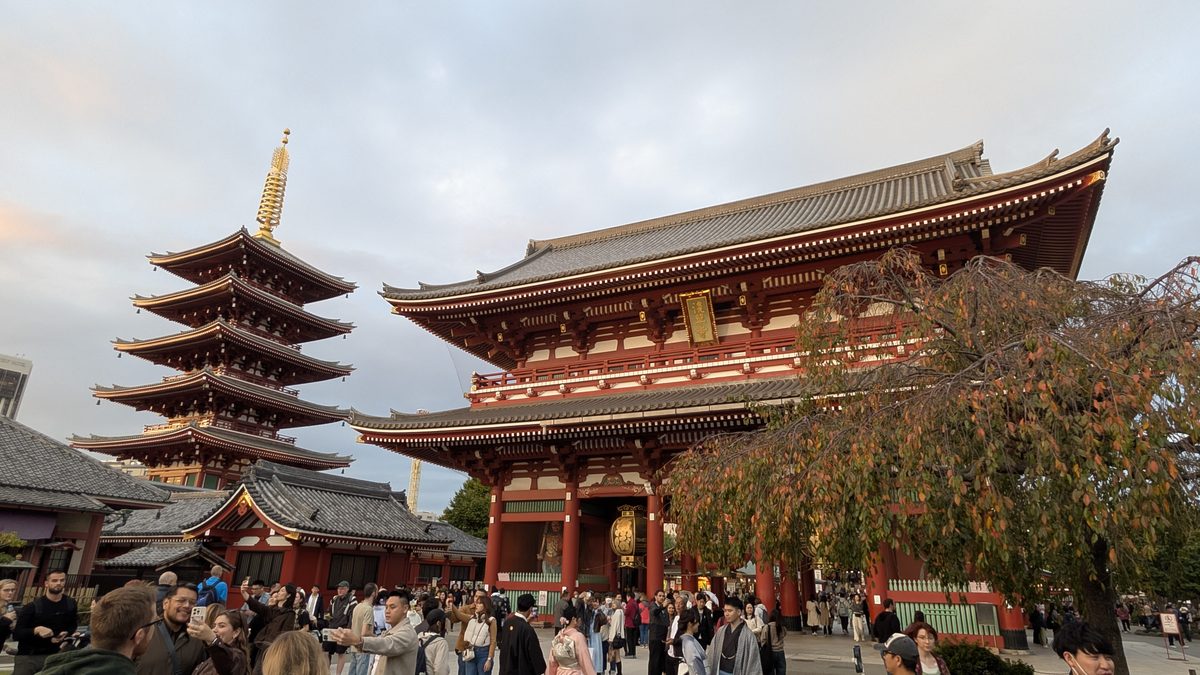
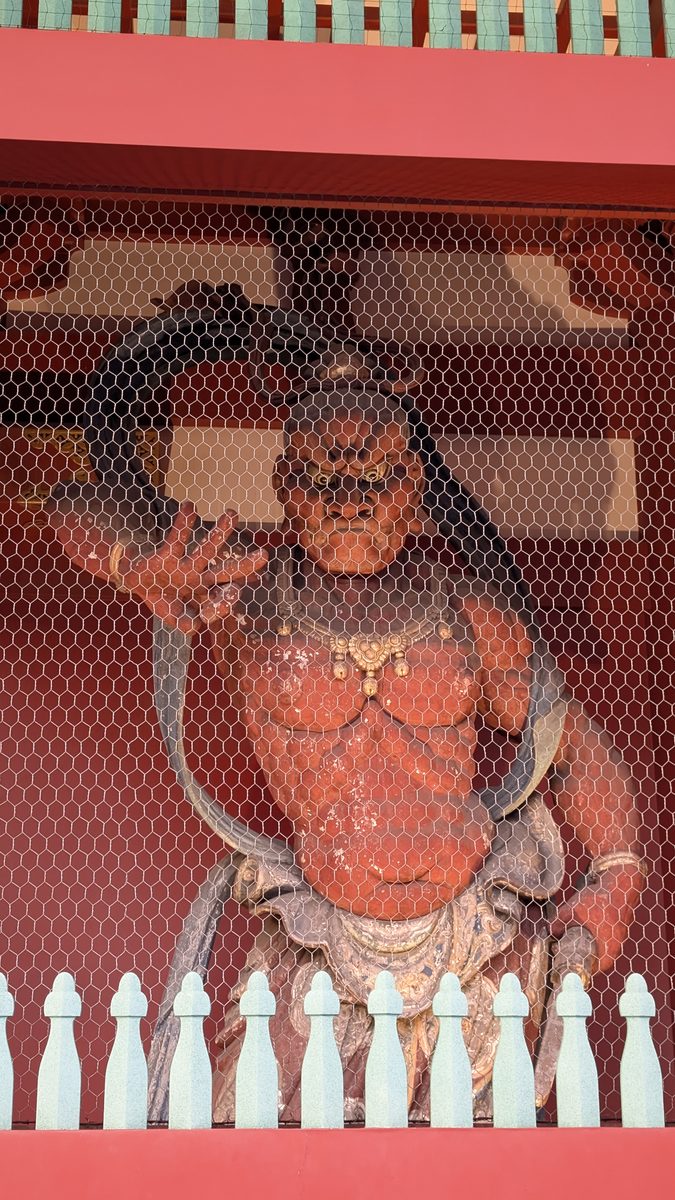
Asakusa is Tokyo's oldest district, a place where the city's deep history breathes through narrow streets and the persistent smell of incense. At its heart sits Sensoji (浅草寺), founded in 645 AD after two fishermen hauled a golden statue of Kannon — the Bodhisattva of Mercy — from the Sumida River. That miraculous catch became Tokyo's spiritual anchor. The iconic Kaminarimon gate announces your arrival with its great red lantern; beyond it, Nakamise-dōri leads you through centuries of vendors toward the main hall and five-story pagoda, all wrapped in the sensory chaos of incense, whispered prayers, and koyo — the autumn foliage that softens Asakusa's edges in deep November gold.
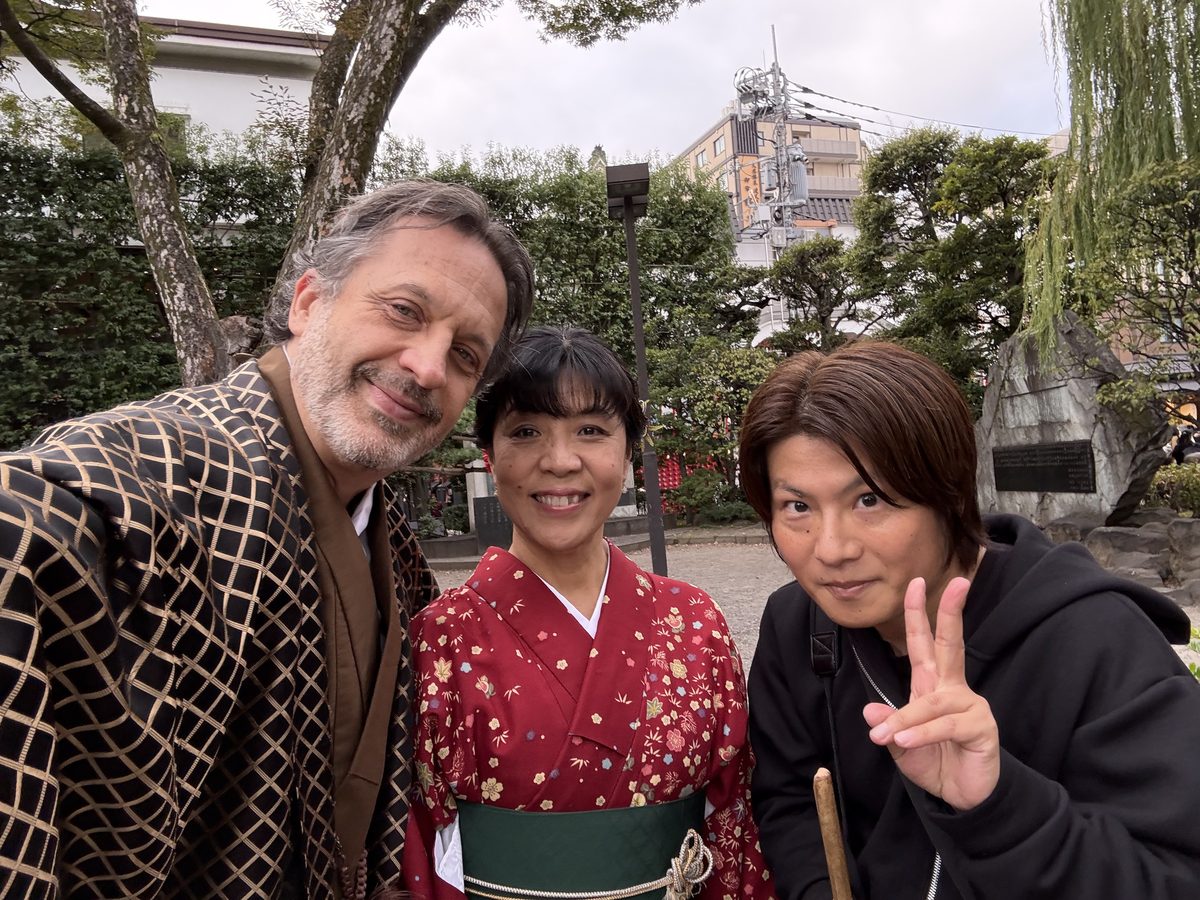
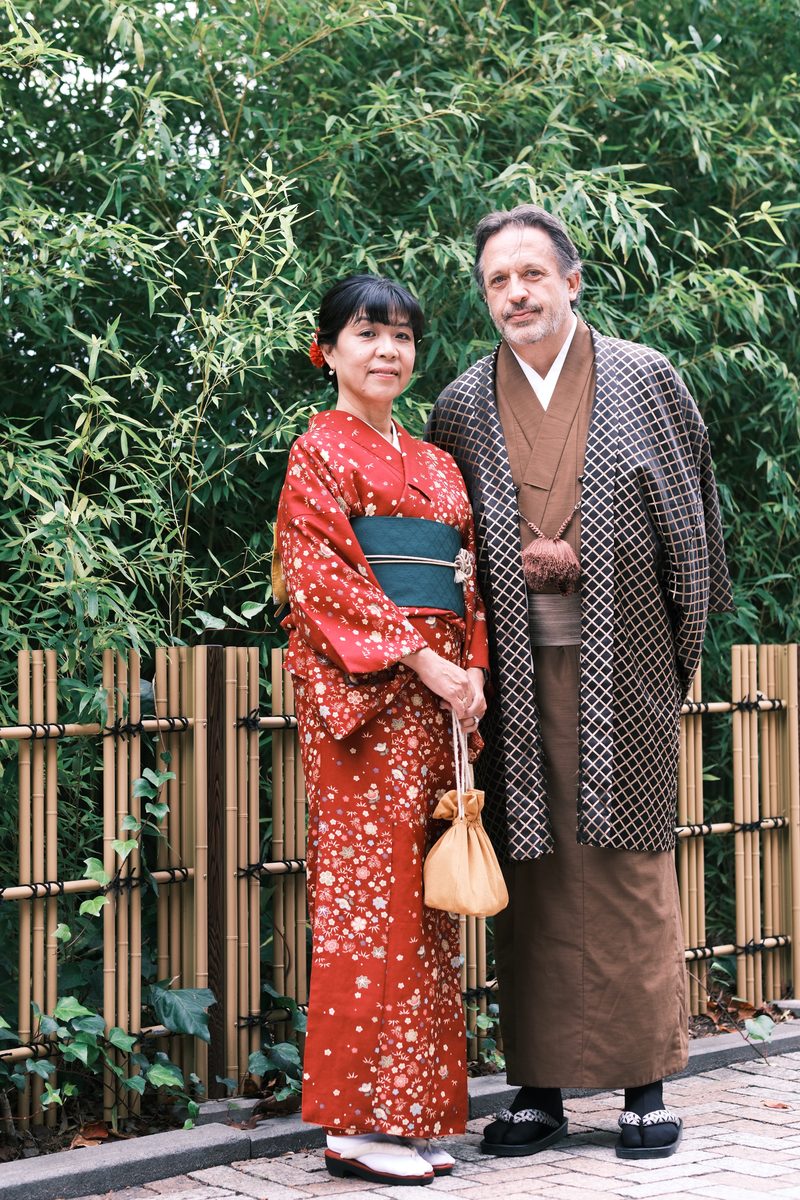
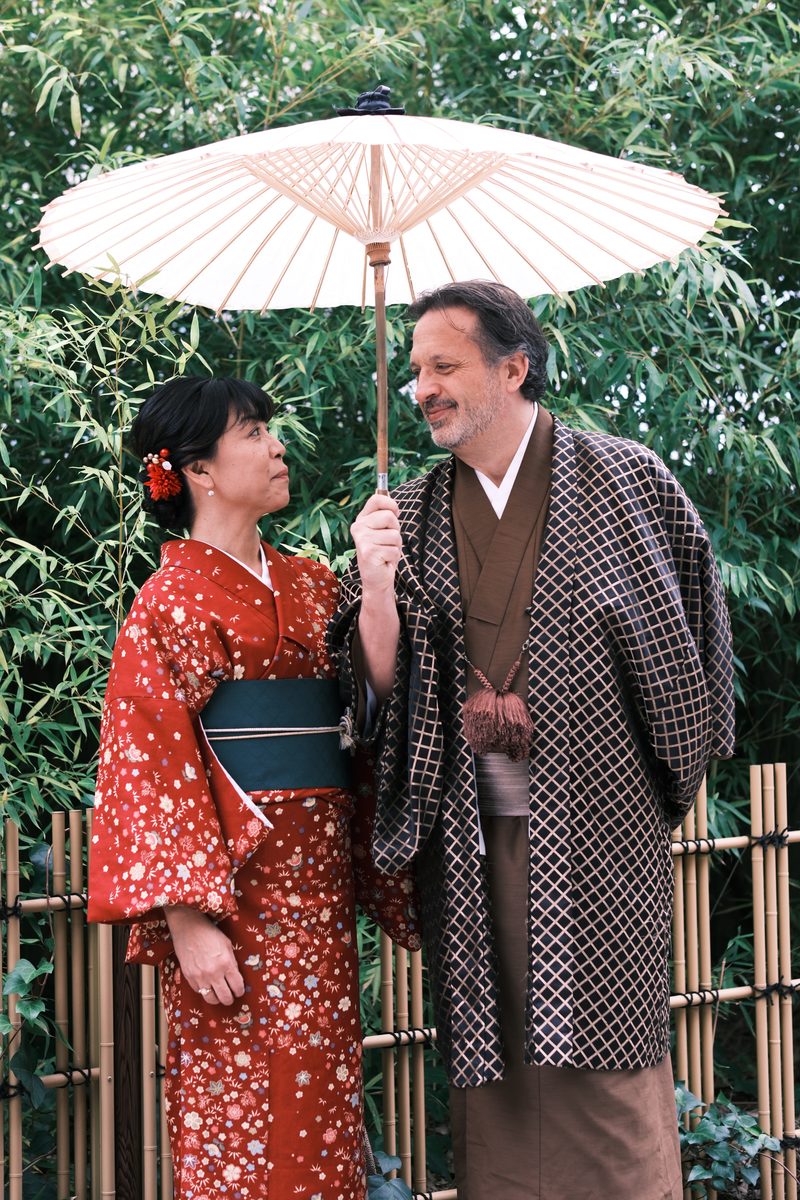
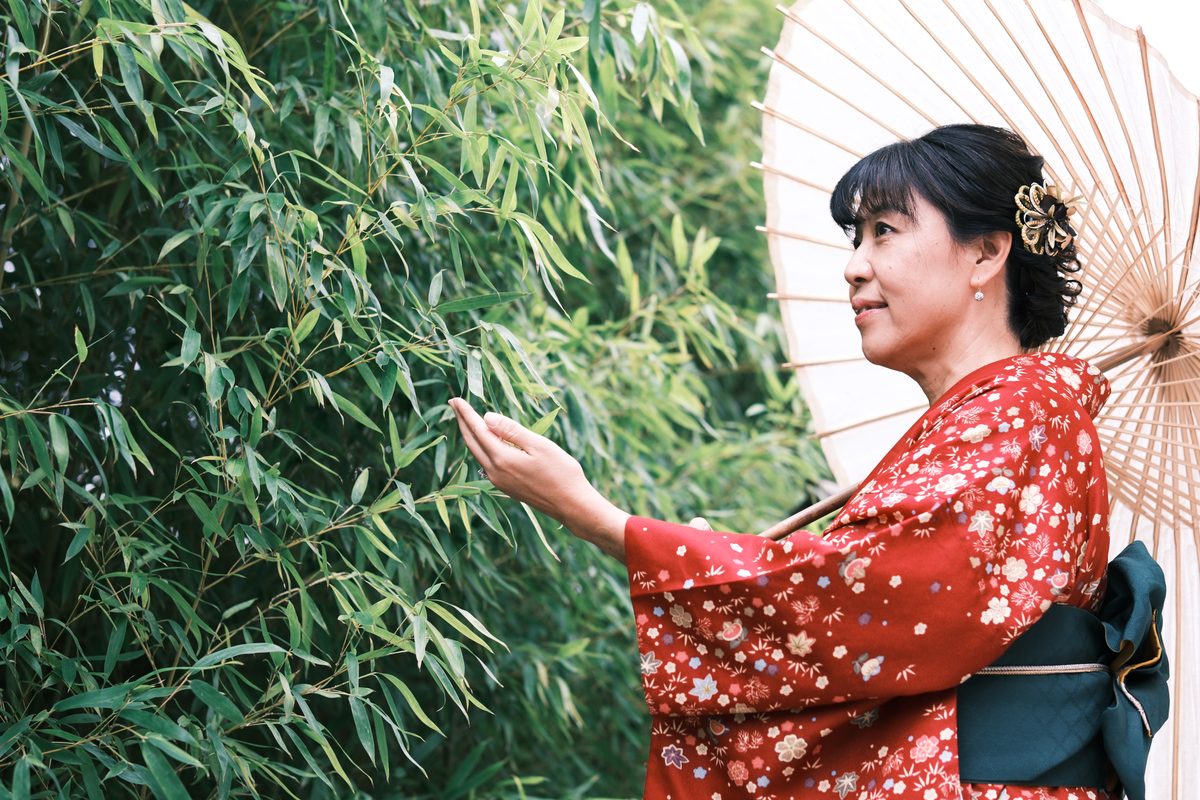
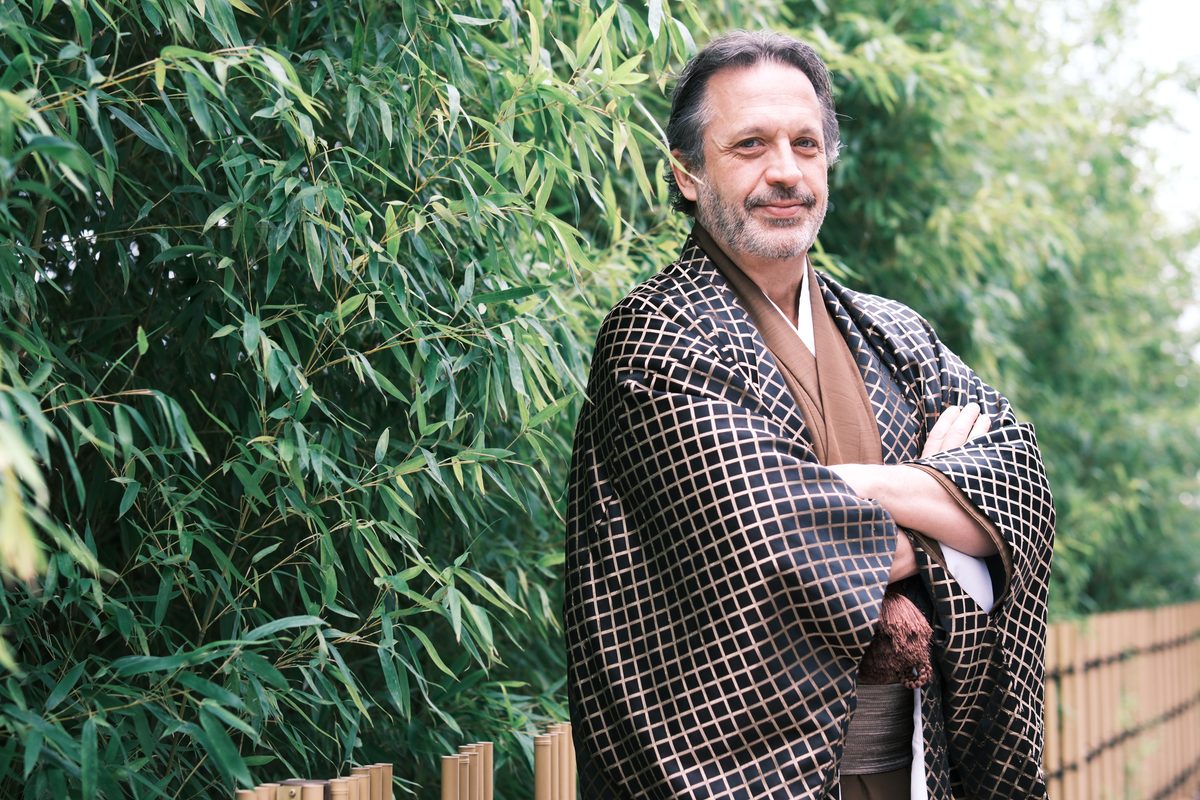
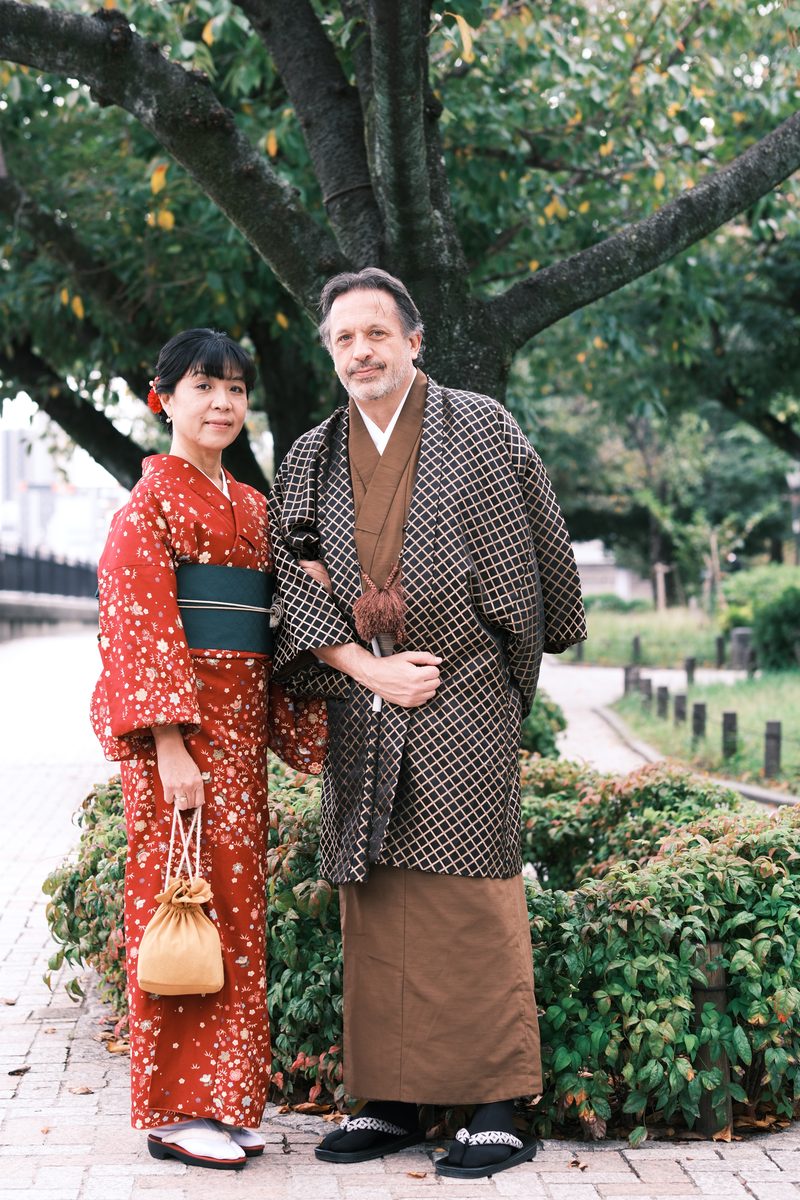
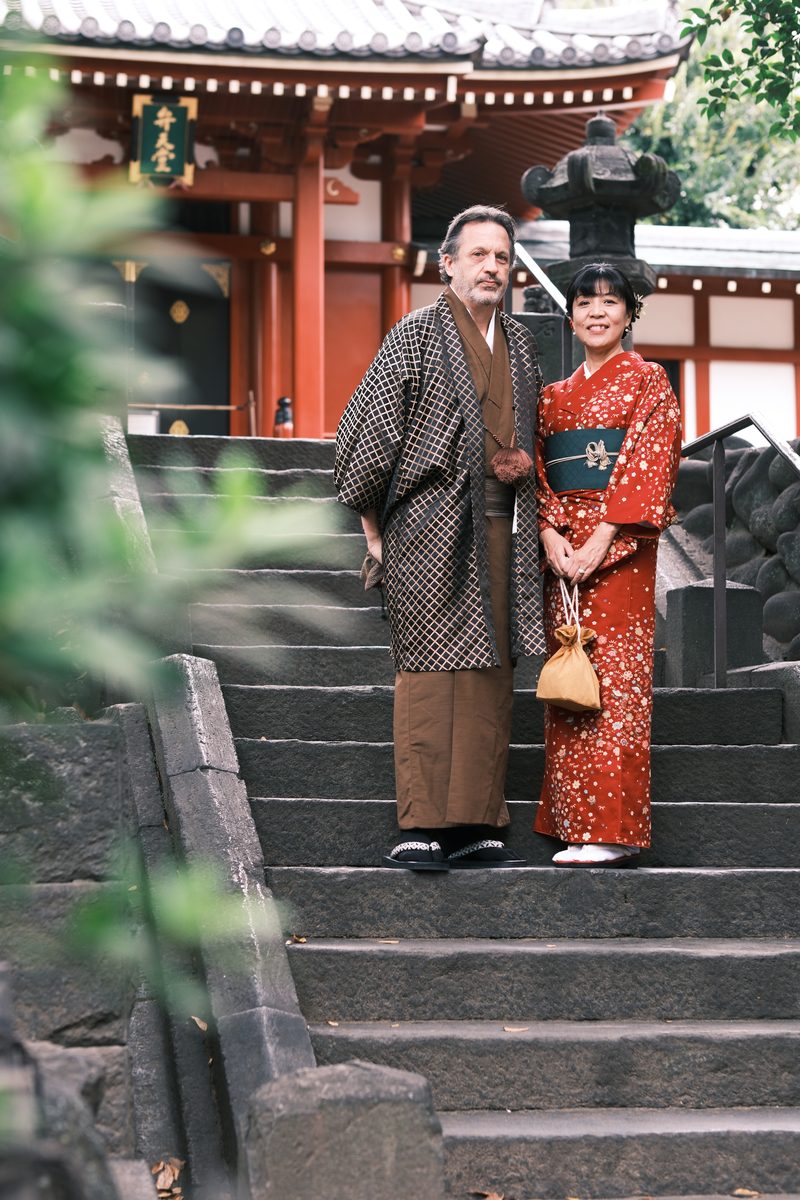
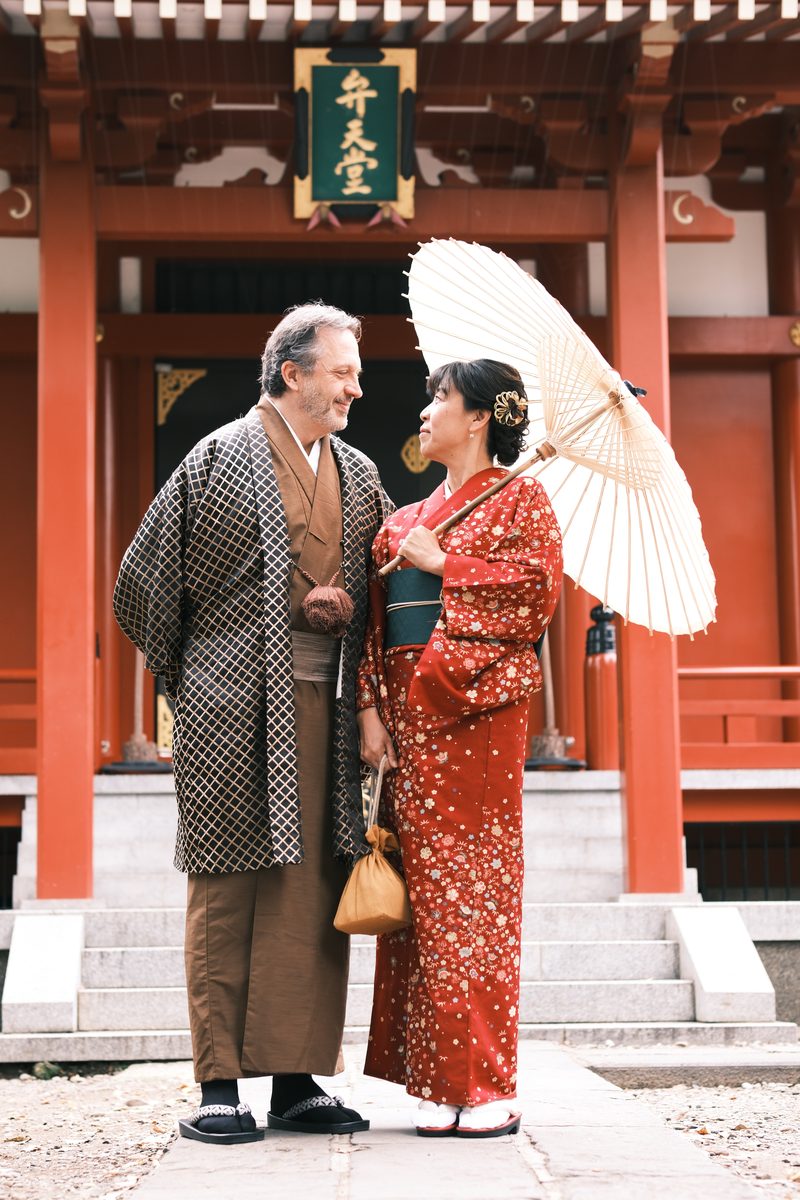
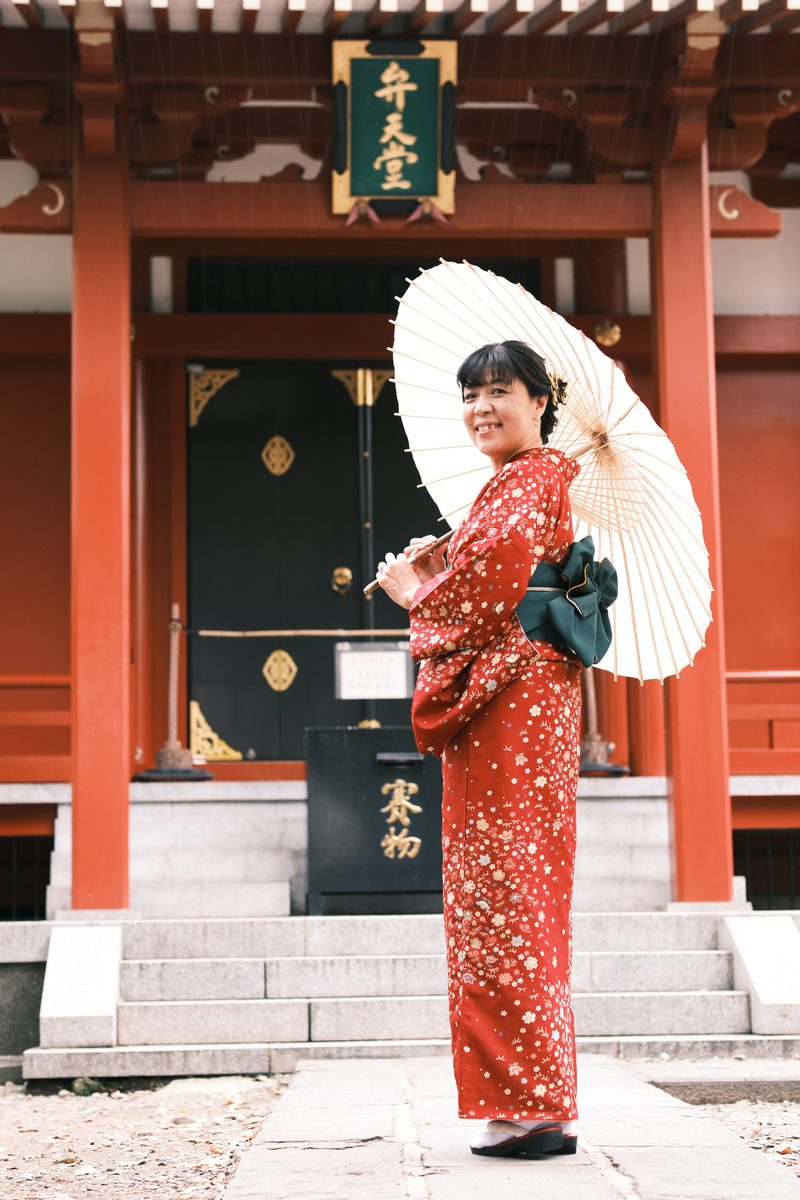
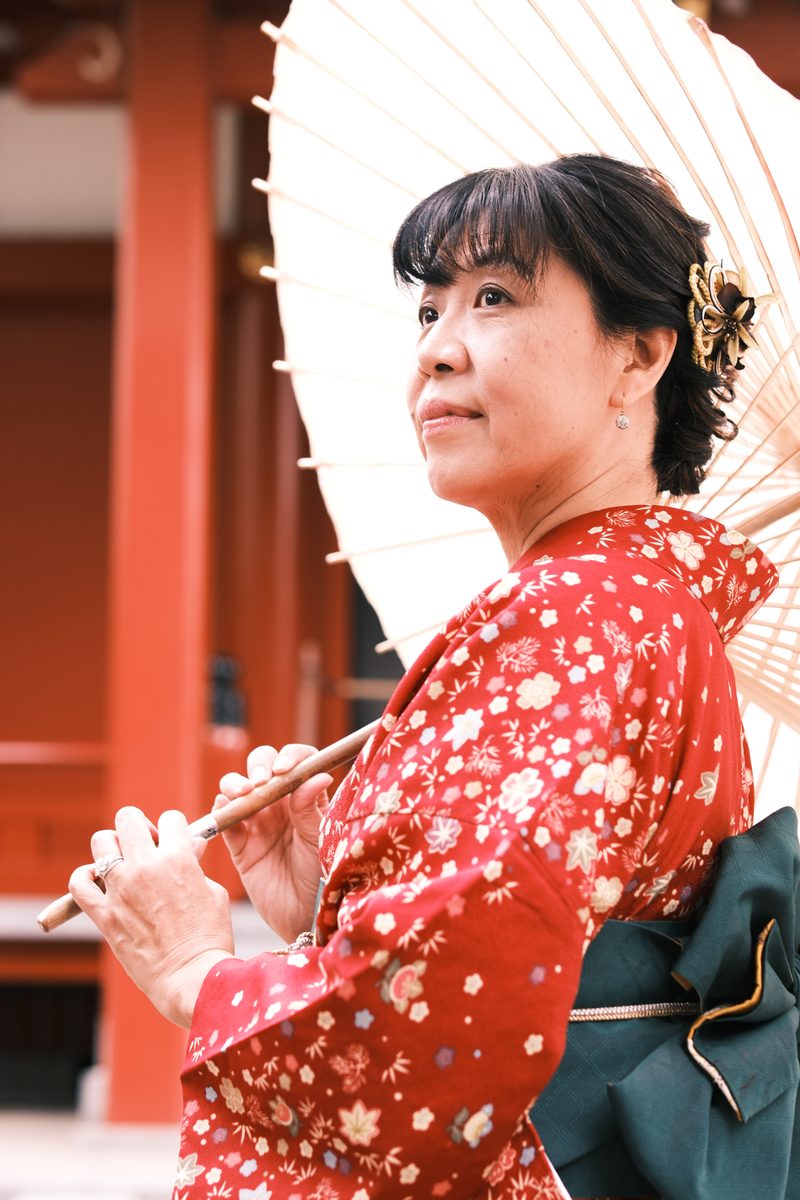
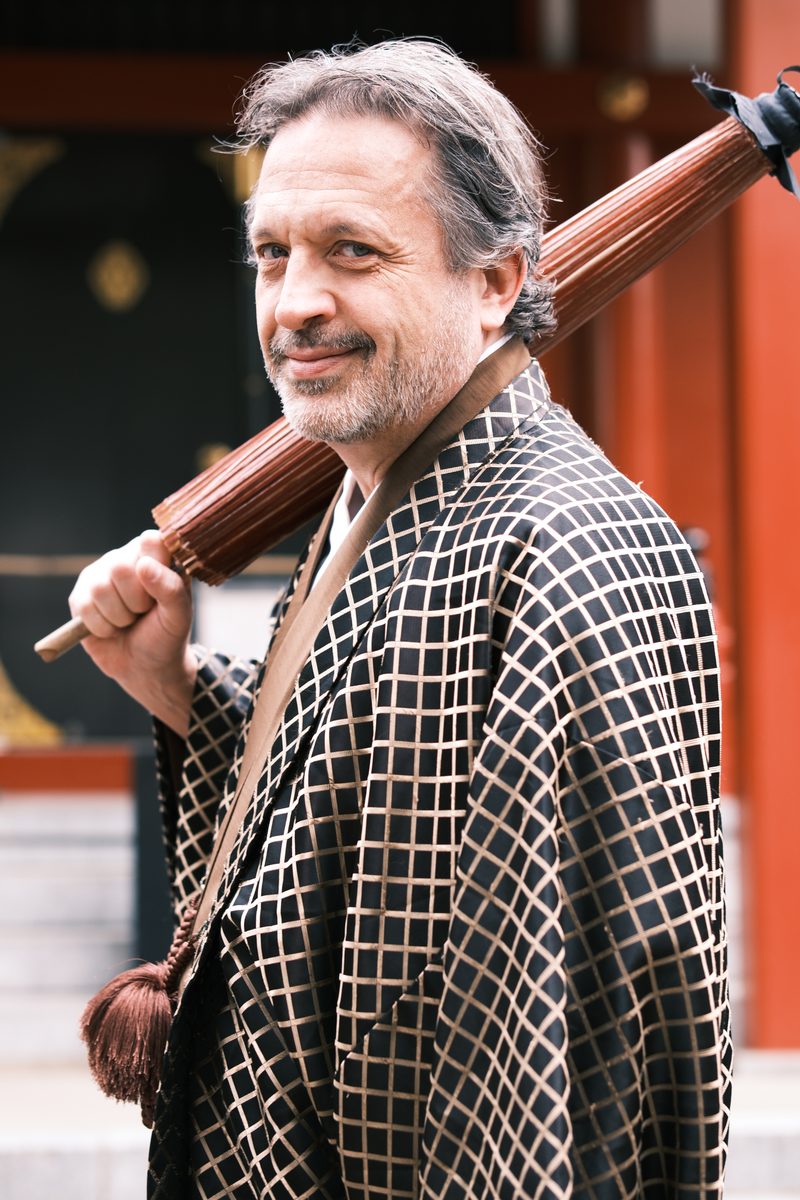
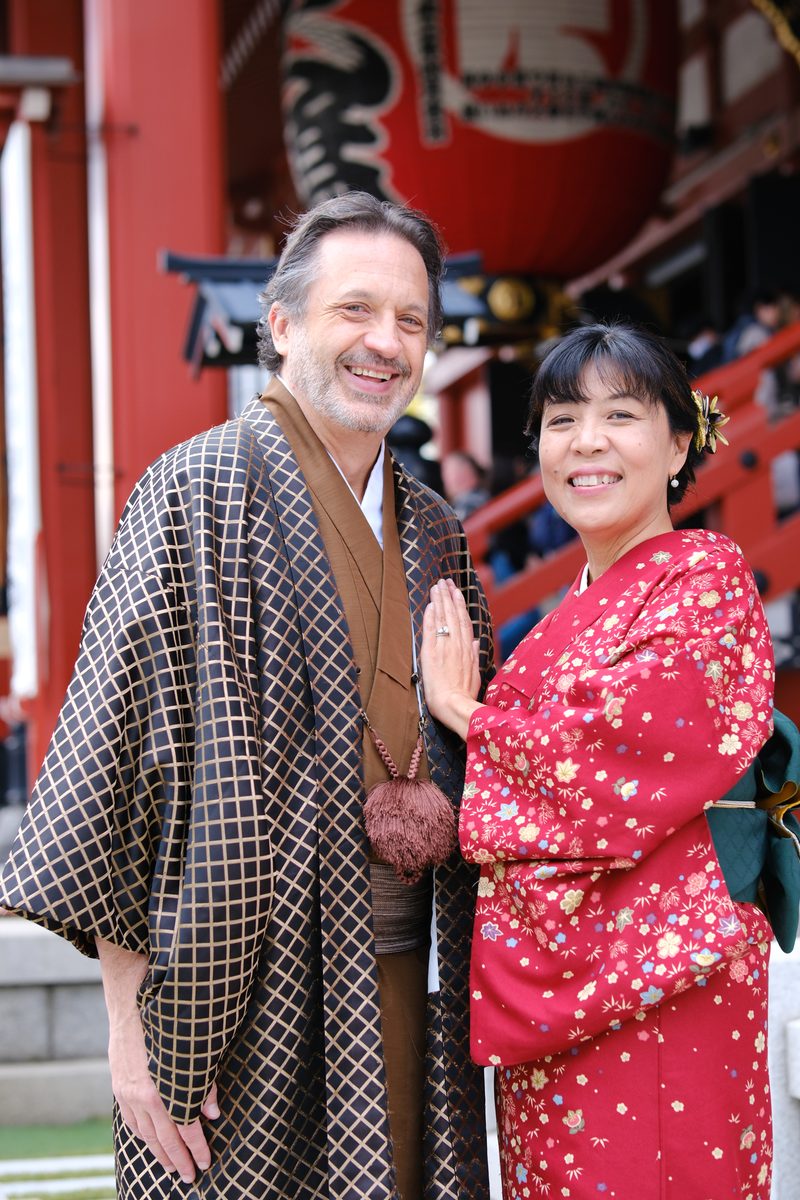
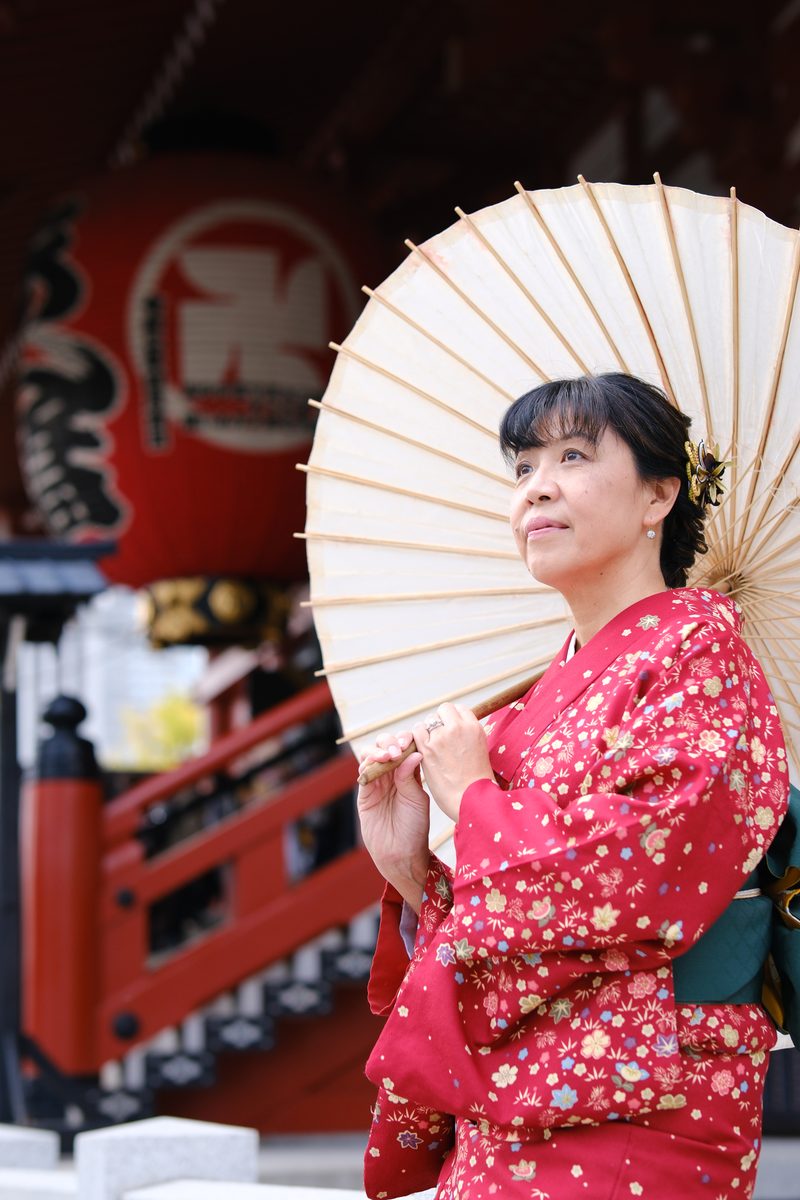
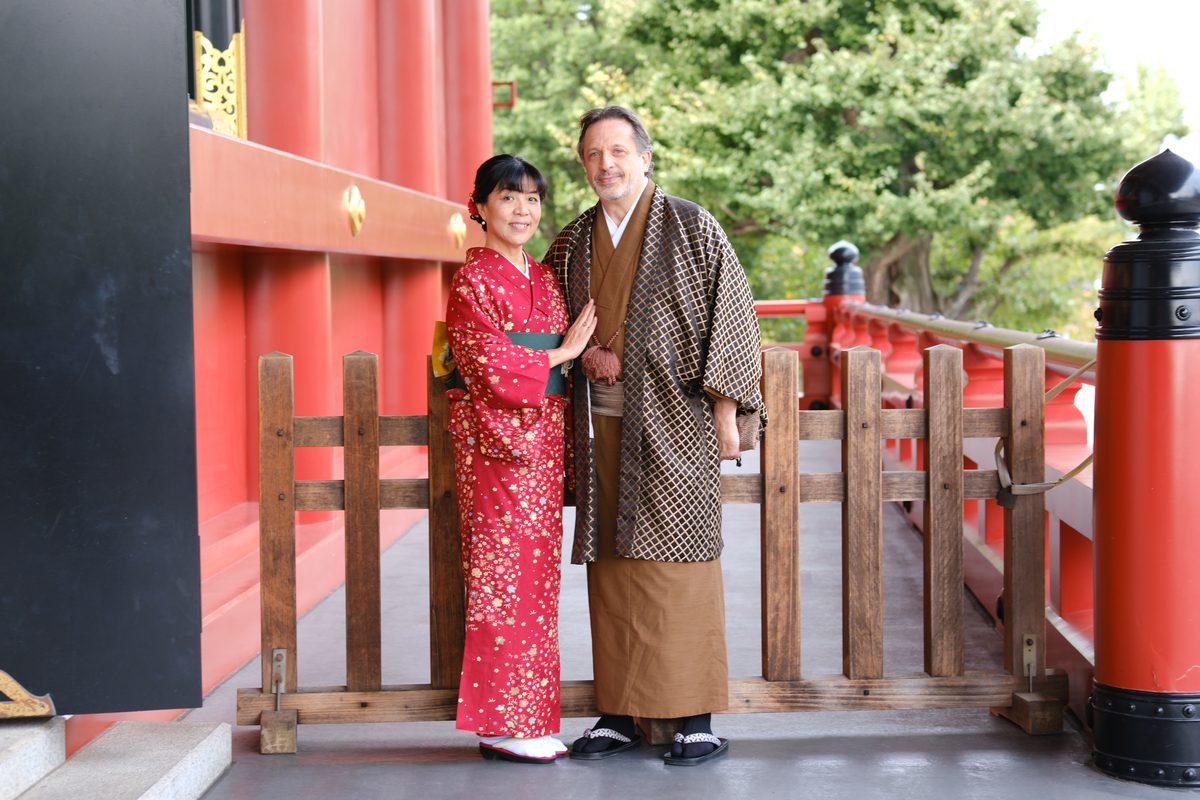
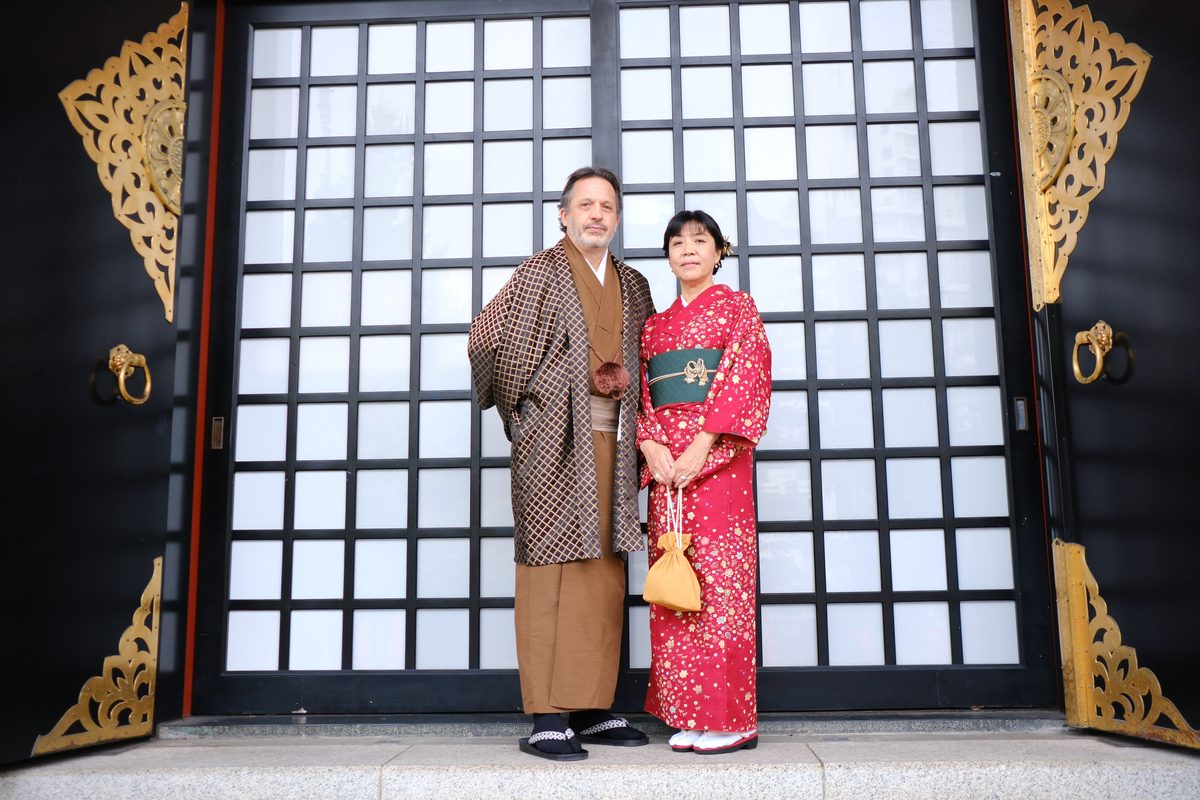
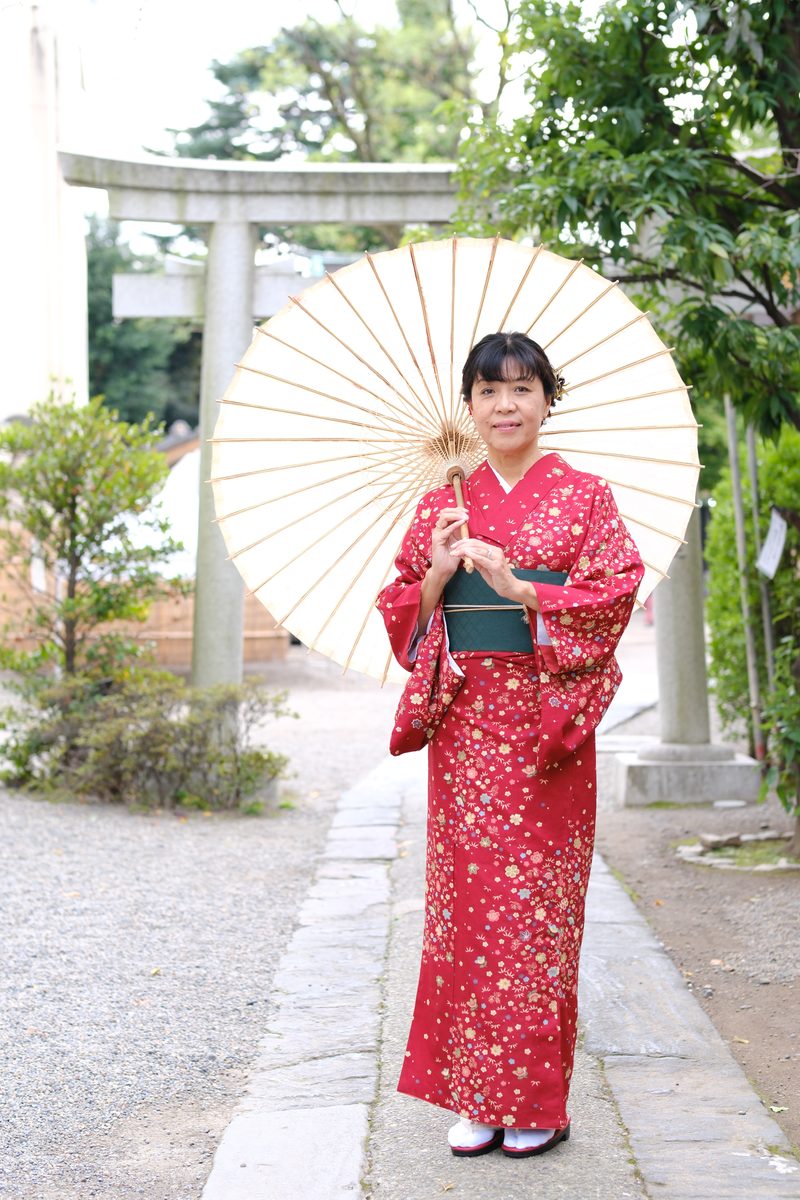
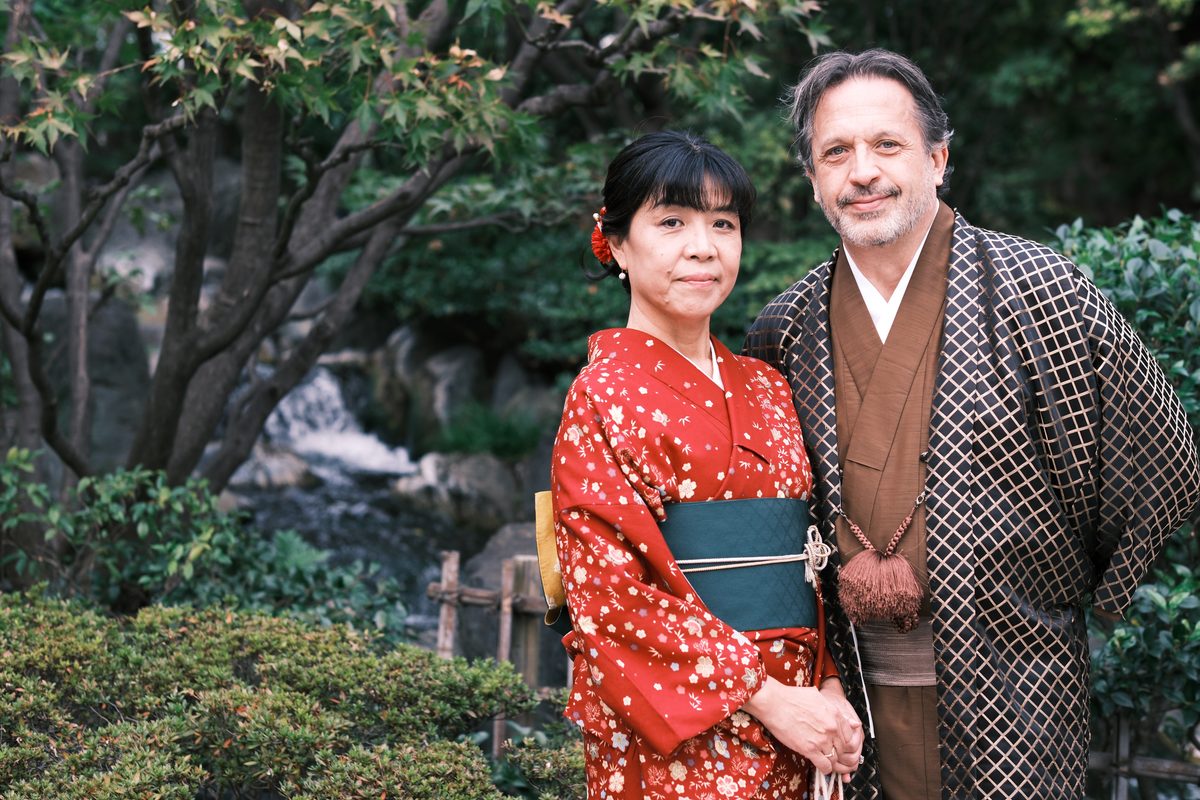
Kimono rental shops throughout Asakusa dress visitors in full traditional attire and connect them with professional photographers who know exactly which corners of the temple grounds catch the afternoon light, which gates frame the pagoda best, and which bamboo paths feel quietly removed from the crowds. The result is something between a portrait session and a time slip. Ako wore a red floral furisode with a green obi; Eddy, a black-and-gold diamond-patterned haori over a brown hakama. The wagasa went with Ako.
浅草は東京で最も古い街のひとつ。狭い路地と絶え間なく漂うお香の香りの中に、この街の深い歴史が息づいています。その中心に佇むのが浅草寺(せんそうじ)。645年、二人の漁師が隅田川から金色の観音像 — 慈悲の菩薩 — を引き上げたことに始まると伝えられ、その奇跡の一網が東京の心の拠り所となりました。象徴的な雷門が大きな赤い提灯とともに参拝者を迎え、その先の仲見世通りには何世紀も続く店々が並び、本堂と五重塔へと導きます。立ちこめるお香、ささやかれる祈り、そして11月の深い金色に浅草の輪郭を和らげる紅葉 — すべてが五感を包み込みます。
浅草の各所にある着物レンタル店では、訪れる人を本格的な伝統衣装に着付け、境内のどの一角が午後の光を捉えるか、どの門が五重塔を最も美しく額装するか、どの竹林の小径が人混みから静かに離れているかを知り尽くしたプロのカメラマンが案内してくれます。その時間は、ポートレート撮影とタイムスリップのあいだのよう。あこは緑の帯を締めた赤い花柄の振袖、エディは茶色の袴に黒と金の菱柄の羽織。和傘はあこが手にしました。
Ningyōchō
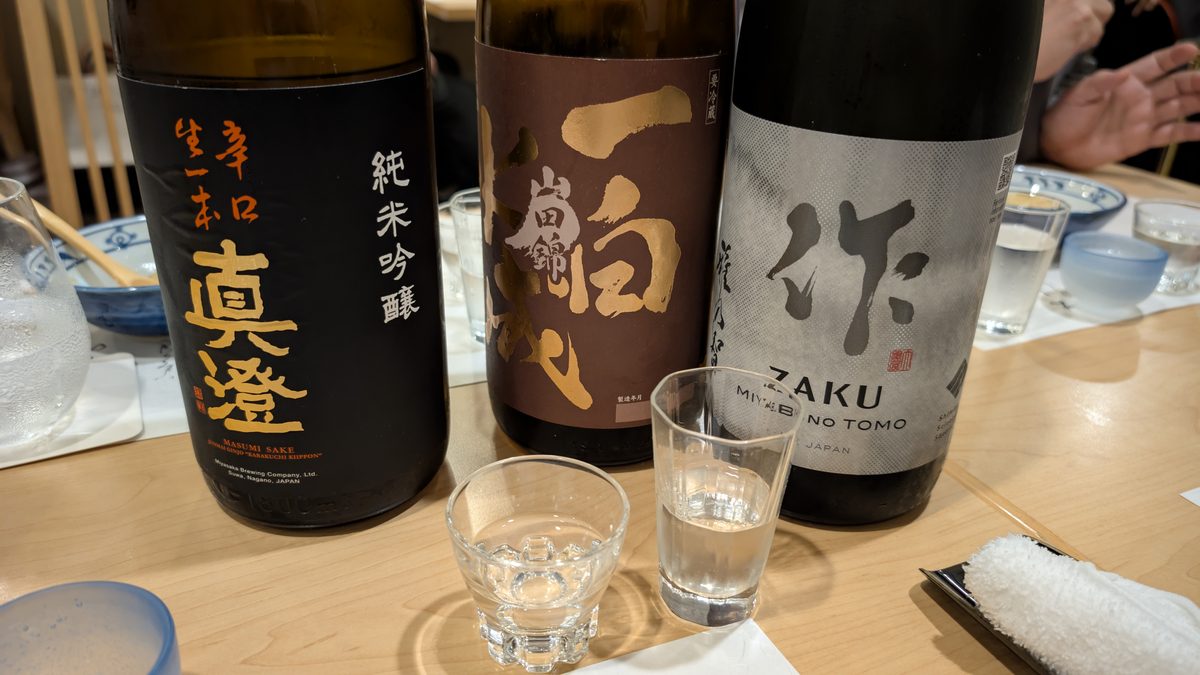
The last evening landed in Ningyōchō — "doll town," named for the puppet-theater craftsmen who once worked these lanes in old Shitamachi Tokyo. It has kept its low-rise, lantern-warm character and its old shops, and it makes a fitting place to raise a final glass: a flight of sake — Masumi, Zaku, and a third — poured to toast the end of the trip.
最後の夜は人形町へ — 「人形のまち」。かつて下町の東京で、この界隈に人形浄瑠璃の人形師たちが暮らしていたことに由来します。低い軒並みと提灯の温もり、そして古い名店の風情を今も残すこの町は、最後の一杯を上げるのにふさわしい場所。日本酒の飲み比べ — 真澄、作(ざく)、そしてもう一銘柄 — を注いで、旅の終わりに乾杯しました。